
Health and recovery
Post-surgery recovery and behavior: keeping calm on crate rest
Every week a Houston vet sends a dog home with instructions that say strict crate rest for six weeks, and every week a family calls us on day four because the dog is screaming in the crate. Recovery is a behavior problem as much as a medical one, and the medical side is your vet's; this is the behavior side.
Last reviewed September 11, 2026 · by the Best Dog University Team
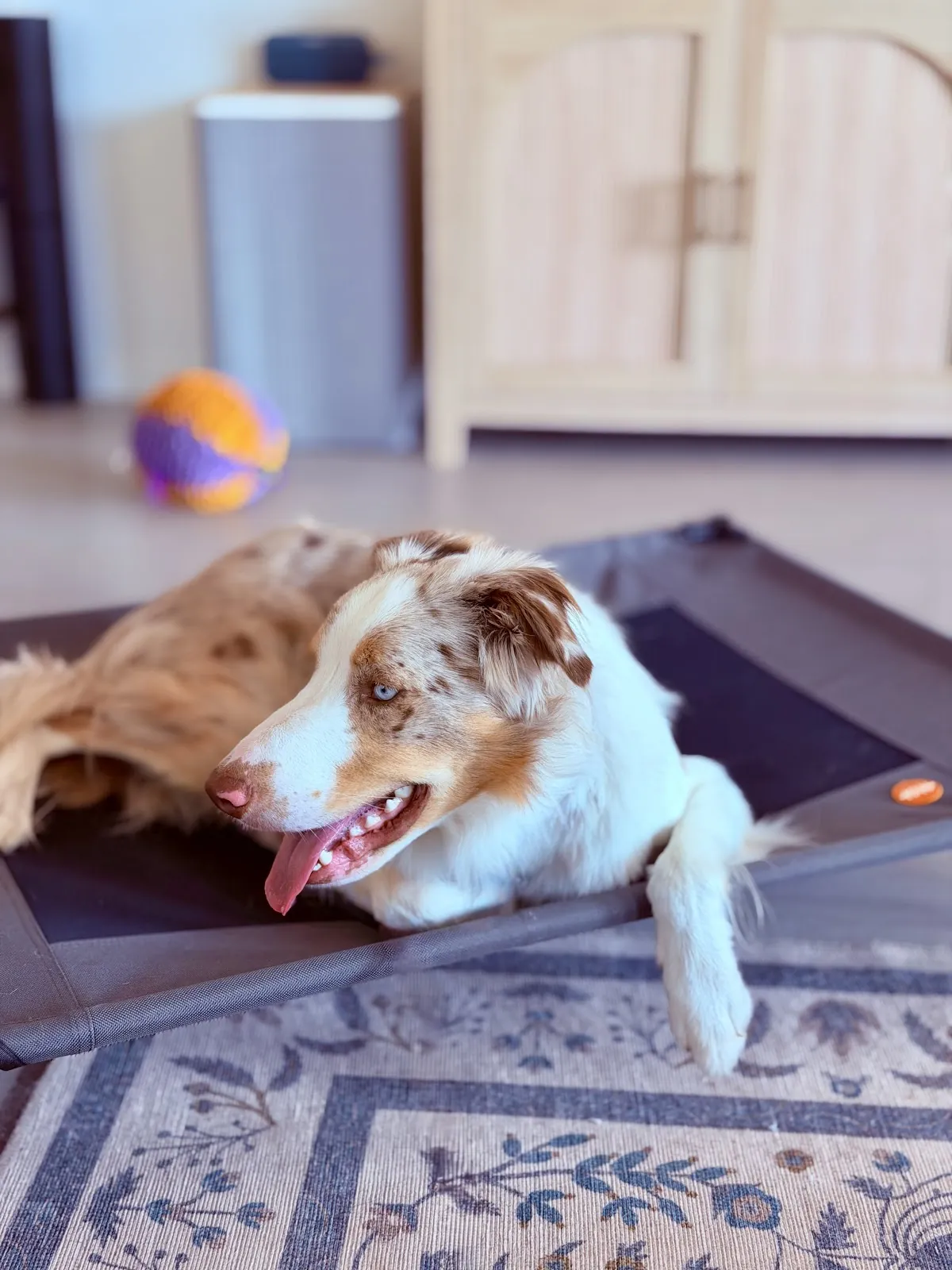
Before the surgery
Teach the crate and place now if the surgery is planned.
A spay, a neuter, a TPLO or a dental is usually scheduled weeks ahead, and those weeks are the time to make the crate a place the dog loves and place a command it can hold for an hour. Meals in the crate, chews in the crate, naps in the crate with the door closed; place at every meal and through every doorbell. A dog that arrives at surgery day with those skills recovers in a crate it already trusts. A dog without them recovers in a cage it hates.
Ask your vet now what the restrictions will be: no stairs, no jumping, leash-only bathroom trips, the cone. Practice the leash-only trip to the yard and the cone in the weeks before, so neither is new on the worst day.
- Crate calm and place built before the date
- Leash-only yard trips practiced
- The cone worn for short periods, with food
- The vet's restrictions written down in advance
The first week home
Boring, scheduled and supervised.
The dog comes home groggy and stays in the crate except for leashed bathroom trips. Meals on the schedule the vet gives, in the crate. No visitors, no other dogs, no children on the floor with it, and no furniture, because a jump off the couch undoes a TPLO. Keep the household quiet and the routine identical every day, because a dog that can predict the day settles into it.
Pain and confusion make some dogs snappy in the first days; respect it, use the leash rather than your hands to move the dog, and call the vet if the pain seems unmanaged. Never use the crate as punishment during recovery, and never let the dog out of it because it is crying; that is how a dog learns that crying opens doors.
- Crate except for leashed bathroom trips
- Meals on the vet's schedule, in the crate
- No furniture, no stairs, no visitors, no other dogs
- Move the dog with the leash, not your hands
Days 1 to 3: crate, leashed yard trips, meals, sleep; nothing else
Days 4 to 14: five-minute mental sessions twice a day; a frozen chew for the long stretches
Weeks 3 to 6: the vet's allowed activity, exactly as written; place beside you in the evening
Recheck: ask the vet what is allowed next before you allow it
Return to normal: one new activity at a time, structured walks first
Replacing exercise
Tire the brain, since you cannot tire the body.
A recovering dog cannot walk, run or play, and a bored dog on crate rest becomes a frantic dog. The substitute is mental work: five minutes of stationary obedience twice a day, a name game, a hand-target, scent work with a few pieces of kibble hidden in a towel, and a frozen stuffed toy that takes an hour. A dog that has worked its brain for ten minutes sleeps for two hours, which is the whole point of recovery.
Chews and food puzzles need the vet's blessing after an abdominal surgery, and anything that needs the dog to stand and paw is out for an orthopedic one. Ask, then use what is allowed generously.
- Five-minute stationary sessions twice a day
- Scent games in a towel, no movement needed
- Frozen chews for the long stretches, vet-approved
- Nothing that requires standing or pawing after orthopedic surgery
When it is not working
The screaming crate, the torn stitches and the calming question.
A dog that cannot settle in the crate on day three, that has chewed its cone or its stitches, or that panics every time you leave the room is a dog whose recovery is at risk, and it is also a dog that needs a plan beyond the vet's instructions. Talk to your vet first about pain control and about whether a short-term calming medication is appropriate; the AVMA's guidance on recovery is a good starting point. Then talk to us about the crate, because crate calm can be built even during recovery, in short sessions, with food and patience.
A lesson at home during recovery is something we do regularly: an hour with you and the dog, building a crate and place routine that carries the remaining weeks.
Recovery in Houston
Heat, bathroom trips and the storm that hits week two.
A summer recovery means bathroom trips on the shaded side of the yard at the cool hours, because a dog that cannot exercise also cannot cool itself by moving, and a cone traps heat around the head. Keep the recovery room cool and the water close. A storm during crate rest is a real risk for a dog with stitches and anxiety; the covered crate in an interior room, a fan and the sound work from our storm page are the setup. And keep the emergency vet's number on the fridge for the night the dog tears something anyway.
The programs
Programs during and after recovery.
A lesson at home to build the crate and place routine recovery depends on, and the regular programs once the vet clears the dog.
Asked and answered
Questions people ask about this.
My dog is screaming in the crate after surgery. What do I do?
First, call the vet about pain, because pain sounds like panic. Then build crate calm in short sessions with meals and chews, cover the crate, run a fan, and never let the dog out because it is crying. A lesson at home during recovery is a common way to get the routine built fast.
How do I keep a young dog calm for six weeks of crate rest?
Mental work in place of exercise: five-minute stationary obedience sessions, scent games in a towel, frozen chews the vet approves. A dog that has worked its brain sleeps; a dog that has done nothing is frantic by the afternoon.
Can I use calming supplements or medication during recovery?
Ask your vet, who knows the surgery and the dog. Some dogs benefit from a short-term prescription for the hardest weeks; none benefit from a supplement in place of a crate routine and mental work.
Will my dog lose its training during recovery?
Not if you keep the stationary parts going: place, sit, down, leave-it and the name response are all possible on crate rest and keep the dog sharp. The walk and the recall come back quickly once the vet clears activity, one step at a time.
Keep reading
Free consultation · 10% off this fall
Tell our team about the recovery.
The free phone consultation is a direct call: the surgery, the vet's rules, what the dog does in the crate, and whether a lesson at home would help.