
Through the flap
How to teach a dog to use a doggy door: without leaving it open for the raccoons
A doggy door looks like a convenience and turns out to be a small training project with house rules attached. Our trainers teach it in two short sessions a day, and the rules about when it is open matter as much as the teaching.
Last reviewed September 29, 2026 · by the Best Dog University Team
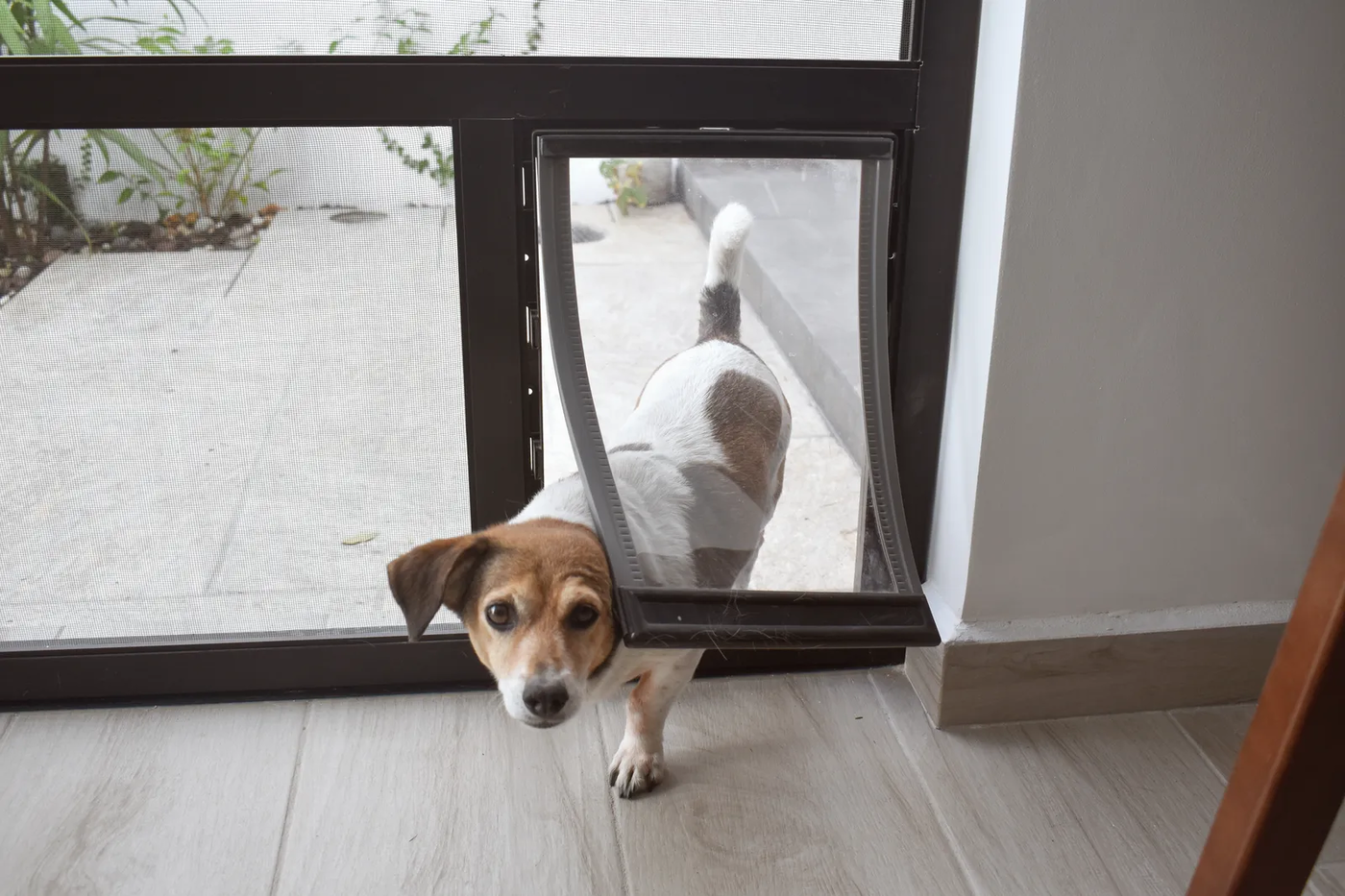
Before you start
Fit the door to the dog, and decide the house rules before the first session.
Measure the dog at the shoulder and across the widest part of the chest, and fit a door the dog can walk through without ducking hard or squeezing. A flap that scrapes the spine teaches a dog to avoid it. Bring soft treats, a helper, painter's tape and a leash. Choose the door's hours in advance: open in daylight while someone is home, locked at dusk, locked when you leave for more than a couple of hours.
The Houston caveat is the yard on the other side. A dog that can let itself out at 3pm in August can lie on hot concrete or dig through a fire ant mound with nobody watching, and a yard backing onto a bayou or retention pond carries wildlife risk. Secure pool gates, shade part of the yard, and check the fence line before you hand the dog a door.
- A door sized to the shoulder and chest, with room to spare
- Painter's tape to hold the flap open
- A helper on the far side and soft treats
- Written hours: daylight open, locked at dusk
- A fenced yard with shade and a closed pool gate
The steps
Open doorway first, then a curtain, then the full flap.
Keep sessions to five minutes and end while the dog is still keen. Every pass through the opening gets paid, in both directions, because a dog that goes out happily but will not come back in has only learned half the door. Go at the pace of the most hesitant pass, not the best one.
Tape the flap fully open or remove it. Toss a treat just through the opening and let the dog step through for it, then toss one back.
Put your helper outside. Call the dog through by name, pay on arrival, then have the other person call it back in.
Once it runs through without slowing, hang a strip of towel or cut ribbon across the top of the opening so something brushes the dog's back.
Lower the real flap halfway with tape, and lift it slightly with your hand as the dog arrives so it learns to push with its nose.
Let the flap hang fully, stand on the far side with a treat visible through the clear panel, and pay the first push generously.
Practice from the rooms where the dog actually rests, so it walks to the door on its own rather than only when called.
Add your lock routine every evening while the dog watches, so a closed door at dusk becomes a normal part of the day.
When it is not working
Three reasons a dog stalls at the flap.
The first is a bad early experience: the flap swung back and smacked the dog, or clattered loudly in the wind. Go back to the taped-open stage for a few days and lower the flap more slowly, holding it as the dog passes. The second is a door that is too small or set too high, so every pass is awkward; no amount of treats fixes a bad fit.
The third is a dog that uses the door but is not house trained. A doggy door lets the dog out; it does not teach the dog to hold it or to choose outside. If accidents continue inside, go back to a schedule with leash trips to one spot, and treat the door as a reward for a dog that already has the habit.
- The flap hit the dog early on
- A door too small or too high
- A dog that was never fully house trained
- One person practicing, the rest shooing the dog through
Keeping the raccoons out
A doggy door is a door, and the night shift in a Houston yard will use it.
Raccoons and possums work fence lines in suburbs from Cypress to Katy after dark, and coyotes travel the greenbelts behind master-planned streets. An unlocked flap is an open invitation, and a dog with overnight yard access tends to become the neighborhood night barker. Lock the door from dusk to morning, and give the dog its last trip out on leash before bed.
Some owners choose a door that opens only for a tag or microchip on the dog's collar, which keeps other animals out during the day. It still does not replace the evening lock. Close the door as well during July 4 and New Year fireworks, when frightened dogs are known to bolt, and during storms, when a scared dog should be inside with you.
When to get help
A private lesson in your home is usually enough.
Because the door lives in your house, a private lesson at home, $220, lets our trainer see the fit, the yard and the dog's hesitation in place, and most dogs are running through the flap by the end of it. A lesson at the Cypress facility is $160 if the door is not the only question you have. For a dog that also needs house training or barks at the yard all evening, the fuller answer is a board and train, where the routine is built before the dog comes home.
Tell our team about the yard on the free consultation call: the pool, the fence, the greenbelt or pond behind it, and who is home during the day. Those answers shape the door rules more than the teaching does, and our trainer will set the hours with you before the first session so the whole family locks and opens the flap the same way.
The programs
Help with the door and the routine around it.
An in-home lesson for the door itself, Gold for a dog that also needs house manners and quiet, the puppy bundle for a young dog.

Asked and answered
Questions people ask about this.
How long does it take a dog to learn a doggy door?
Most dogs run through a taped-open doorway in one or two sessions and push a full flap within a week of short practice. Cautious dogs, and dogs that were hit by the flap once, take longer. Go at the pace of the slowest pass and never push the dog through.
Should I leave the doggy door open at night?
No. Lock it at dusk. After dark, raccoons, possums and roaming cats use yards, and coyotes move along greenbelts in many Houston suburbs. A dog with overnight access tends to bark at all of it. Give the dog its last trip out on leash and lock the flap until morning.
Will a doggy door house train my dog?
No. It gives a house-trained dog a way out. A dog still having accidents needs the schedule, the leash trips to one spot and supervision first. Adding the door too early just means accidents happen near the door instead of in the living room.
My dog is scared of the flap. What do I do?
Tape the flap fully open and go back to tossing treats through the empty opening. Then hang something light, like a towel strip, and lower the real flap in small steps, lifting it as the dog arrives. Most fear comes from one bad bump, and slow repetition fixes it.
Is a doggy door safe with a pool in the yard?
Only with the pool fenced and the gate latched, because the door lets the dog reach the yard with nobody watching. Teach the dog where the pool steps are while you are present, and keep the door locked until the pool area is secured.
Keep reading
Free consultation · 10% off this fall
Tell us about the door and the yard.
Our team can usually solve a doggy door in a single lesson. Book the free consultation call and describe the dog, the flap and what is on the other side.