
Potty bell, two weeks
How to teach a dog to ring a bell to go outside: a two-week plan
A bell turns the quiet dog who waits by the door, gives up and goes on the rug, into a dog that can ask. The plan below takes two weeks of short sessions and one rule the whole household keeps.
Last reviewed September 29, 2026 · by the Best Dog University Team
Before you start
Before you start: one bell, one door, one potty spot, and a schedule already running.
You need a bell on a strap, or a hanging string of bells, at the height of the dog's nose, soft treats cut small, a leash hung by the door and a potty spot in the yard. Hang the bell on the door the dog already uses for bathroom trips, not the front door, so a ring always points to the same place. The bell does not house train a dog. It gives a dog that already knows outside is the bathroom a way to tell you, so a new puppy or a rescue in its first week still needs the schedule first.
The Houston caveat is the weather. From May to September the potty spot at 3pm is hot grass beside a hot patio, and a thunderstorm can roll through on any afternoon, so a dog that rings and then walks out into a downpour or onto baking concrete learns that the bell has a price. Put the spot in shade close to the door, keep a towel there through storm season, and walk the yard for fire ant mounds before you choose it, because one sting on day three can undo a week of work.
- A bell at nose height on the potty door only
- Small soft treats and a leash hung beside it
- A shaded potty spot with no fire ant mounds
- A potty schedule in place before the bell goes up
The steps
The two-week plan, from a nose touch to a dog that rings unasked.
Sessions last two or three minutes, three or four times a day, and each stage gets a couple of days. Use a marker word such as yes, said the instant the nose meets the bell, and pay within a second of it. Move to the next stage only when the dog gets the current one right about eight times out of ten, and drop back a stage for a day whenever it starts guessing.
Days 1 and 2: hold the bell in your hand near the dog's nose, mark and pay the moment it sniffs or bumps it, and repeat until the dog reaches for it on sight
Days 3 and 4: hang the bell on the door and hold a treat just behind it, so the nose has to touch the bell on the way, then fade the treat to an empty pointing hand
Days 5 and 6: at every scheduled potty trip, walk to the door, point, wait for the touch, then open the door at once and clip the leash
Days 7 to 9: stop pointing, stand at the door and wait up to thirty seconds for the dog to offer the ring, helping with a point only if it stalls
Days 10 to 12: answer every ring the dog offers on its own with a leashed trip to the spot, a potty cue as it starts, and a reward when it finishes
Days 13 and 14: keep the bell dull by walking straight back in after two or three minutes if nothing happens, with no yard play in between
When it is not working
A bell that stays silent, a bell that rings all day, or a ring nobody answered.
The silent bell usually means the stages went too fast, most often the jump from pointing to waiting, so go back two days and pay more. The bell that rings every ten minutes means ringing has paid for something other than a bathroom trip: a game in the yard, a lizard to chase, a chance to bark at the fence. Keep every trip that follows a ring on a leash, to the spot, and back inside, and the novelty wears off within a few days.
The third reason is the household. A ring that goes unanswered while someone finishes a call teaches the dog that ringing does not work, and it goes back to waiting silently by the door, then to the rug. For the first month, whoever is home answers the bell every time, even at 10pm when it is probably a false alarm. A dog that rings, goes out, and then has an accident inside a few minutes later should see your vet, because the bell was never the problem.
- Silent bell: go back two days and pay more
- Constant ringing: leash, spot, straight back in
- Unanswered rings teach the dog to stop asking
- Accidents right after a trip: call your vet
When to get help
When the bell needs a trainer, and which program fits.
A dog that learns the bell but still goes inside has a house training gap rather than a bell gap, and that is what our team would look at first. For a puppy under four months, the Puppy Development Bundle covers crate and potty guidance across four private sessions, $550 in Cypress or $750 in your home, and a trainer can hang the bell and start this plan with you in the first one. For an adult dog, one private lesson at $160 in Cypress or $220 at home usually untangles a stalled bell.
The bell is rarely a reason for board and train on its own, but it travels well with one. Dogs in the Gold Board & Train, two weeks at $2,500, live in our trainer's house in Cypress, where the back door already has a routine, and the family learns the same cue at the go-home session so the habit comes home with the dog. If you are not sure which fits, describe your dog's potty routine on the free phone consultation.
The programs
Programs that help the bell stick.
The puppy bundle for potty routines under four months, a single lesson for a stalled bell, Gold when manners at every door need work.

Asked and answered
Questions people ask about this.
How long does it take to teach a dog to ring a bell?
Most dogs link the bell to the door in about a week of short sessions and start ringing on their own in the second week. Puppies, and adults that are not yet reliable about going outside, take longer, because the bell only works on top of a potty routine that already exists.
What if my dog rings the bell just to play outside?
Then ringing has been paying for play. Make every trip after a ring a leashed walk to the potty spot, give it two or three minutes, reward only for going, and walk back in whether anything happened or not. Yard play still happens, just at times you choose and never right after a ring.
Can a puppy learn to ring a bell?
Yes, from about ten weeks, but treat the bell as a reminder for the family rather than the puppy's job. A young puppy still goes out on a schedule every couple of hours and after naps, meals and play, whether it rings or not. The bell carries more of the load as the bladder grows over the next few months.
Should I use a bell or a pet door?
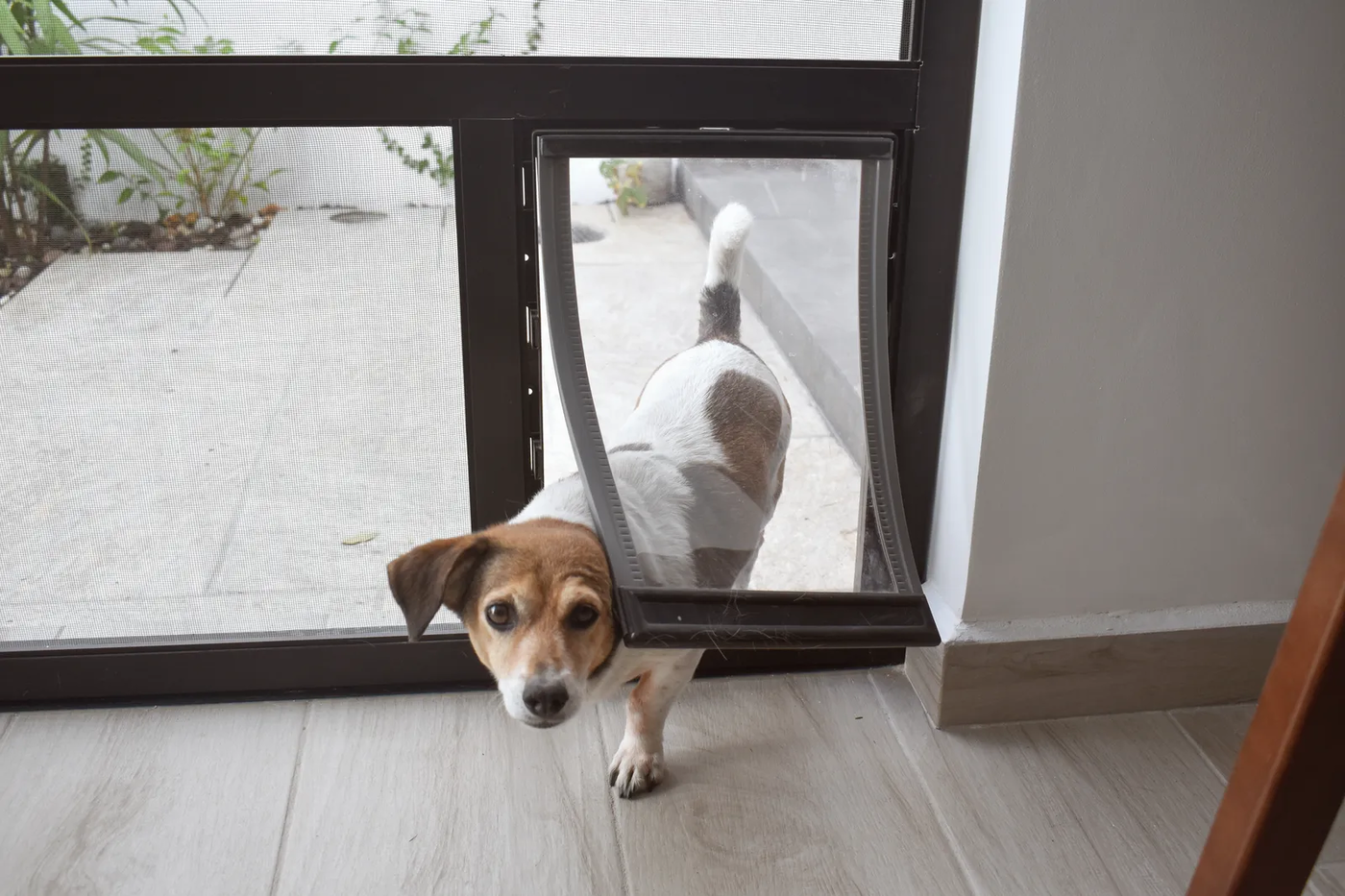
A pet door lets a fully house trained dog out without asking, which suits a secure fenced yard. It also lets a dog out alone into midday heat, a storm or a yard with a gap under the fence. A bell keeps a person in the loop, which most Houston families prefer until the dog is reliable and the yard is secure.
Where exactly should the bell hang?
On the door the dog uses for bathroom trips, at the height of its nose when it stands, and nowhere else in the house. A strap from the handle or a hook beside the frame keeps it from scratching paint. Raise it as a puppy grows, so the touch stays easy.
Keep reading
Free consultation · 10% off this fall
Give your dog a way to ask.
Tell our team where your dog is with house training and where the bell has stalled. The free phone consultation is a direct call, with no obligation.