
The boring homecoming
How to teach a dog to be calm when you come home: the boring homecoming
The spinning, jumping, crying welcome feels like love, and it is also the moment most scratched arms and knocked-over grandparents happen. Our trainers teach a quiet return, because a calm homecoming is part of a calm departure, and it is one of the simplest habits a family can change.
Last reviewed September 29, 2026 · by the Best Dog University Team
Before you start
Set up the entry so calm is easy to reach.
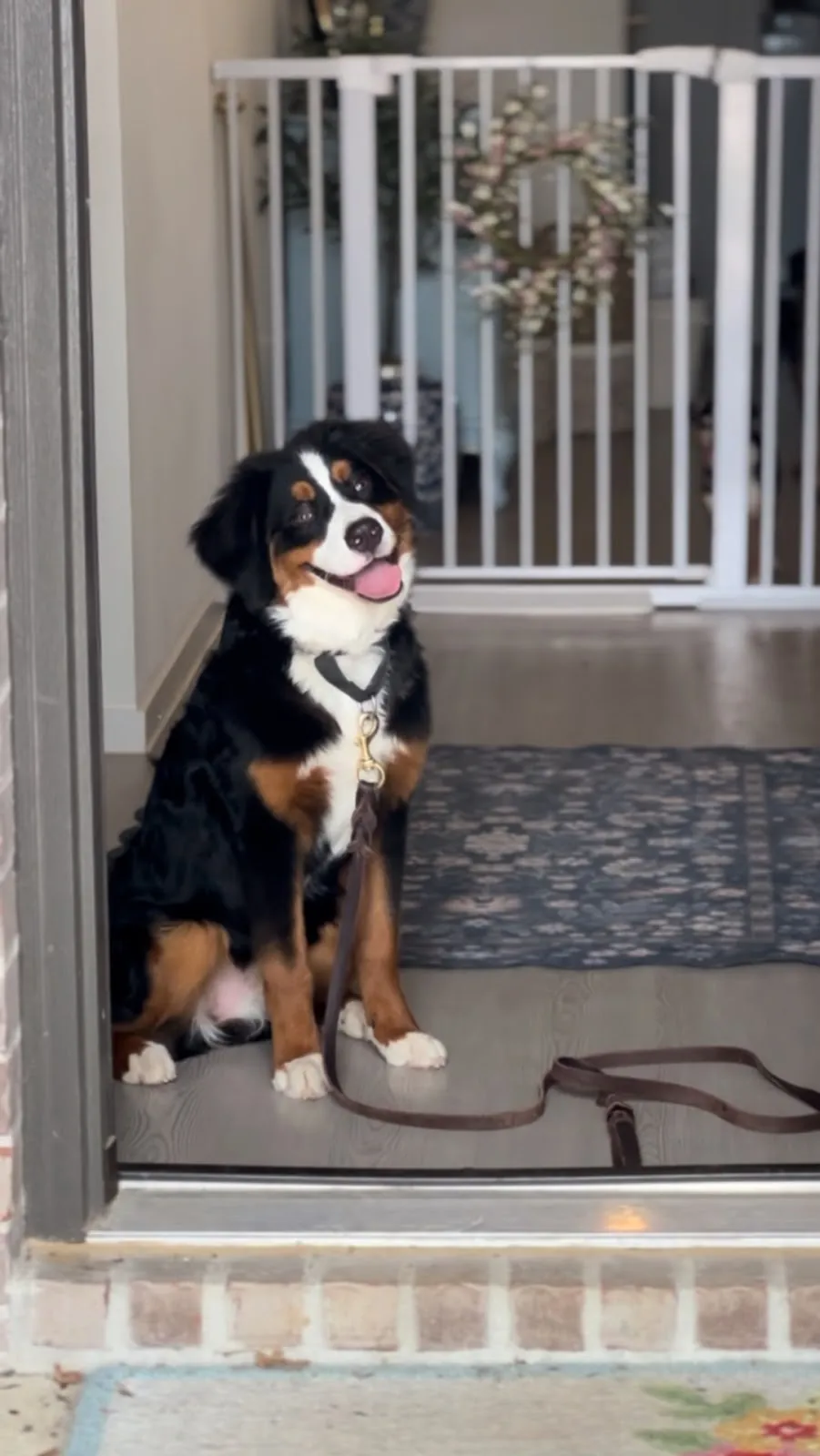
Most families come in through the garage, so the first contact happens in a narrow laundry room or kitchen doorway where the dog is already wound up. Put a place bed a few steps from that door, hang a leash on a hook inside it, and keep a few treats in a jar on a shelf. If the dog is crated while you are out, the crate is your starting point instead: you decide when the door opens.
The Houston caveat is the afternoon. From May to September, the house may be cool but the dog has often been waiting hours for a potty trip, and a full bladder makes it frantic. Take it out first, to shade, and test the patio with your hand before you ask it to stand there. Greet afterwards, not before.
- A place bed near the door you actually use
- A leash on a hook by that door
- Treats in a jar within reach
- The crate door opened only when the dog is calm
- Shade and a potty spot for the first trip out
The steps
Walk in, ignore, go out, then greet.
For the first two weeks, every arrival follows the same pattern, whether you were gone for eight hours or eight minutes. The dog is learning that the door opening predicts a calm routine, not a party. Consistency matters more than any single perfect return. Tape the steps inside the garage door for the first week, so every family member and the dog walker follow the same order.
Walk in without speaking or making eye contact. Put down your keys and bags as if the dog were not there.
If the dog is crated, wait at the crate until it is quiet, then open the door without fuss.
Clip on the leash and go straight outside to the potty spot. Stand still, pay the potty, walk back in.
Now ask for a sit or send the dog to its place bed. When it holds for a few seconds, give a calm greeting at its level.
If it jumps or spins, stand up straight and turn away, then try again once four paws are down.
Run fake arrivals: step out for thirty seconds, come back in, follow the same steps. Do five a day for a week.
Once the dog knows the routine, meet a jump with a calm leash guide back to place and pay the settle.
When it is not working
Three reasons the welcome stays wild.
The first is a family split. If one person comes in shouting hello and rolling on the floor, the dog learns that any arrival might be a party and keeps checking. Agree on the routine together. The second is skipping the potty trip; a dog with a full bladder after a long day is uncomfortable and cannot settle, however good the training is.
The third is excitement that is really anxiety. A dog that is frantic at every return, has chewed the door frame or has had accidents while you were out may be struggling with being alone, and the arrival is only the end of that story. Record the next absence on a camera, and if the video shows panic, the plan starts with the time alone rather than the door.
- One family member still throwing a party
- No potty trip before the greeting
- Anxiety mistaken for excitement
- Greeting a jumping dog because it feels rude not to
Puppies, excited peeing and older dogs
Some homecoming habits need a gentler version.
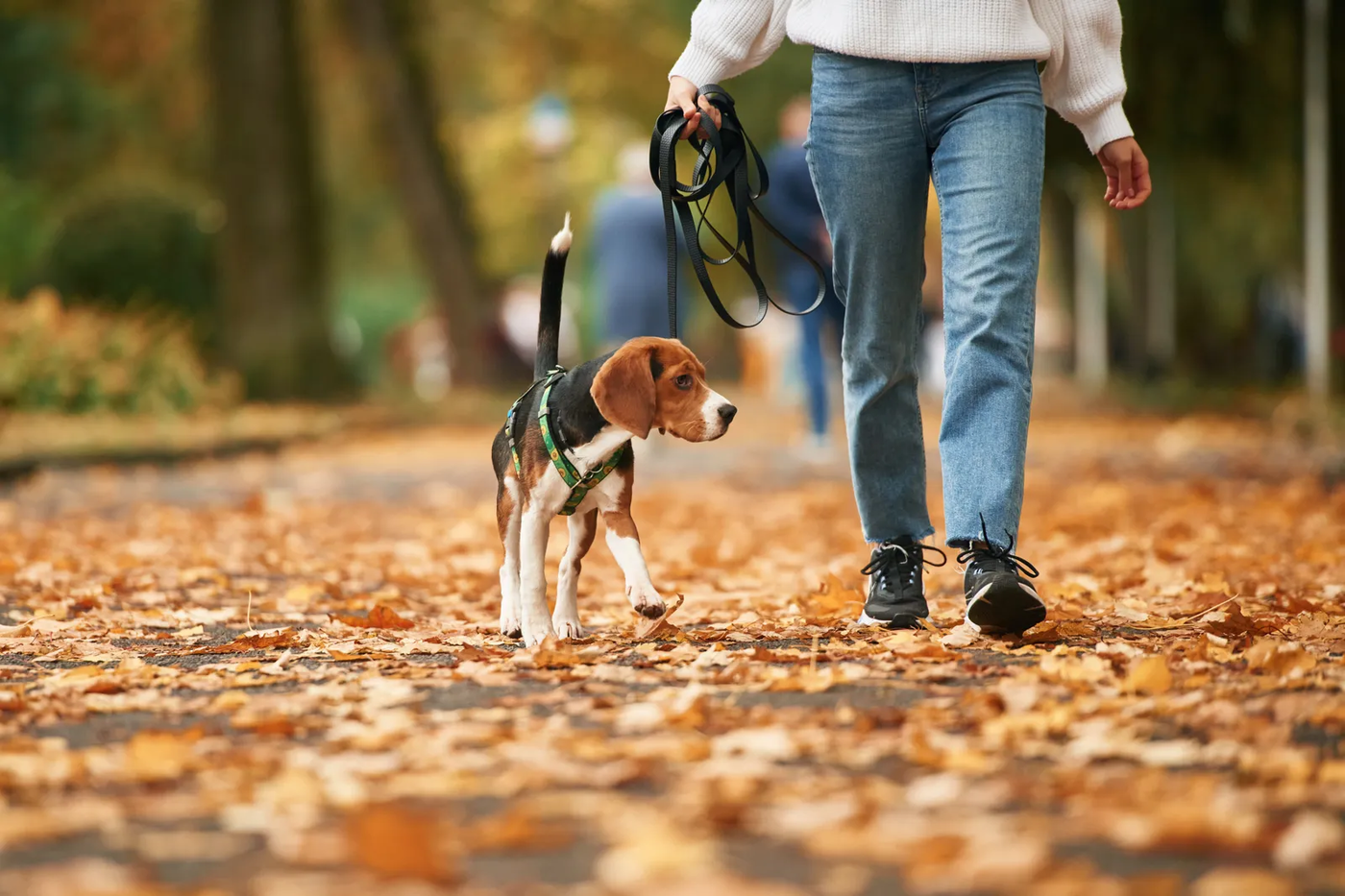
Young puppies and some submissive dogs dribble urine when greeted. Keep arrivals even quieter, greet outdoors on grass, crouch sideways rather than leaning over, and avoid reaching over the head. Most puppies grow out of it with calm greetings, though a dog that leaks at other times should see the veterinarian. For older dogs, keep the routine but let them take their time getting up.
Big dogs deserve special care. A seventy-pound Lab that launches at the door is a real risk for a grandparent or a toddler, so keep the leash and place routine in force until calm is automatic. Ask visiting family to follow the same arrival steps as everyone else, even if they only come on Sundays.
When to get help
Gold teaches door boundaries, place and calm greetings.
Gold Board & Train, two weeks at $2,500, includes place and sit with duration, door boundaries, jumping and impulse control, and the go-home session shows your family the arrival routine in person. If the frantic welcome is tied to trouble being alone, Platinum at $3,750 adds behavior modification time and unlimited private lessons.
For a younger dog with a newer habit, a private lesson at $160 in Cypress or $220 in your home is usually enough. Our trainer watches a real arrival, fixes the timing and shows each family member where to stand. Tell our team about your arrivals on the free consultation call.
The programs
Programs that calm the front door.
Gold for door boundaries and calm greetings, Platinum when the welcome comes with anxiety, private lessons for a young dog.


Asked and answered
Questions people ask about this.
Should I ignore my dog when I come home?
For the first few minutes, yes. Walk in calmly, put your things down and take the dog out to potty. Then greet it warmly once it is calm. Ignoring the dog is not cold; it is teaching that your return is ordinary, which helps with both excitement and anxiety.
Why does my dog go crazy when I come home?
Because your return is the biggest event of its day, and the excitement has usually been rewarded with attention. A full bladder after hours inside adds to it. A calm routine, a potty trip first and a greeting only for four paws down change it within a week or two.
My puppy pees when I come home. What should I do?
Keep arrivals very quiet, greet outdoors on grass, crouch sideways instead of leaning over, and avoid reaching over its head. Most puppies outgrow excited peeing with calm greetings. If your puppy leaks at other times too, see the veterinarian.
Is my dog's excitement at the door separation anxiety?
Not usually. Excitement settles in a minute or two with a calm routine. Anxiety tends to show before and while you are gone: destruction at the door, accidents, drooling, barking for a long time. A camera on your next absence will tell you which.
How long does it take to calm down homecomings?
Most dogs improve within one to two weeks of a consistent routine followed by everyone in the house. Fake arrivals several times a day speed it up. Dogs that have been rewarded for wild greetings for years may need a little longer.
Keep reading
Free consultation · 10% off this fall
Come home to a calm dog.
Tell our team what your dog does when the door opens. The free consultation is a direct call, and we will suggest a lesson or Gold.