
Problem behaviors
How to stop a dog from whining
Whining is the sound of a dog asking for something, and the question our trainers ask is what it has been getting. The answer sorts the whine into a need, a habit, anxiety or pain, and each one has a different fix.
Last reviewed September 11, 2026 · by the Best Dog University Team
Why it happens
A need, a habit, anxiety or pain, and the timing tells you which.
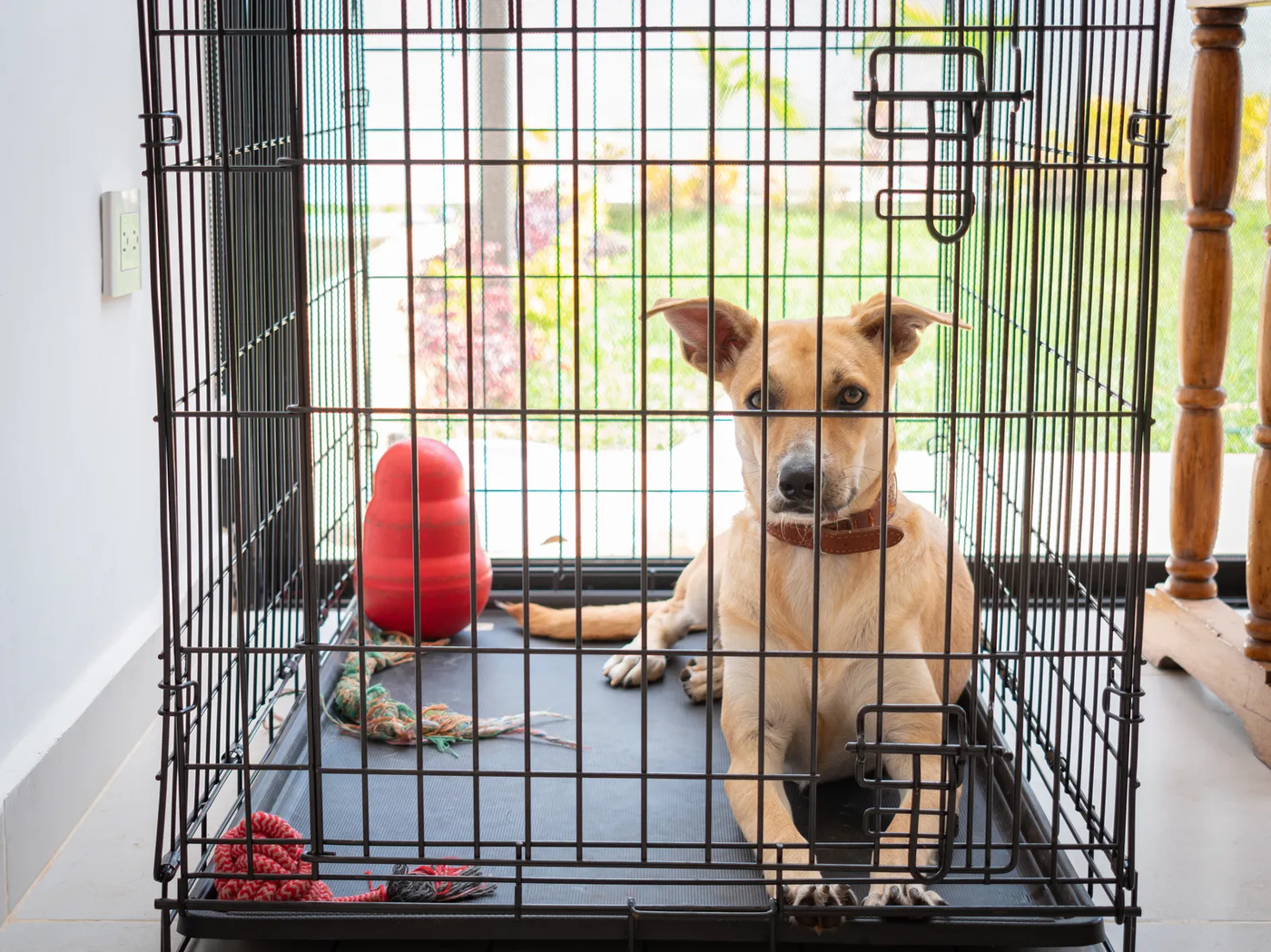
A dog whines at the back door at the time it usually goes out, at the bowl at dinner time and in the crate when its bladder is full, and those are needs, met by a schedule that gets ahead of the whine. A dog whines at the person on the couch, at the laptop, at the dinner table and in the car, and gets looked at, spoken to, petted or let out, and that is a habit, built one payment at a time. A dog whines while pacing, panting, trembling or drooling, in storms, when left, or in the car, and that is anxiety, which no amount of ignoring fixes. And a dog that begins whining with no pattern, or an older dog that whines at night or when it lies down, may be in pain. The schedule handles the first, silence the second, a plan the third and the vet the fourth.
- A need: predictable, at the door, the bowl, the crate
- A habit: at you, and it has been paid
- Anxiety: with pacing, panting, trembling
- Pain: new, patternless, or an older dog at night
The method
Six steps for the learned whine, which is most of them.
Rule out pain with a veterinary visit if the whining is new or the dog is older, and rule out anxiety with a camera if it happens when you are gone. Then run the plan for the habit.
Get ahead of the real needs: out, fed, watered and exercised on a schedule the dog can predict, so the whine has no job
The whine gets nothing: no eye contact, no voice, no touch, no door, for as long as it lasts; the first days are the loudest
Pay the silence: the instant the dog is quiet for a few seconds, mark it and give it what it wanted, or a treat, and grow the quiet before the pay
Give the dog a job in the moments it whines most: place with a chew during dinner, a puzzle during the work call, a structured walk before the car
Teach a quiet cue by day, paired with the pay for silence, so there is a word for it later
Hold the line for two weeks with everyone in the house, because one person who gives in teaches the dog to whine longer
The mistakes
Giving in on the loud day, scolding, ignoring a need, and ignoring anxiety.
The whine gets louder before it stops, on about day three, and the family that gives in on the loud day has taught the dog that loud works, which is worse than where they started. Scolding is attention and pays the whine. Ignoring a real need, a full bladder or a dog that has not been out since morning, is unfair and teaches nothing; the schedule comes first. And ignoring anxiety, a dog that whines while trembling in a storm or pacing when left, does not extinguish anything, because the dog is not asking for attention; it is frightened, and the fear has to be worked. A camera and a veterinary visit sort the last two before the silence plan is applied to the wrong dog.
Puppies whine in the crate in their first week and that is covered on its own page; the method is the same, with the bedroom and a trip out for a real need.
- The loud day is day three; hold the line
- Scolding is attention
- Meet the need first
- Anxiety is not extinguished by silence
- A camera and the vet before the silence plan
Proofing around Houston
The car on 290, the storm, and a hot afternoon indoors with nothing to do.
Houston whining has three local flavors: the car, where a dog that whines for the whole drive up 290 is usually anxious or car sick and needs the car anxiety guide rather than silence; the storm, where a whining dog in March is afraid and needs the den and the storm plan; and the summer afternoon, where a dog stuck indoors from noon to dusk with nothing to do whines out of boredom, and a job, a chew on place, a search for kibble, a training session in the air conditioning, is the fix. Our trainers see all three in the training home and the routine handles the last one; the first two are anxiety pages.
- The car: anxiety or sickness, not a habit
- The storm: the den and the plan
- The summer afternoon: a job indoors
- The routine handles boredom
When to call
Anxiety, pain, or a whine that has outlasted a fortnight of silence.
A dog that whines with pacing, trembling or drooling is anxious and the separation, storm or car pages on this site are the method, with a Platinum stay at $3,750 for the dog whose anxiety needs daily structure and lessons afterwards. A dog that has started whining for no reason, or an older dog that whines at night, goes to the vet before anything else. A learned whine that has outlasted two clean weeks of silence usually means someone in the house is paying it, and an in-home lesson at $220 finds who. A Gold stay at $2,500 builds the routine, place and the off switch that make a whining dog quiet, and the calm-in-the-house guide is the companion to this one.
The programs
Programs for a dog that whines.
Gold for the routine and the off switch, lessons at home to find who is paying the whine, Platinum for the anxious dog.


Asked and answered
Questions people ask about this.
Why does my dog whine at me all the time?
Because it works: a look, a word, a pat or a door has followed the whine often enough to make it a habit. Meet the real needs on a schedule, give the whine nothing, pay the silence, and give the dog a job in the moments it whines most. It fades within a week or two if nobody gives in.
Should I ignore my dog when it whines?
Ignore the learned whine, yes, completely. Do not ignore a full bladder, a dog that has not been out, or a dog that whines while pacing, trembling or drooling, which is anxiety and needs a plan. A schedule, a camera and a vet visit sort which whine you have.
Why did my older dog start whining?
New whining in an older dog, especially at night or when lying down, is often pain, arthritis or something else, and the vet comes first. Hearing and vision changes and confusion can also produce it. Rule out the medical side before treating it as a habit.
My dog whines in the car the whole way. What do I do?
That is usually anxiety or car sickness rather than attention-seeking, and silence does not fix it. The car anxiety guide on this site covers the method: the car as a good place in the driveway first, short drives to good places, a crate or a harness, and a veterinary conversation about sickness.
Keep reading
Free consultation · 10% off this fall
Sort the whine, then answer the right one.
Tell our team when your dog whines and what it gets. The free phone consultation is a direct call.