
The two-mode walk
How to let a dog sniff on walks without pulling: the two-mode walk
Sniffing is how a dog reads the neighborhood, and a walk with none of it is a poorer walk. The problem is not the sniffing. It is a dog that decides, every ten feet, where the walk goes next. The two-mode walk gives the dog its sniffs and gives you your arm back.
Last reviewed September 29, 2026 · by the Best Dog University Team
Before you start
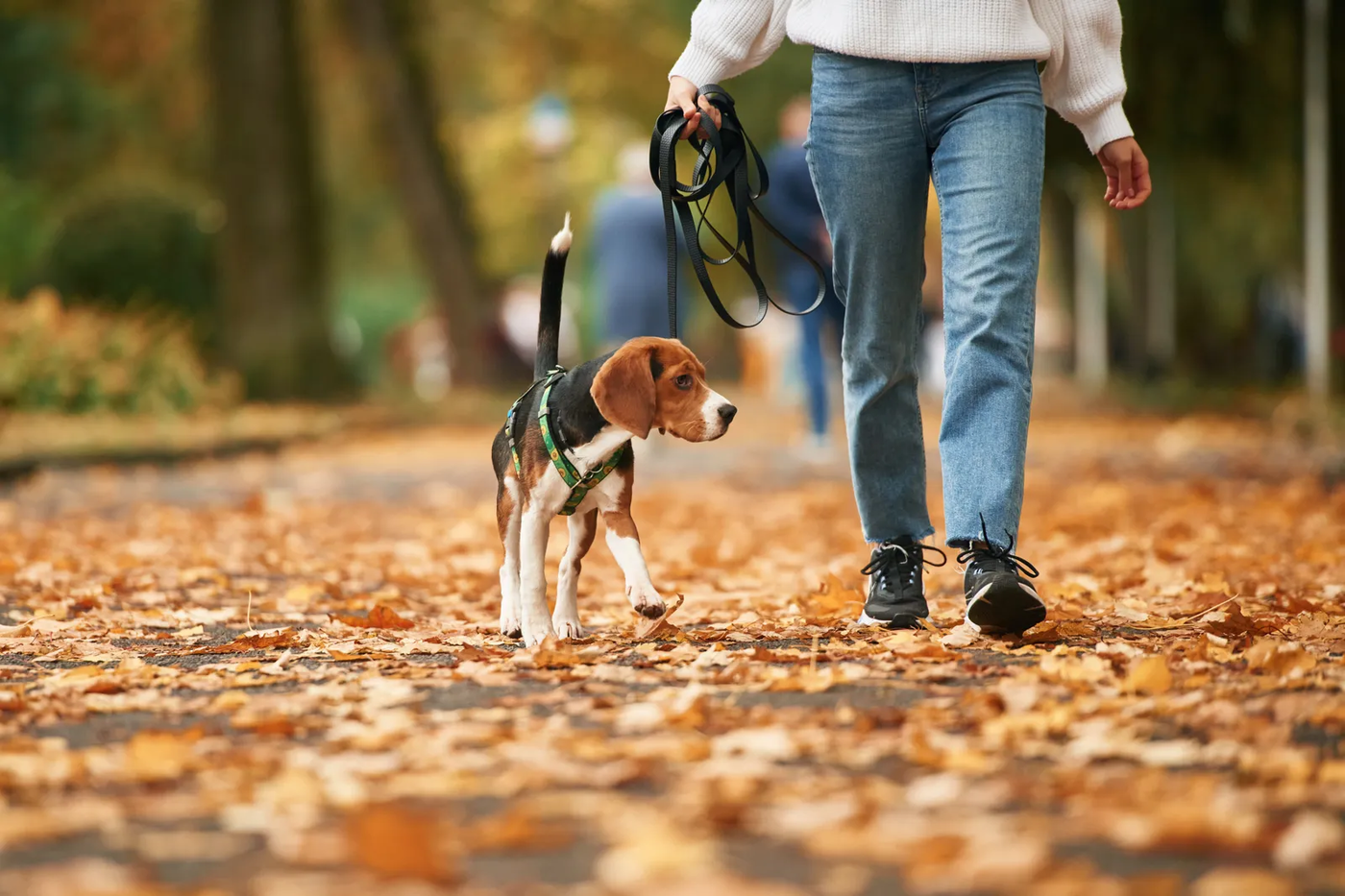
Before you start: two cues, one leash length, and a route that suits the season.
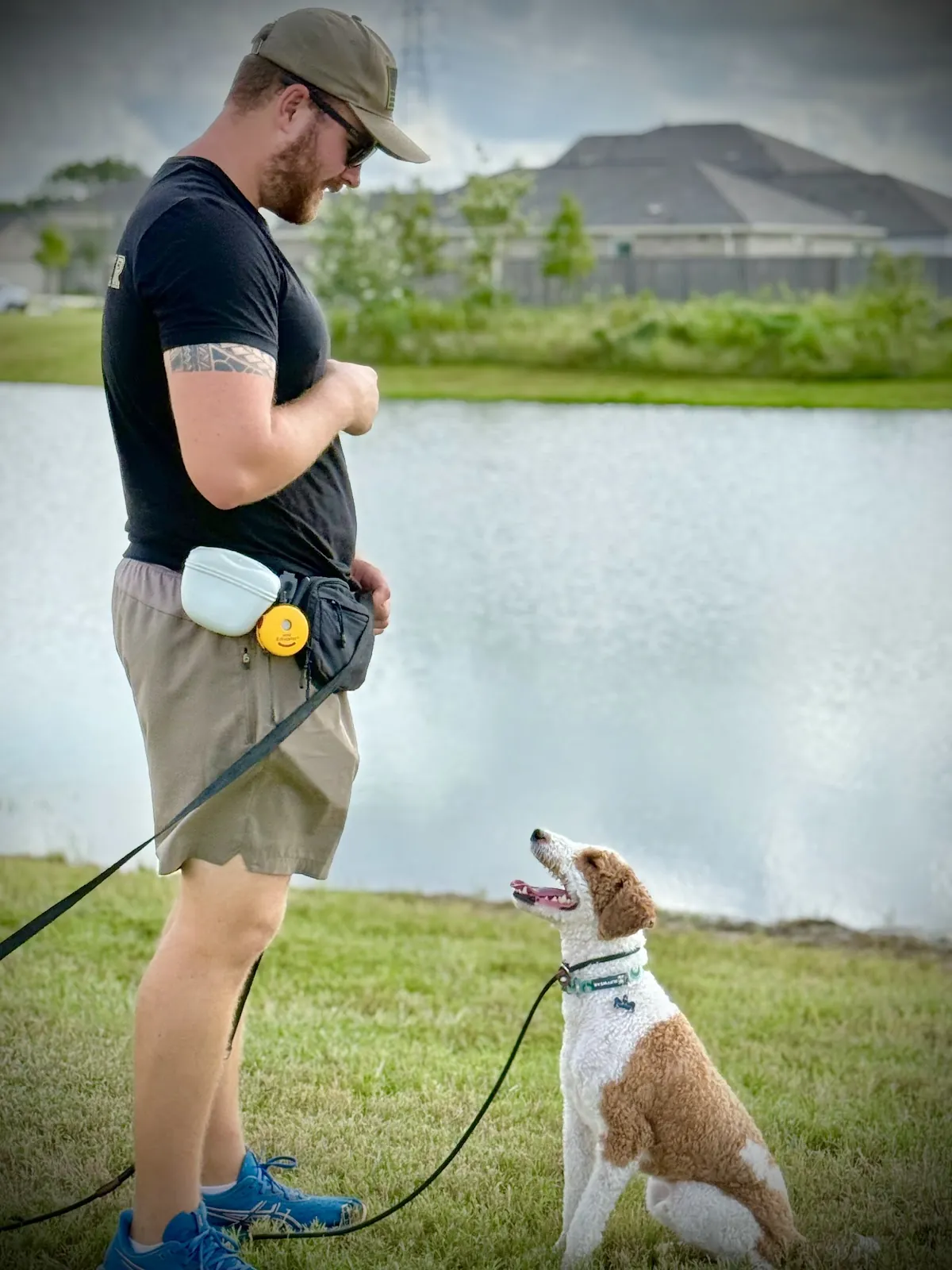
You need a marker word, a with-me cue for walking at your side, and a release such as go sniff that tells the dog it may explore. Use a standard six-foot leash, not a retractable one, because a retractable leash pays every pull with more line. Carry small treats for the with-me stretches. If your dog cannot yet walk a few steps beside you in the driveway, start there; our guide to leash pulling covers that foundation.
The Houston caveat is where noses go. In summer, walk at dawn or after dark and choose sniff spots in the shade, since the grass strip beside a sidewalk at noon can be nearly as hot as the concrete. Fire ant mounds sit along curbs and in park lawns, so steer go-sniff breaks away from them. Storm drains and bayou banks carry wildlife smells, and sometimes the wildlife itself, which makes them poor places to hand the dog the whole leash.
- A with-me cue and a go-sniff release
- A six-foot leash, never a retractable
- Shaded sniff spots at the cooler hours
- No sniff breaks on fire ant mounds
The steps
Six steps to a walk with two gears.
Teach this on your own street first. Early walks can be ten or fifteen minutes, with most of the time in go-sniff and short with-me stretches, because the point is to teach the switch rather than to march. As the switch gets clean, the with-me stretches grow in busy places and the sniff breaks move to the spots where sniffing is safe and welcome.
Start in with-me: walk ten or twenty steps with the dog at your side on a loose leash, marking and paying often at your leg
Stop, say your release, and walk the dog toward a good smell, letting it sniff for thirty seconds on a loose leash
Say your with-me cue, take a step away, and pay the dog as it arrives back at your side, then walk on
Whenever the dog pulls toward a smell in either mode, stand still, wait for the leash to go slack, then release it to that same smell
Alternate the modes every couple of minutes, lengthening the with-me stretches past distractions and the sniff breaks on quiet grass
Let the dog earn a longer sniff break near the end of the walk, and finish with a short with-me stretch home
When it is not working
Pulling in sniff mode, ignoring the call back, and a dog that never gets to sniff.
A dog that pulls in sniff mode has been paid for pulling on every walk it remembers, so the stop-and-wait must be completely consistent: tension means the walk stops, slack means the smell. It may take a few walks before the dog notices the pattern. A dog that ignores the with-me cue while its nose is down needs an easier ask. Call it back after five seconds of sniffing rather than a minute, pay well, and send it straight back to sniff as a second reward.
The third reason is less obvious. A dog kept at heel for the whole walk, with no sniffing at all, will grab every chance with its whole body, and that looks exactly like pulling. Build real sniff breaks into every walk and the with-me stretches get easier. A dog that lunges at other dogs or people, rather than at smells, has a reactivity problem, and our reactive dog guide is the one to read.
- Pulling to sniff: stand still, wait for slack
- Ignoring the cue: call back sooner and pay well
- No sniffing at all makes pulling worse
- Lunging at dogs or people is a different problem
When to get help
When the walk needs a trainer, and the program that starts with the leash.
Loose leash walking is the heart of our shortest program. The Silver Foundation Program, one week at $1,500, builds loose leash walking, door boundaries and basic structure, and ends with a go-home session where the family learns to run the walk themselves. The Gold Board & Train, two weeks at $2,500, adds sit and place stays, jumping, pulling and impulse control, with one additional lesson after the go-home session and lifelong support.
A dog that pulls only in one place, toward the pond or past one particular yard, is often a lesson job. A private lesson at $220 in your home, or $160 in Cypress, puts a trainer on your actual route. Our answer on what a structured walk is explains how the with-me mode fits into a wider routine. On the free phone consultation, our team will ask what your walks look like now.
The programs
Programs built on a loose leash.
Silver for loose leash walking and structure, Gold when stays and impulse control are needed too, a lesson on your own route.


Asked and answered
Questions people ask about this.
Is sniffing on walks good for my dog?
Yes. Sniffing is mental exercise, and a walk with sniff breaks usually tires a dog more than a march of the same length. The difference is that you decide when sniffing starts and ends, with a release and a with-me cue, so the dog is not towing you from bush to bush.
How much sniffing should a walk include?
There is no fixed ratio. Many families settle on a few minutes of with-me past the busy stretches and generous sniff breaks on quiet grass, with the longest break near the end. On very hot days, keep the whole walk short and let the sniffing happen in the shade.
What is the difference between heel and with-me?
A formal heel is a precise position at your left leg, used past distractions or in crowds. A with-me cue can be looser: beside you, on a slack leash, on either side. Many dogs learn both, the heel for busy places and with-me for the neighborhood loop.
Will sniff breaks make my dog pull more?
Not if the leash rule stays the same in both modes. Sniffing only ever follows slack, so pulling toward a smell stops the walk and slack earns the smell. Dogs pick up that rule quickly when every person who walks them keeps it.
Sources
Keep reading
Free consultation · 10% off this fall
Give the nose its turn.
Tell our team what your walks look like and where the pulling starts. The free phone consultation is a direct call, at no cost.