
Puppy meets adult
How to introduce a puppy to a resident dog
Most adult dogs are more patient with a puppy than with an adult stranger, but patience runs out. A puppy who hangs off ears and steals chews all day teaches the adult that puppies are a problem. The set-up below protects that patience.
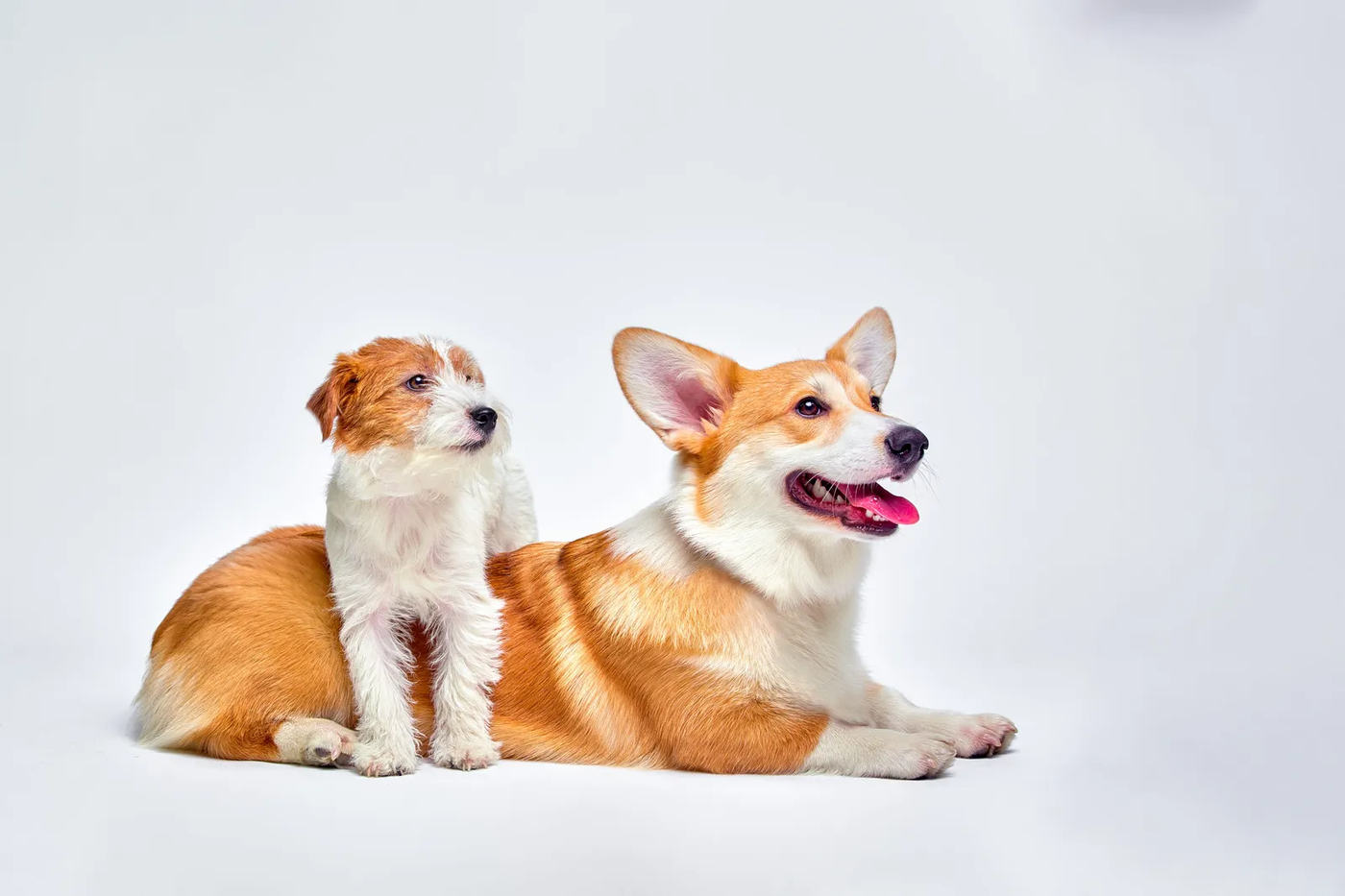
Where to meet
Meet outside, but somewhere unknown dogs have not been.
A young puppy is still finishing its vaccinations, so public parks, pet store floors and busy sidewalks are out for now. Ask your vet when your puppy can safely walk where other dogs go. Your own clean backyard, or a friend's yard with no dog traffic, is the usual choice. Make sure your adult dog is current on its own vaccines and parasite prevention too.
Walk your adult dog first so it arrives a little tired. Remove toys, bones and food bowls from the yard, since those are what an adult dog is most likely to guard.
- Resident dog current on vaccines
- A clean yard with no unknown dog traffic
- Toys, chews and bowls picked up
- Adult dog walked first
The method
Run the first introductions in this order.
Start with the puppy contained and the adult dog free to choose. Most of the early relationship happens through a pen panel, which is exactly what you want.
- Carry the puppy out and let your adult dog sniff its back end for a few seconds while you hold the puppy, then set it down and let them sniff briefly.
- Take the puppy inside to a pen or crate in a room the family uses. Let the adult dog approach, sniff and walk away whenever it likes.
- Hold floor sessions of three to five minutes with the puppy on a light drag line, so you can guide it away without grabbing.
- Interrupt pestering early: jumping at the face, biting ears or tail, or following an adult that is walking away. Lift the puppy away or redirect to a toy.
- Give chews and meals in separate spaces, and never leave both with a high-value bone.
- Lengthen sessions only when your adult dog chooses to stay and engage.
What a normal correction looks like
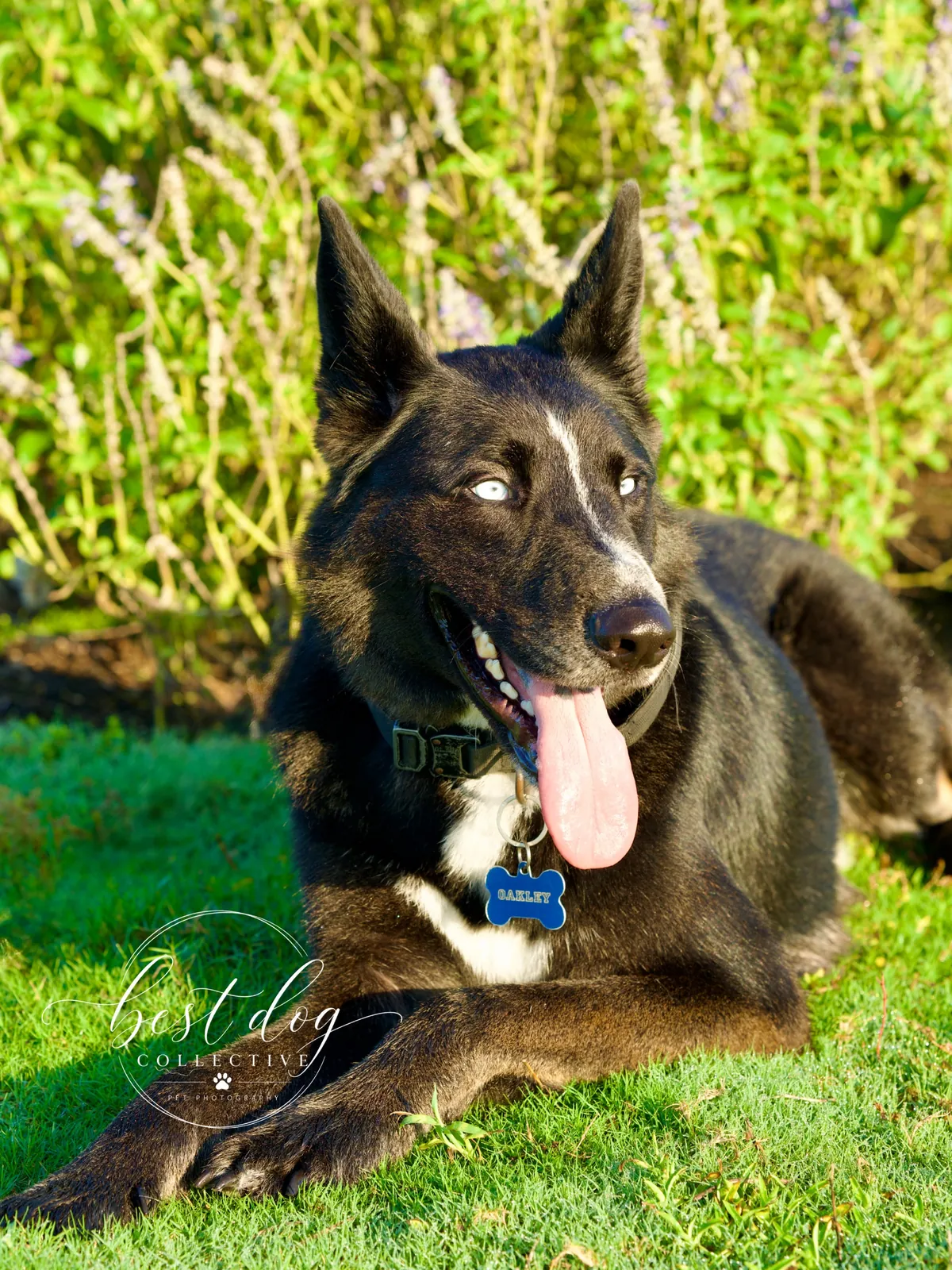
A growl or a quick air snap is normal adult behavior; a pinned or injured puppy is not.
Adult dogs teach puppies manners with a stare, a lip lift, a growl or an air snap that does not connect. The puppy usually yelps dramatically, backs off and then comes back more politely. That is healthy, and you should not scold your adult dog for it. Instead, give the adult dog fewer reasons to need it.
Step in hard when the correction is out of proportion: pinning the puppy, repeated snapping after the puppy has backed off, or any bite that breaks skin. If your adult dog has a history of guarding food or toys, or has bitten another dog, keep the two fully separated and get an in-person trainer to see them together before going further.
Keep the adult dog's life the same
The resident dog should lose nothing because a puppy arrived.
Keep your adult dog's walks, meal times and couch spot exactly as they were. Give it at least one daily stretch of puppy-free time with you. A gated room or a high bed where the puppy cannot follow is the single most useful thing in the house for the first few months.
Exercise and train the puppy separately too. A tired puppy is much easier for an adult dog to live with, and short training sessions alone build the puppy's attention on you rather than on the older dog.
- Same walks and feeding times for the adult dog
- A puppy-free retreat
- Separate training and play for the puppy
- Daily one-on-one time with each dog
Tailored help
If your adult dog is unsure, get a plan before the puppy comes home.
A $99 virtual session by phone or Zoom lets our head trainer look at your adult dog's history and your home layout and build the pen, schedule and interruption plan around them. It suits families anywhere in the US. Families in the Greater Houston area can also choose in-person puppy training.
The programs
Help with the puppy and the adult dog.
A $99 virtual session by phone or Zoom anywhere in the US, or in-person puppy training for families near Houston.
$99per session
Phone or Zoom, anywhere in the US
Virtual consultation with our head trainer
One-on-one guidance for behavior, a new dog, introductions or a new puppy.
My adult dog ignores the puppy. Is that a problem?
Usually not. Ignoring is a polite way of saying not now, and many adult dogs warm up over weeks once the puppy calms down. Do not push them together. Reward your adult dog for calm behavior near the puppy and let the relationship develop at the adult dog's speed.
How long before the puppy and my dog can be left alone together?
Not until the puppy is reliably respecting the adult dog's signals and both have spent many weeks of calm supervised time together, which is often months. Until then, crate or pen the puppy, or separate them with gates, whenever no adult is watching. Leaving them together too soon is when injuries happen.
Should I let them play rough?
Some wrestling is normal, but good play has pauses, role reversals and both dogs coming back for more. Stop it when the puppy is relentless, the adult dog tries to leave, or the noise and speed keep rising. Call the puppy out for a break of a minute or two, then decide whether to restart.
Can the puppy and my adult dog share a crate or bed?
Not at first. Each dog should have its own crate and its own bed. Sharing removes the adult dog's escape route and can trigger guarding. If they later choose to sleep together, that is fine, but keep both spaces available for each dog.
My dog guards toys from the new puppy. What should I do?
Pick up toys and chews whenever the two dogs share a space, and give them only when the dogs are separated. Guarding is a common reason for fights between dogs. If your adult dog stiffens, growls or snaps over items, a trainer should help you plan the next steps.
Virtual session, $99
Bringing a puppy into a home with an adult dog?
Book a $99 virtual session by phone or Zoom and our team will help you set up the pen, the schedule and the interruption plan that protect your adult dog.