
E-collar conditioning, done carefully
How to condition a dog to an e-collar: the first two weeks, step by step
Our trainers condition the Mini-Educator inside the six-week VIP program, and the first two weeks with the collar look like this. It matches our answer on whether e-collars are safe, and it is written so an owner can see what careful looks like before deciding anything.
Last reviewed September 29, 2026 · by the Best Dog University Team
Before you start
Before you start: solid commands, a collar with fine low levels, and a reason that is not fear.
The conditioning starts where the teaching ends. The dog should already come, heel and go to place reliably on a leash and on a fifteen to thirty foot long line, because the collar is going to mean those words at a distance, and it cannot mean a word the dog does not know. You need a collar with a fine range of very low levels, such as the Mini-Educator we use; cheap units with a few coarse settings are where the horror stories begin.
Be honest about the reason. The collar is for off-leash reliability on acreage, a lake trail or an open field, not for barking, jumping, pulling or reactivity, and never for a dog that is afraid. A frightened dog that feels a tap near the thing it fears becomes more afraid of it. In Houston the conditioning runs in the early morning from May to September, because an overheated dog is not learning and the ground has to pass the hand test first.
- Commands solid on leash and long line
- A collar with fine low levels
- Off-leash reliability, never fear or reactivity
- Summer sessions at dawn
The steps
The first two weeks with the collar, day by day.
Sessions run ten to fifteen minutes, once or twice a day, and they end on a success. Every tap is paired with a cue the dog already knows and followed by a reward, food or a game, so the tap always predicts something the dog can do and be paid for. If the dog looks confused or worried at any point, the level is too high or the step is too big, and you go back a day.
Days one to three: fit the collar snug and high so the contact points touch skin, and let the dog wear it switched off on walks and at meals so it means nothing yet
Day four: find the working level. Start at zero and raise it one step at a time while the dog is calm, stopping at the first small sign it notices, an ear flick, a head turn or a glance
Days four to seven: recall on a short leash. Say come, tap at the working level with the gentle leash cue it already knows, stop the tap the instant the dog turns to you, and pay at your feet
Days eight to ten: the same pairing on the long line at ten to thirty feet, then heel and place with the tap and the leash cue together
Days eleven and twelve: let the long line drag; give the spoken cue first, add the tap only if the dog does not respond, then pay
Days thirteen and fourteen: add mild distractions at a distance, a helper walking by, a ball on the grass, keeping the level as low as the dog needs
After week two: field trips and more distance in stages, with the long line back on in every new place before any real off-leash freedom
Fit and skin
The collar is snug for the session and off between sessions.
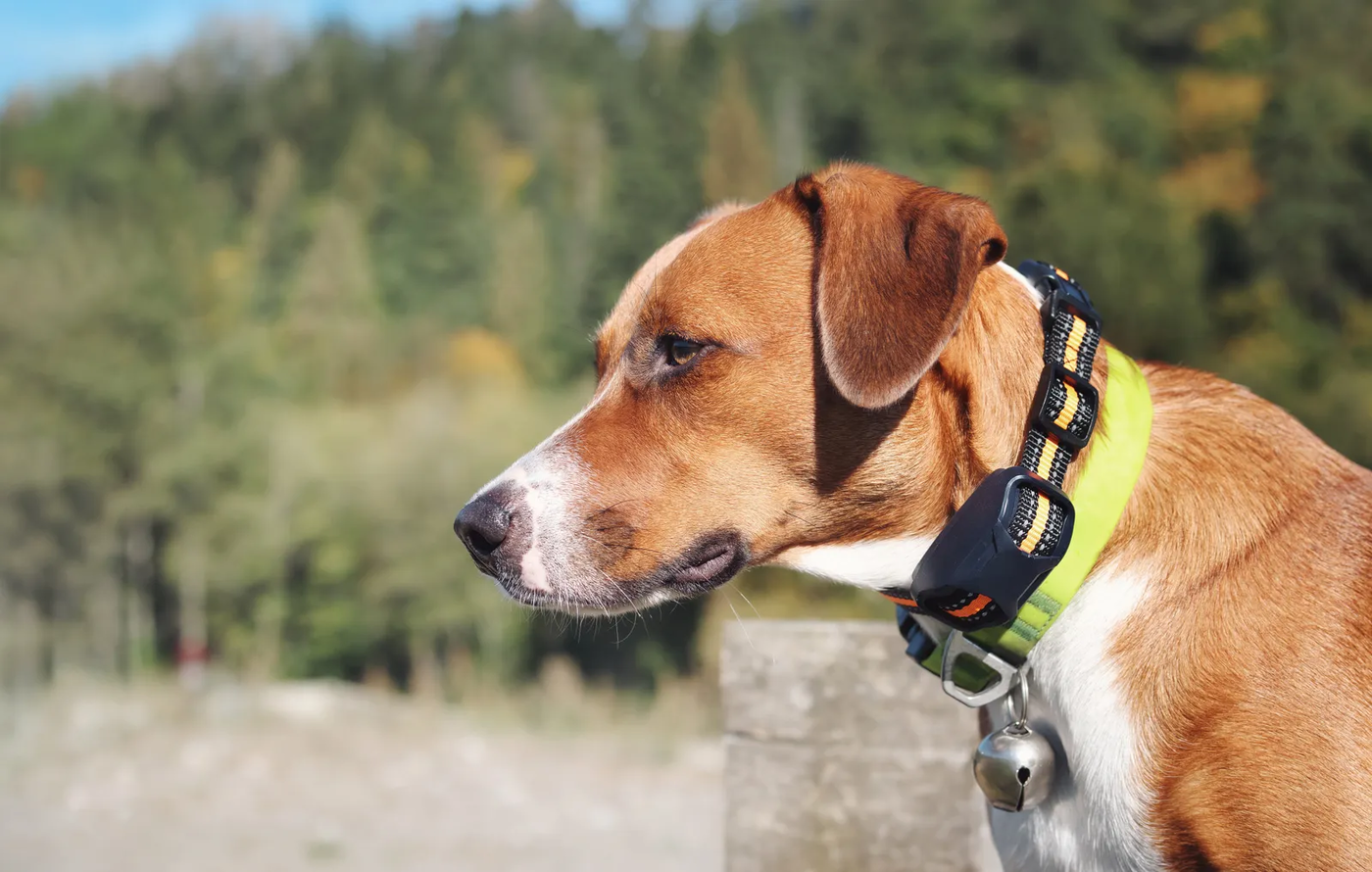
A collar that is too loose makes contact inconsistent, so the dog feels the tap some of the time and not the rest, which is confusing and unfair. Fit it snug and high with the contact points on skin, and check it at the start of each session. Then take it off. Contact points worn for hours on a damp Houston neck can irritate the skin with no stimulation at all, so the collar comes off afterwards, sits in a slightly different spot each day, and the neck is checked every evening.
- Snug and high, contact points on skin
- Off between sessions
- Moved a little each day
- Neck checked every evening
Troubleshooting
When it is not working: the level, the timing, or a command that was never solid.
Three things go wrong. The level is wrong: too low and the dog does not notice, too high and the dog startles, freezes or yelps, which means stop, drop the level and go back a day. The timing is wrong: a tap that lands a second late, or keeps going after the dog has turned, teaches nothing, so the tap ends the instant the dog responds. Or the command was never solid, and the dog is guessing.
The fix for the last one is to take the collar off and return to the leash and long line until the dog gets the command right without it. A dog that turns clingy, tucks its tail, avoids the collar or shows fear anywhere in this process is telling you the plan has gone wrong, and the collar work stops until a trainer has looked at it. That rule keeps the tool fair.
- Startle, freeze or yelp: too high
- Late taps teach nothing
- Guessing means the command is not solid
- Any sign of fear stops the collar work
When to get help
When to get help: the Mini-Educator comes with the VIP program and its handover.
The six-week VIP Service-Dog-Level Board & Train at $10,000 includes the Mini-Educator, weeks of foundation before it is fitted, the conditioning above, field trips, transport home and an in-home handover where you learn the fit, the level and the timing with a trainer beside you, plus unlimited in-home lessons. Most dogs never need a collar, and the three-week Platinum program at $3,750 does behavior work without one. If you already own a collar, a private lesson at $160 or $220 can check whether your dog is ready.
The programs
Programs where the collar fits, and where it does not.
VIP includes the Mini-Educator and its handover, Platinum does behavior work without a collar, and a private lesson checks a dog you are already working.


Asked and answered
Questions people ask about this.
What level should I start an e-collar at?
At zero, raised one step at a time until the dog shows the smallest sign of noticing, such as an ear flick or a glance. That is the working level, and on a good collar it is a level the dog can barely feel. The right level shifts with distraction, so check it every session.
How long does it take to condition a dog to an e-collar?
The first pairing with a known recall usually takes a few days, and the first two weeks move the tap from a short leash to a long line with mild distractions. Reliable off-leash work in new places takes longer, which is why the VIP program runs six weeks.
Can I use an e-collar to stop my dog barking at other dogs?
No. Barking and lunging at other dogs is usually fear or frustration, and a tap delivered near the other dog can make your dog more afraid of it. Reactivity is trained with structure, distance and reward, which is Platinum work. The collar is for off-leash reliability on a dog with a foundation.
Should my dog wear the e-collar all the time?
No. It goes on for training and off-leash outings and comes off afterwards, with the contact points moved a little each day and the neck checked. Many families keep it for the trail, the lake and the acreage and leave it off at home.
Is it safe to condition an e-collar myself?
It can be, with a good collar, a dog that already knows its commands, and someone who has shown you fit, level and timing in person. Most of the harm we see comes from owners who skipped one of those. If you are unsure, talk to our team before the collar goes on.
Keep reading
Free consultation · 10% off this fall
Foundation first, then the lowest level.
Tell our team what you want your dog to do off leash. The free phone consultation is a direct call with our trainers.