
Tools · Honest answer
Are e-collars safe for dogs? An honest answer
Ask ten people about e-collars and you get ten answers. Owners want a straight one. This page explains what the collar does, when it helps, when it hurts, and how our team uses it, so you can decide with facts instead of a comment thread.
Last reviewed September 10, 2026 · by the Best Dog University Team
Straight answer
Safety depends on the collar, the timing and the hands, not the category.
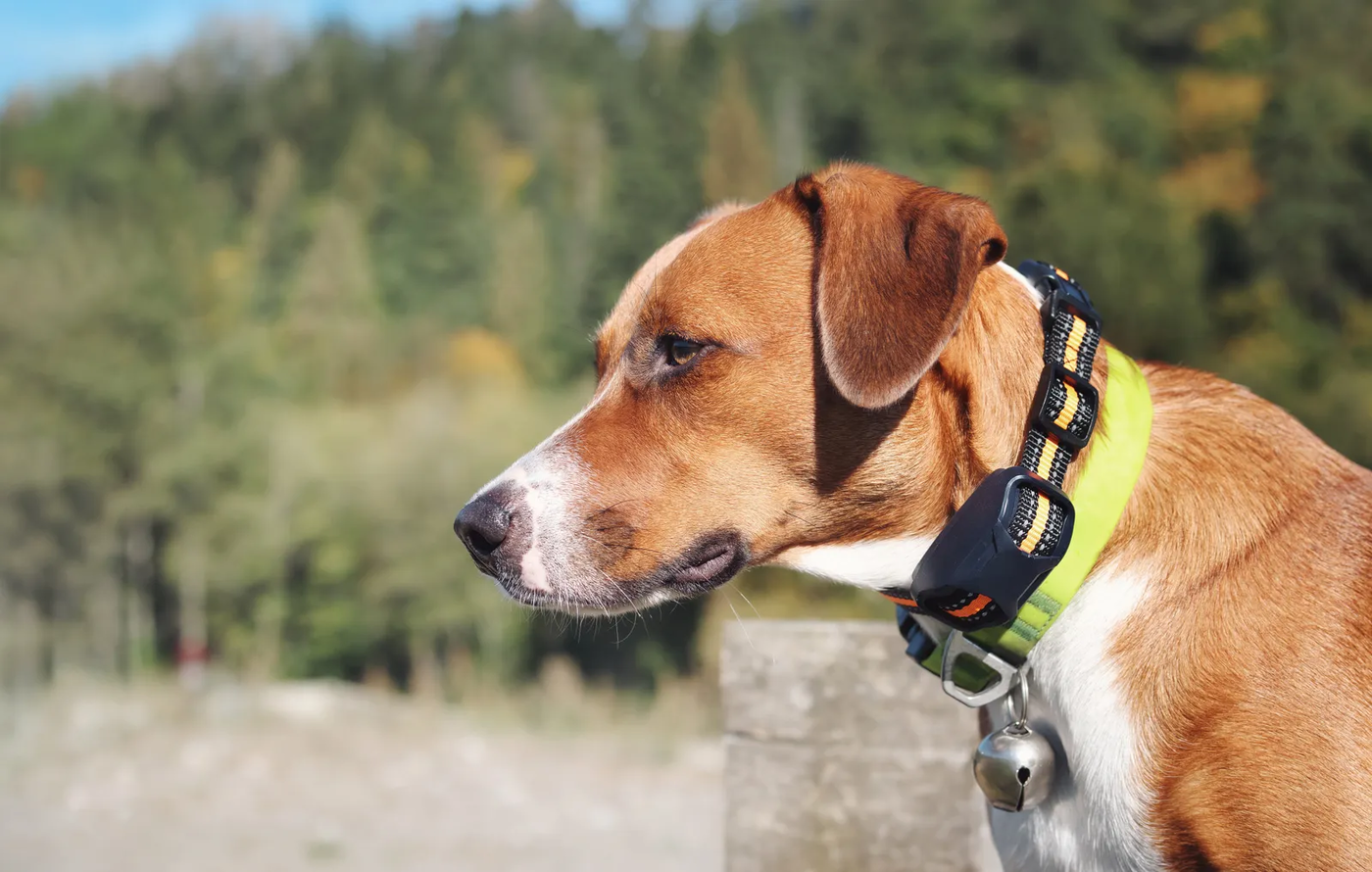
The word e-collar covers everything from a device with a fine range of very low levels to a cheap unit with a few harsh settings. That is why both sides of the argument sound right. Someone who watched a dog yelp under a bargain collar saw a real problem. Someone whose dog trots beside them on a lake trail with a Mini-Educator set so low a person can barely feel it also saw a real thing.
Best Dog University's position after 16 years is simple. Used the way our trainers use it, the collar is a communication tool: a tap that means the same thing as a light touch on the leash, felt at a distance. Used to punish, used before the dog understands the command, or used because the owner is angry, it causes exactly the fear and confusion people are worried about. The tool is neutral. The method is not.
What goes wrong
Nearly every e-collar problem comes from the same handful of mistakes.
Our trainers see dogs arrive already wearing a collar their owner bought online, and the pattern is almost always the same. The level is far too high because the box had no low settings. The dog was corrected for something he had never been taught. The collar became the only tool, so the dog learned to behave with it on and ignore everything with it off. And nobody ever showed the owner the timing, so the tap landed a second late and taught nothing.
- A cheap collar with coarse levels and no low end
- Stimulation used before the dog knows the command
- Corrections given in anger or a second too late
- The collar as the whole plan instead of one part of it
- Owners never taught how to fit, hold and time it

How we introduce it
The collar arrives last, after the command is solid.
In the VIP program the Mini-Educator is introduced only after weeks of leash work, when the dog already knows what heel, come and place mean and performs them reliably on a long line. At that point the collar is layered in at the lowest level the dog notices, paired with the same leash cue he already understands. The dog learns that the tap means the thing he already knows how to do. There is no guessing and no surprise.
Teach the command fully on a leash and long line first. Weeks, not days.
Fit the collar snug and high on the neck so the contact points touch skin, and have the dog wear it for a few days with nothing attached to it.
Find the working level: the lowest setting where the dog shows a small sign of noticing, an ear flick or a glance.
Pair the tap with the leash cue the dog already knows, and reward the response.
Fade the leash while the tap and the reward stay.
Add distance and distractions in stages, on field trips, before any real off-leash freedom.
Teach the owner every part of this in the in-home handover before the remote leaves the trainer's hand.
Side by side
The difference between a communication tool and a punishment device is in the details.
If you already own a collar or are considering one, the table below is a plain comparison of the two ways a collar gets used. Everything in the left column is what makes an e-collar safe. Everything in the right column is where the horror stories come from.
| Used well | Used badly |
|---|---|
| Reputable collar with fine, low levels | Bargain collar with a few coarse levels |
| Introduced after the dog knows the command | Used to teach a command the dog has never learned |
| Working level the dog barely notices | Level set by how the owner feels that day |
| Same meaning as a light leash touch | A shock used to stop or punish |
| One tool inside a balanced plan with rewards | The whole plan |
| Owner trained in fit, timing and levels | Owner handed a remote and a receipt |
Houston specifics
Heat, water and wildlife change how the collar is worn here.
Houston summers matter for collar fit. Contact points on a sweaty neck for eight hours can irritate skin regardless of stimulation, so the collar comes off between sessions, sits in a slightly different spot each day and is checked for redness every evening. Our team runs off-leash work in the early morning from May to September and treats the pavement hand test as a rule for the dog's pads before any field trip.
Off-leash freedom is also the reason recall must be rock solid before it is ever tested outdoors. Houston bayous and lake edges have alligators, and a dog who bolts toward the water in the wrong place is in real danger. Leash rules apply in Houston city parks and on most trails at the time of writing; the sources below have the current version. The collar's job is safety, not showing off in a place where the law says leash.
- Collar off between sessions, contact points moved daily, skin checked
- Off-leash work early morning in summer
- Recall proofed on a long line before any open space
- Leash laws respected; off-leash only where allowed

Do you need one
Most Houston dogs never need an e-collar at all.
It is worth saying plainly. Silver, Gold and Platinum dogs at Best Dog University are trained on a leash, a long line, a place bed, food and clear boundaries. The collar is included only in the six-week VIP program at $10,000, where the goal is complete off-leash reliability at a service-dog level. A dog who pulls, jumps and barks at the window does not need one, and we will say so on the phone.
If the free consultation ends with the collar recommended, it comes with the whole package: the weeks of foundation first, the introduction at low levels, the field trips, and the in-home handover where you learn it with a trainer beside you. That is the only way our team is comfortable sending a collar home.
The programs
Where the e-collar fits at Best Dog University.
Only the VIP program includes the Mini-Educator. Every other program builds control with a leash, a long line and structure.


Asked and answered
Questions people ask about this.
Does an e-collar hurt the dog?
At a proper working level, no. The dog notices a sensation similar to a light tap or a tingle, and the goal is the lowest level that gets attention. Pain comes from high levels, coarse collars and poor timing. Our trainers find the working level with the dog and teach you to check it every time you fit the collar.
Is it the same as a shock collar?
The hardware is related, and the word matters less than the use. A modern collar with a fine range of low levels, used as a cue the dog already understands, works nothing like a high-level shock used as punishment. The comparison table on this page shows the difference in practice.
Do I have to use an e-collar to train with Best Dog University?
No. Most programs at Best Dog University use no e-collar at all. The Mini-Educator is included only in the six-week VIP program, where off-leash reliability is the goal. If your dog's issues are leash manners, jumping, barking or reactivity, our team trains those without a collar and will tell you so on the free phone consultation.
Can I buy a collar and use it myself?
You can, but the mistakes that harm dogs almost all happen in the first week of unsupervised use. If you want the collar, get the foundation trained first, buy a reputable model with low levels, and have someone show you fit, working level and timing in person. That is what the VIP handover exists for.
Are e-collars legal in Houston?
At the time of writing, e-collars are legal to own and use in Texas, and this page is not legal advice. What Houston does regulate is where a dog must be leashed; city parks and most public spaces require a leash regardless of collar. Check BARC and the Houston Parks pages for the current rules.
Keep reading
Free consultation · 10% off this fall
Ask our team whether your dog needs one.
The free phone consultation is a straight conversation with our team. If a collar is not the right tool for your dog, they will say so and recommend what is.