
Balanced training, explained
Balanced dog training in Houston: what it means and how tools are used
The phrase gets used loosely. This page explains exactly what balanced means at Best Dog University, which dogs it is built for, the order in which any tool appears, and what balanced training is not.
Last reviewed September 10, 2026 · by the Best Dog University Team

What balanced means here
Balanced training is rewards plus boundaries, with both sides fair and consistent.
Every dog in our Cypress training home earns things: food, the release from place, the walk, the ride to the store. That is the reward side, and it does most of the work. The boundary side is a clear, consistent no to the behaviors that hurt the dog or the family, delivered at a level the dog understands and dropped the moment the dog chooses right. Neither side works alone for long.
Our founder and head trainer grew up on a farm training Quarter Horses with his stepfather, and that background shows in the method: pressure and release, timing, and the belief that an animal is happiest when the rules are clear. Sixteen years and more than 900 dogs later, the approach is the same in a Cypress living room as it was in a round pen.
- Rewards for the choice you want
- Fair, consistent boundaries for the choice you do not
- The tool chosen for the dog, never the other way around
- Clear rules, then freedom inside them
The order tools appear
No tool is introduced until the dog already knows the command without it.
The single most important rule here is sequence. A tool is never used to teach; it is used to make a known behavior reliable under distraction. So the order in every program is the same: teach with rewards on a leash, then proof, then add a tool only where the dog needs help holding the behavior in the real world.
A dog conditioned this way does not fear the tool. He hears it as information, the same way he hears his name. That is why our trainers will not rush the sequence for an owner in a hurry: a collar on a dog who does not yet understand the command teaches confusion, and confusion makes a dog shut down or push back.
Build the foundation with food, a leash and a place bed: sit, place, down, heel and recall, taught with rewards in the house and yard.
Proof the basics in low-distraction public places: the driveway, the street, a quiet corner of a pet store.
Fit the tool and condition it. In VIP, the Mini-Educator e-collar is set at the lowest level the dog notices, well below anything uncomfortable.
Pair the tool with a command the dog already knows, so the sensation means a word, not a surprise.
Layer in distractions: other dogs on the sidewalk, the lake, a hardware store aisle, always at a distance where the dog can succeed.
Fade the tool. The goal is a dog who works on a word and a look, with the collar as a backup, not a crutch.
Teach the owner at the go-home session or in-home handover, with the same timing and the same levels.
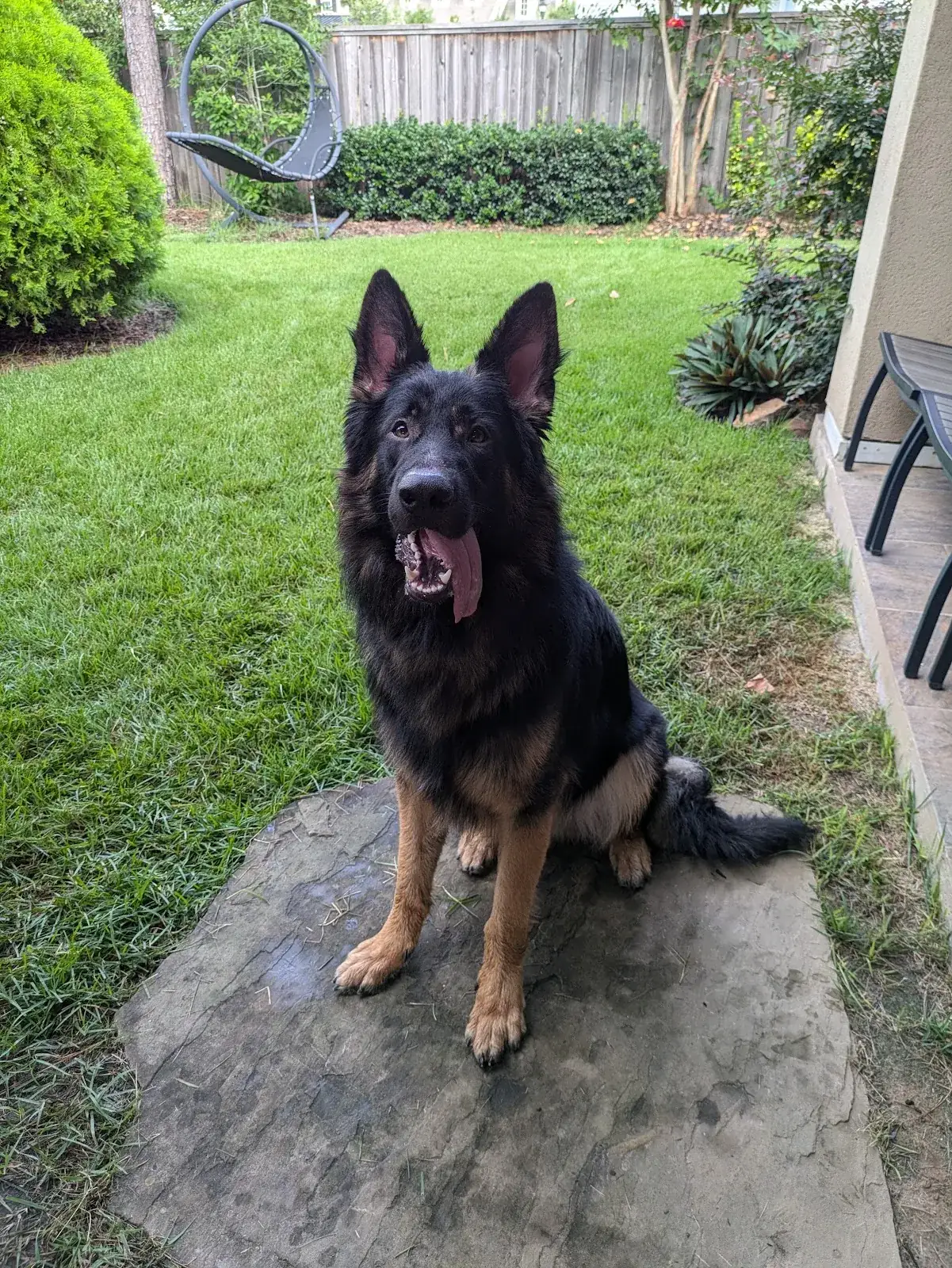
Tools in the toolbox
The right tool for the dog can be as simple as a leash and a long line.
Balanced does not mean every dog gets every tool. A soft, food-driven doodle from Fairfield may never need more than a leash, a place bed and consistent handling. A big cane corso who has decided the front window is his post needs firmer, clearer boundaries, and a Malinois with real drive needs an outlet before anything else. The tool is chosen after our trainers meet the dog, never before.
Whatever the tool, the standard is the same: it must be fair, the dog must understand it, and it must fade as the dog succeeds. A tool that has to stay on forever was introduced too early or used in place of teaching, and our team treats that as a sign to go back a step, not to turn a dial up.
| Tool | What it is for | When it appears | Where |
|---|---|---|---|
| Leash and collar | Teaching every command and the structured walk | Day one | Every program and private lessons |
| Place bed | Duration, calm and impulse control at home | Day one | Every program |
| Food and release | Rewarding the choice you want | Every session, never faded | Every program |
| Long line | Recall and off-leash foundations at the lake and in open fields | Once recall is started on a short leash | Programs with recall work |
| Mini-Educator e-collar | Off-leash reliability and recall under heavy distraction | After the foundation, conditioned at the lowest level | Included in VIP |

Who it is for
Balanced training is built for the dogs that reward-only work stalls on.
Our specialties are anxiety, reactivity and aggression, and those are the cases where balanced training earns its name. A leash-reactive dog needs to learn two things: that the other dog is not a threat, which rewards teach, and that lunging is not an option, which a boundary teaches. Remove either half and progress stops at the first real trigger on a Bridgeland sidewalk.
It is also for owners who need reliability in a city full of hazards. Houston bayous and lakes hold alligators, and a dog with no recall cannot be taken to the water. Fire ant mounds, snakes in tall grass along the trails and the bang of July 4 fireworks are all easier with a dog who comes when called and settles on command. That is what the six-week VIP program is for.
- Reactivity, aggression and anxiety
- Big, strong or high-drive breeds
- Owners who need off-leash reliability
- Families who want clear rules at home
What it is not
Balanced training is not punishment first, and it is not a shortcut.
It is not correction without teaching. A dog who has not been taught place cannot be corrected for leaving it. It is not a tool strapped on to stop barking on day one. It is not harsh, loud or emotional; a fair boundary is quiet and over in a second. And it is not a way to skip the weeks of repetition, which is why programs run in weeks, not days.
It is also not for very young puppies. The Puppy Development Bundle for puppies under four months is rewards, crate and potty structure, socialization and prevention, not boundaries with tools. And service-dog-level reliability in VIP is an obedience standard, not service dog certification or task training. If a trainer promises a finished dog in a weekend, keep looking.
- Not correction before teaching
- Not a tool on day one
- Not for puppies under four months
- Not certification, and not a weekend fix
The programs
Where balanced training happens.
Every program starts with rewards. Boundaries and tools are added by the dog's need, and VIP includes the e-collar.


Asked and answered
Questions people ask about this.
Is balanced training the same as e-collar training?
No. The e-collar is one tool inside a method that starts and ends with rewards. The Mini-Educator is included in the six-week VIP program and appears only after the dog knows every command on a leash. Many dogs in shorter programs train with a leash, a place bed and food, and never see one.
Will my dog be afraid of me or of the trainer?
A fairly trained dog is not afraid; he is clear. Boundaries are delivered at the lowest level the dog understands and end the moment the dog chooses right, and the reward side never stops. Watch the Monday, Wednesday and Friday videos and you will see loose bodies and wagging tails, which is the only acceptable result.
Is balanced training right for an anxious or fearful dog?
Often it is, because anxiety is a Best Dog University specialty and structure is what an anxious dog is missing. Boundaries for a fearful dog are gentle and mostly about routine: place, crate rest, a predictable walk. Tools come later, if at all, and only once the dog is confident. That call gets made on the free phone consultation.
Do I have to use the tools at home?
You have to use the rules at home; the tool is secondary. At the go-home session our trainers teach you the timing and the levels they used, and in VIP the in-home handover covers the e-collar in your own house and neighborhood. Most owners find that within a few weeks the word does the work.
How is a boundary different from punishment?
A boundary is information given at the moment of the choice, at the lowest level that changes the choice, and released immediately. Punishment is emotional, late and about the handler's frustration. Our founder's rule from the horse pen applies: pressure means nothing without release, and the release is the lesson.
Keep reading
Free consultation · 10% off this fall
Ask our team what your dog would need.
The free phone consultation is the place to ask about tools, levels and whether your dog needs any of them. Our team answers plainly.