
Houston wildlife and dogs
Alligators and dogs in Houston: bayous, retention ponds and the leash
Most Houston dog owners will never see an alligator on a walk. The ones who do usually see it in an ordinary place: a neighborhood pond, a bayou trail, a drainage channel behind the subdivision. The habit that keeps a dog safe costs nothing and takes a few weeks to build.
Last reviewed September 29, 2026 · by the Best Dog University Team
Where they live
Bayous, lakes and the ponds built for flood control are all alligator habitat.
Houston is built on water. The bayous, the creeks, the lakes in master-planned communities and the detention and retention basins that hold stormwater are all places an alligator can live or pass through. The Harris County Flood Control District manages many of the channels and basins, and many double as trails, so dogs and water meet on ordinary walks from Cypress Creek to Brays Bayou. Texas Parks and Wildlife's species pages describe the American alligator's habits and range, which covers the whole Houston region.
Alligators are most active in the warm months and more likely to be on the move in spring, when they look for mates and new territory. In cold spells they slow down and stay in the water. Floods also move them, and after a big storm one can turn up far from its usual pond, in a flooded street or a drainage ditch where nobody expects it. The first walks after high water deserve a short leash and a route away from standing water.
- Bayous, creeks and neighborhood lakes
- Detention and retention basins
- More movement in spring and warm months
- Floods can move them into new places
Why dogs are at risk
A small animal at the water's edge is what an alligator is built to catch.
An alligator hunts by waiting near the bank and striking at animals that come to the water. A dog that splashes in the shallows, drinks at the edge or chases a ball into a pond is doing exactly what prey does. Small dogs are at the most risk, but any dog in the water is at a disadvantage. The danger is highest at dusk and after dark, when alligators feed and when owners walking in summer tend to be out.
Feeding makes it worse. An alligator that has been fed by people loses its fear and learns to approach. Feeding wild alligators is illegal in Texas, and throwing food, fish scraps or bait near the water, even for the ducks, can draw one to a spot where dogs are walked every day. If you see neighbors feeding ducks or turtles at a pond where alligators have been reported, a word with the HOA is worth more than any sign.
- No drinking or wading at unknown water
- No fetch into ponds or bayous
- Extra care at dusk and after dark
- Never feed wildlife near the water
The habit we train
A short leash at the water, a wait at the edge and a recall away from the bank.
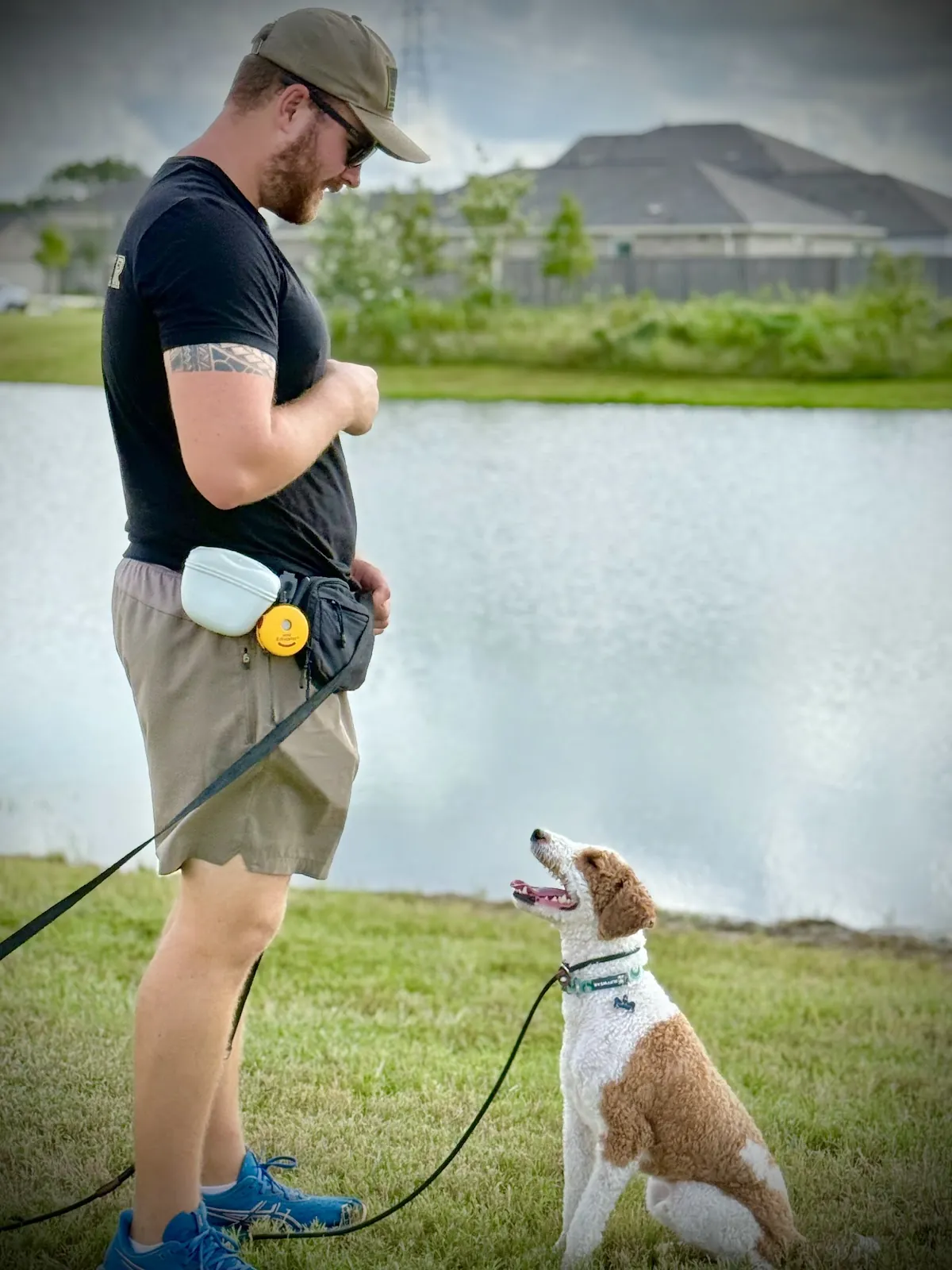
Our trainers build a water routine for every dog that will live near it, which in Houston is most dogs. The leash shortens as you approach any bank where you cannot see the water's edge clearly. The dog learns a wait at the edge rather than walking in, and a leave-it for anything floating or moving in the water. The recall is practiced moving away from water, on a long line, until the dog turns from the bank on the first call.
We teach this at the lake near the training home in Cypress, where our trainers work dogs at the edge on a leash, and families practice it on their own neighborhood pond after the go-home session. Water play then happens at places where you can see the water and the bank, such as a backyard pool or a clear, well-used swimming spot, and never in an unknown pond.
Shorten the leash well before any bank you cannot see clearly
Ask for a wait at the edge, rewarding the pause
Leave-it for anything floating or moving in the water
Recall away from the water on a long line
Water play only where the bank and water are clear
If you see one
Back away, keep the dog close, and leave the alligator alone.
Shorten the leash, keep the dog on the side away from the water and walk away calmly. Give the alligator plenty of room, and never try to scare it, move it or photograph it up close. Alligators usually avoid people, and one resting on a bank is rarely a problem if everyone keeps their distance. Walk a different route for a while, and warn neighbors who walk dogs there.
An alligator in a yard, a pool, a garage or a street, or one that approaches people, is a different matter. Texas Parks and Wildlife explains how to report nuisance alligators, and local authorities can help in an emergency. Keep children and pets indoors until it is handled. If your dog is bitten, get it to a vet at once, even when the wound looks small, because the teeth go deep and the mouth is full of bacteria.
Nearby
The hazards guide, the swimming spots, Cullinan Park, Brazos Bend and the Houston hub.
Our Houston dog hazards guide covers fire ants, toads and snakes, and the swimming spots page covers where dogs can swim with clear water and banks. Brazos Bend State Park is famous for its alligators, and Cullinan Park's birding lake in Sugar Land is alligator habitat too; each has its own page on walking there with a dog. The answers page on bayou swimming covers that one question in more detail.
The Houston area hub covers drive times from every side of the region, the $250 transportation option and the go-home session, where we walk your own neighborhood pond with you and practice the wait at the edge until it is automatic. Lessons in your home are $220 if you want a second session at the water later.
The programs
Programs that build a water-safe dog.
Platinum builds the wait and the recall around water, VIP proofs it off leash, and lessons can meet you at your own pond.


Asked and answered
Questions people ask about this.
Are there alligators in Houston?
Yes. American alligators are native to the Houston area and live in bayous, rivers, lakes and stormwater ponds across the region. Texas Parks and Wildlife describes their range and habits on its species pages. Most walkers never see one, but the habitat is everywhere water is.
Are retention ponds in my neighborhood safe for my dog?
Treat any pond where you cannot see the bank and the water clearly as alligator habitat. Keep the dog on a short leash near the edge, no wading or drinking, and no fetch into the water. Enjoy the walk around the pond rather than the water in it.
When are alligators most active?
In the warm months, especially at dusk and after dark, and they move more in spring. That overlaps with Houston's hot season, when owners walk dogs early and late. Keep the leash short near water at those hours, and take a route away from the water after dark.
What should I do if my dog is bitten by an alligator?
Get the dog away from the water and to a vet at once, even if the wound looks small, because bites are deep and dirty. Report the alligator following Texas Parks and Wildlife's guidance on nuisance alligators, and warn neighbors who walk there.
Can I train my dog to stay away from water?
Yes. A wait at the edge, a leave-it for things in the water and a recall away from the bank are all trainable, and our trainers build them at the lake near the training home in Cypress. Families practice them on their own neighborhood pond afterward.
Keep reading
Free consultation · 10% off this fall
Build the habit that keeps your dog out of the water.
Tell our team where your dog walks near water. The free phone consultation is a direct call with no obligation.