
Tools, honestly
E-collar vs prong collar vs slip lead: how each is used, honestly
Searching this comparison usually means you have been told three different things by three different people. Our trainers use all three tools, each for a specific job, and skip two of them for plenty of dogs. This page explains what each one actually communicates, the order they appear in, and what we will not do with them.
Last reviewed September 11, 2026 · by the Best Dog University Team
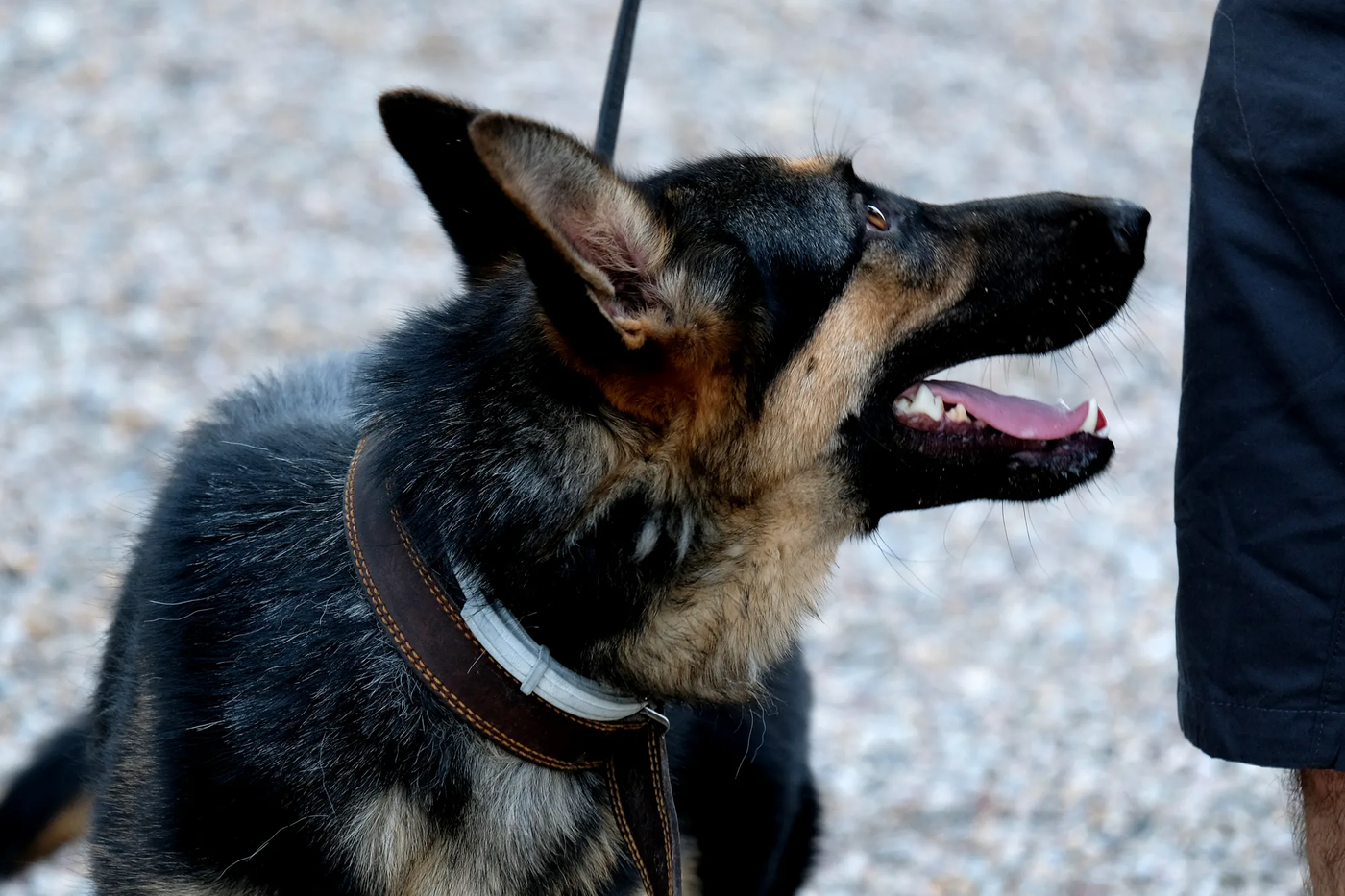
Side by side
Three tools, three jobs: direction, pressure and remote communication.
Every tool in balanced training does one thing: it makes a message clearer to the dog. The slip lead makes leash direction clear. The prong makes leash pressure clear to a dog who has learned to ignore it. The e-collar makes a cue clear at a distance, when there is no leash at all. Rewards for the right choice come first with every one of them, and the tool is introduced only after the dog already knows the command without it.
What none of them do is teach. A prong on a dog who has never been taught to walk beside you is pressure without meaning. An e-collar on a dog who does not know recall is noise. That is why our trainers build the behavior first, in the house and on the property in Cypress, and add a tool only if the dog needs a clearer signal for the next step. The table sets out the honest version.
| Slip lead | Prong collar | E-collar (Mini-Educator) | |
|---|---|---|---|
| What it communicates | Direction and a light leash cue | Leash pressure a strong dog actually feels | A remote tap the dog has been taught to read |
| Used for | Everyday walks, structured heel, most dogs | Strong pullers who ignore a flat collar | Off-leash reliability, recall at distance |
| When it appears | From the first walk | After heel is taught and the dog still pulls | Only after every command is known on leash; VIP |
| Fit and use | High on the neck, loose leash, quick light cues | Snug and high, links sized to the dog, no popping or dragging | Lowest level the dog notices, paired with a known command |
| Who never needs it | Almost nobody; it is a leash | Small dogs, soft dogs, most puppies, most dogs after Gold | Any dog whose life is on a leash; most Platinum graduates |
| Where it sits in our programs | Every program | Some Gold, Platinum and VIP dogs, taught at handover | Included and conditioned in VIP ($10,000) |
When the slip lead wins
The slip lead is all most dogs need, and it stays that way after the program.
A slip lead sits high on the neck, just behind the ears, where a light cue is felt and a loose leash is easy to keep. Our trainers use it for structured heel work, door thresholds and the first field trips to the pet stores along 290. Gold does not include an e-collar, and a Gold graduate goes home on the everyday equipment it trained on. Platinum graduates typically do the same once the heel is built, because the dog is responding to the handler rather than the equipment.
It is also the honest default for small dogs, soft dogs, seniors and puppies, where anything stronger is unnecessary and unkind. If you have a 25-pound Cavapoo who pulls toward every dog on the Towne Lake trail, the answer is teaching heel with a slip lead and rewards, not adding hardware. When you hear a trainer reach for a tool before teaching the behavior, that is the moment to ask why.
- Small, soft or senior dogs
- Puppies of any size
- Dogs who already walk on a loose leash
- Structured heel practice at home
- Almost every walk after graduation
When a prong or e-collar wins
A prong earns its place for the strong puller; an e-collar earns its place off leash.
A ninety-pound Lab, a young Rottweiler or a Doberman who has spent two years dragging a family down a Katy sidewalk has learned that a flat collar means nothing. A correctly fitted prong spreads pressure around the neck so the dog feels a light cue without the handler hauling. Used properly it means less force, not more. Our trainers fit it high and snug, teach the dog what the pressure means with reward for the right answer, and show you the same at the go-home session. A prong is never popped, never left on unattended, and never used on a fearful dog.
The e-collar is a different category: it is for the dog whose life includes no leash. Recall across a field in Magnolia, a heel through a parking lot with the leash dropped, a down at distance on a Lake Conroe dock. In VIP the Mini-Educator is included, and the conditioning takes days of pairing the lowest level the dog notices with commands he already knows. It is not introduced to stop a behavior. It is introduced to communicate a known cue at range.
- Large, strong dogs who pull through a flat collar: prong
- Dogs with a solid heel who need lighter handling: prong, briefly
- Off-leash recall, heel and stays at distance: e-collar in VIP
- Every command already reliable on leash: the prerequisite for either
- A fearful or shut-down dog: neither, ever
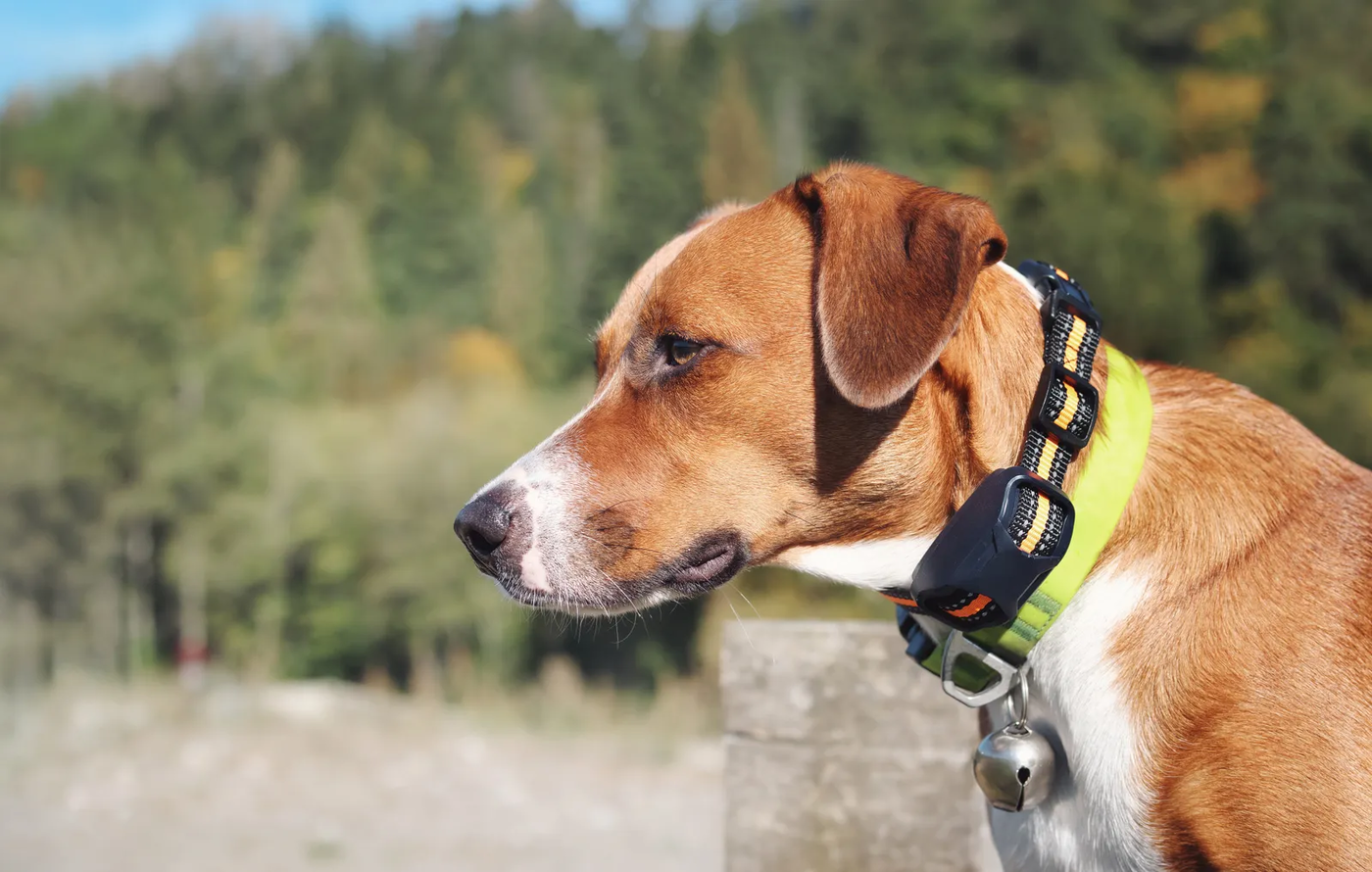
What Houston families choose
Most Houston families go home with a slip lead, some with a prong, and VIP families with the e-collar.
The honest breakdown in our Cypress home is that the slip lead is the tool for most dogs, the prong is taught to families with big, strong dogs who still pull after heel is built, and the e-collar belongs to the six-week VIP program where off-leash reliability is the goal. Families who arrive having bought all three online are usually asked to leave two of them in the car.
Two Houston factors shape the choices. Heat: from May to September walks are short and early, so a prong is often only needed for a few weeks while the heel settles. Fireworks: around July 4 and New Year, a dog who bolts is a recall problem, and families sometimes ask for an e-collar as a fix. It is not one. A frightened dog needs a leash, a closed door and a calm house on those nights, not a tap.
How our trainers decide
How our trainers decide which tool, in the order it happens.
This is the sequence in the training home, and it is the sequence we teach you at the go-home session. Skipping a step is how tools get a bad name, and how dogs get confused.
Teach the behavior with rewards and a slip lead until the dog performs it in the house and the yard.
Proof it with distractions: doors, food, people, other dogs at a distance. Most dogs stop here.
If a strong dog still pulls through a light cue, fit a prong high and snug and teach what the pressure means, with reward for the right answer.
Once the prong has done its job, fade it back to the slip lead. It is a teaching tool, not a permanent one.
For VIP dogs only, condition the e-collar at the lowest level the dog notices, paired with recall and heel the dog already knows, and then proof off leash.
The programs
Where the tools sit in our programs.
Gold and Platinum use the right tool for the dog, taught at handover. VIP includes the Mini-Educator e-collar and its conditioning.



Asked and answered
Questions people ask about this.
Do you use a prong collar on every board and train dog?
No. Many Gold and Platinum dogs never wear one. Our trainers reach for a prong only when a strong dog keeps pulling through a slip lead after the heel has been taught, and the aim is to fade it once the dog understands. Small dogs, puppies and soft dogs work on a slip lead and rewards.
Can I buy an e-collar and use it myself?
You can buy one, but the conditioning is the whole point, and it is easy to get wrong. A collar introduced to stop a behavior teaches fear; a collar introduced to communicate a known command teaches reliability. In our VIP program the Mini-Educator is included and the conditioning is done over days, then taught to you at the in-home handover.
Is a slip lead safe for a dog who pulls hard?
For a light cue, yes, and it is where heel is taught. For a large dog who leans into it constantly, it is not the right tool, because steady pressure on the neck helps nobody. That is the case where a properly fitted prong gives the dog a clearer signal with far less force. Our team shows you the fit.
Which tools does a Platinum graduate go home with?
Whatever the dog was working on at the end of the stay, taught to you at the comprehensive handover. For most Platinum dogs that is a slip lead; for some strong dogs it is a prong being faded. The e-collar and its conditioning belong to VIP. Unlimited private lessons afterward cover any adjustment.
Sources
Keep reading
Free consultation · 10% off this fall
Ask us about tools before you buy any.
Describe your dog's size, temperament and what happens on walks on the free phone consultation. Our team will tell you which tool, if any, fits. A $250 deposit reserves a program start.