
Guardian breeds
How to train a Doberman
Several of the dogs in our gallery are Dobermans, and there is a reason: the breed shows up in Cypress often, and it responds to calm, structured handling better than almost any other. A Doberman with a leader is a joy. A Doberman deciding for itself is a problem.
Last reviewed September 10, 2026 · by the Best Dog University Team
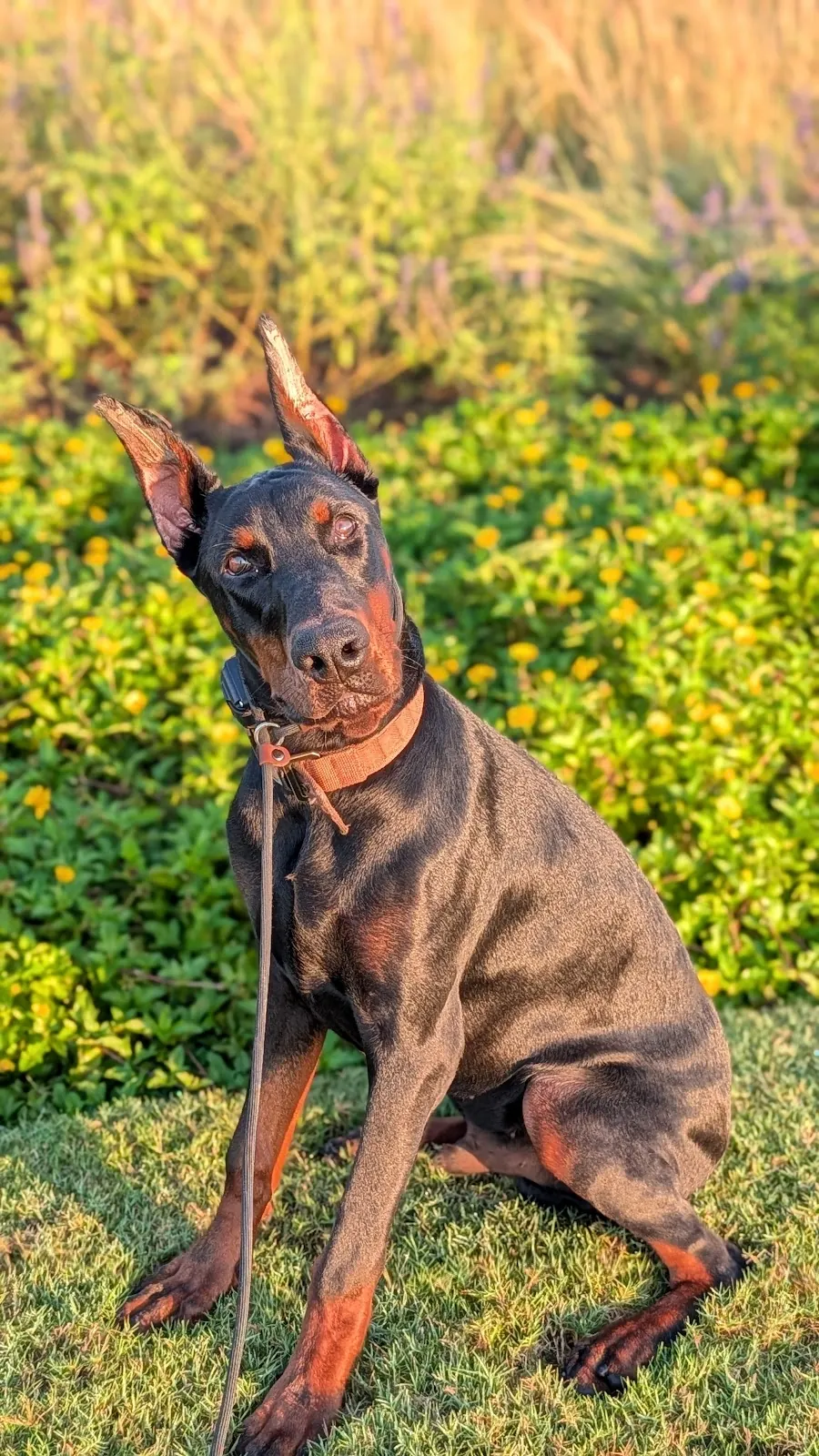
The guardian's wiring
Bred to protect one person, the Doberman decides who is a threat unless someone else does.
The Doberman was created as a personal protection dog: fast, watchful, bonded to its person and quick to act. That wiring makes it a superb companion for someone who leads and an anxious guardian for someone who does not. A Doberman with no clear leader appoints itself and starts assessing everyone who comes to the door, every dog on the trail and every stranger on the patio.
The breed is also sensitive and thin-skinned. Harsh handling makes a Doberman worse; fair, consistent rules delivered calmly make it relax, which is the approach our founder learned with horses and our trainers use with every dog.
- Bonded hard to one person
- Decides threats unless led
- Sensitive to tone and handling
- Needs an off switch as much as a job
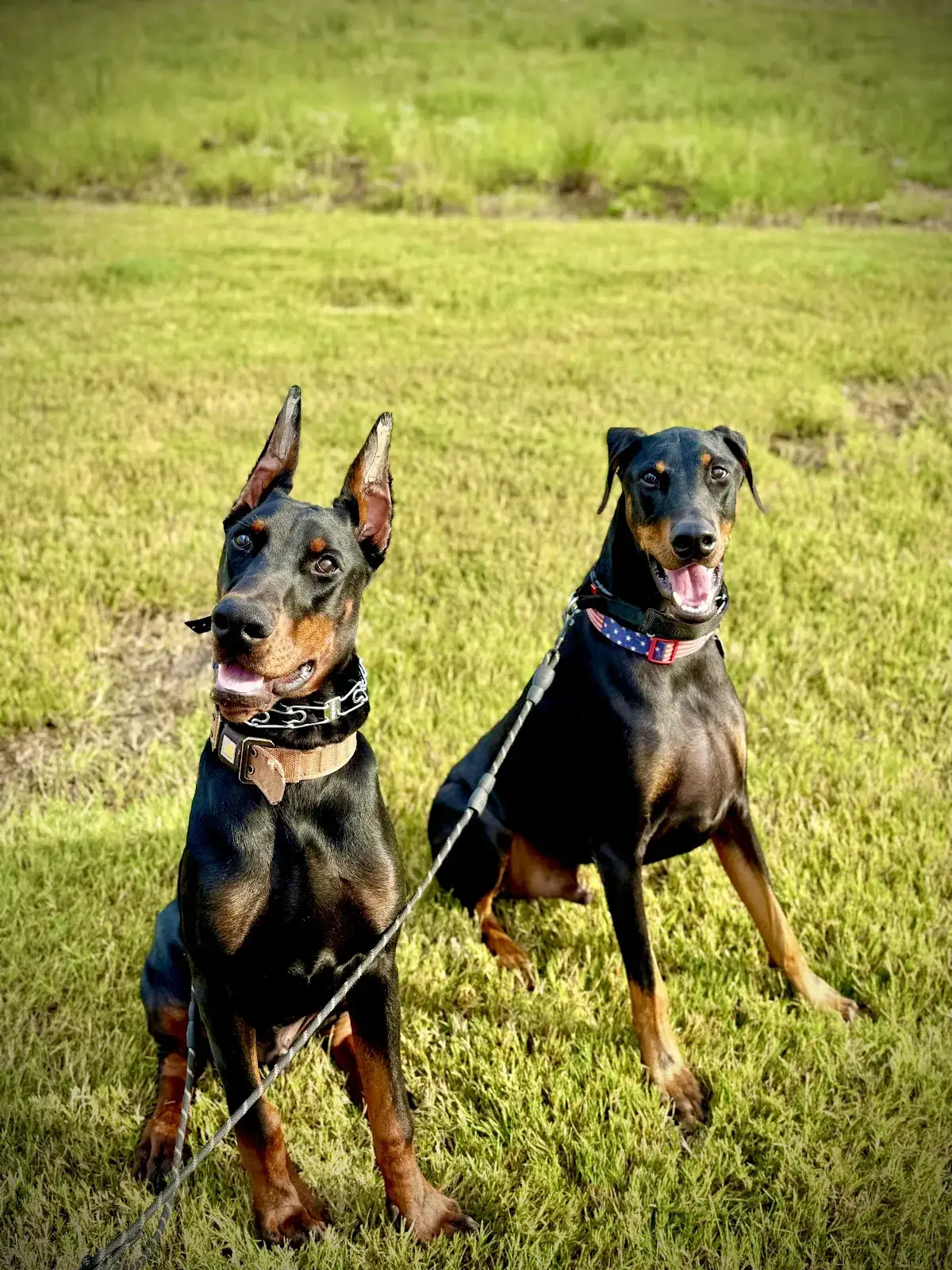
What arrives
Leash reactivity, door guarding and separation anxiety are the Doberman trio.
Dobermans come to us for lunging at dogs on leash, guarding the front door and window in neighborhoods full of deliveries, and panicking when their person leaves, which the velcro wiring makes common. Some arrive after a bite or a near miss at the door, and those start with an in-person consultation.
All three come back to leadership and an off switch. A Doberman that holds place while the delivery driver knocks, and that walks past another dog in a heel because its person said so, has stopped guarding on its own initiative.
The training order
Structure, place, heel, then the door, then the triggers, then the family.
Structure first: earned meals, waiting at doors, crate calm, no window post. Place with duration is the off switch and the separation cure. The structured heel makes the walk a following exercise. Then the door, worked with real deliveries and real guests. Then the triggers on the sidewalk and in stores at a distance the dog can hold. The family finishes it in the handover so the dog has one set of rules from everyone, not just its person.
Sessions are calm and clear. A Doberman corrected in anger shuts down; one corrected fairly and then rewarded moves on in seconds.
Earned meals, crate calm, no free window access.
Place with duration through deliveries and doorbells.
Structured heel until the leash stays slack past dogs.
Door work with real guests: place, release, calm greeting.
Neutrality to dogs and strangers at a distance, shrinking daily.
Handover: every adult and older child runs the same rules on the leash.
Houston Dobermans
A short coat that hates the cold and burns in the sun, and a lot of front doors.
Dobermans handle Houston heat better than double-coated breeds but still burn their pads and overheat working hard at noon; summer sessions run at dawn and dusk. The rare freeze week is the other end, when a thin-coated Doberman needs a coat and short outings. Master-planned neighborhoods from Bridgeland to Cinco Ranch deliver packages all day, which is the guarding rehearsal the program has to interrupt, and the reason door work uses real deliveries.
- Dawn and dusk in summer
- A coat in the freeze week
- Door work with real deliveries
Which program
Platinum for the reactive or guarding Doberman; VIP for a finished, off-leash guardian.
The three-week Platinum program ($3,750) is the fit for most Dobermans: behavior modification for reactivity and guarding, field trips for neutrality in public, and unlimited lessons so the family holds the leadership afterwards. The six-week VIP ($10,000) produces the finished Doberman, off-leash reliable and calm anywhere, with the Mini-Educator introduced properly and an in-home handover. Dobermans with a bite history start with an consultation and usually land in VIP. Puppies under four months take the bundle, where neutrality is cheapest to build.
The programs
Programs for a guardian breed.
Platinum for reactivity and guarding. VIP for the finished off-leash Doberman.


Asked and answered
Questions people ask about this.
Are Dobermans hard to train?
No. They are intelligent, bonded and eager to work for a calm leader. They are hard to live with untrained, because the guardian wiring fills the leadership gap with guarding. Fair, consistent rules delivered calmly are what the breed responds to.
Why is my Doberman reactive on leash?
A Doberman assesses every dog and stranger as a possible threat unless someone else is clearly making that call. On leash, without a structured heel, that becomes lunging. It is fixed with structure, a heel and controlled exposure, the core of the Platinum program.
Do Dobermans get separation anxiety?
Often, because the breed was bred to stay with one person. Crate calm and place with duration, built while you are home, are the prevention. Established cases respond well to a stay where independence is rebuilt in small steps.
Is a Doberman safe with kids?
A trained Doberman with clear rules and a leader is a steady family dog. The risk is an untrained guardian deciding for itself at the door or around the kids' friends. Structure, neutrality and a management plan for guests are what make the breed safe at home.
Which program is best for a Doberman?
The three-week Platinum program for most Dobermans with reactivity or guarding, the six-week VIP for a finished off-leash dog or a bite history, and the Puppy Development Bundle for pups under four months.
Keep reading
Free consultation · 10% off this fall
Give your Doberman a leader.
Tell our team what your Doberman does at the door and on the leash. The free phone consultation is a direct call.