
Guardian breeds
How to train a cane corso
Two of the cane corsos in our gallery are sitting calmly on a lawn and looking up at a camera. Getting a corso to that point is the point of this guide. The breed is loyal, calm and magnificent with leadership, and a liability without it.
Last reviewed September 10, 2026 · by the Best Dog University Team
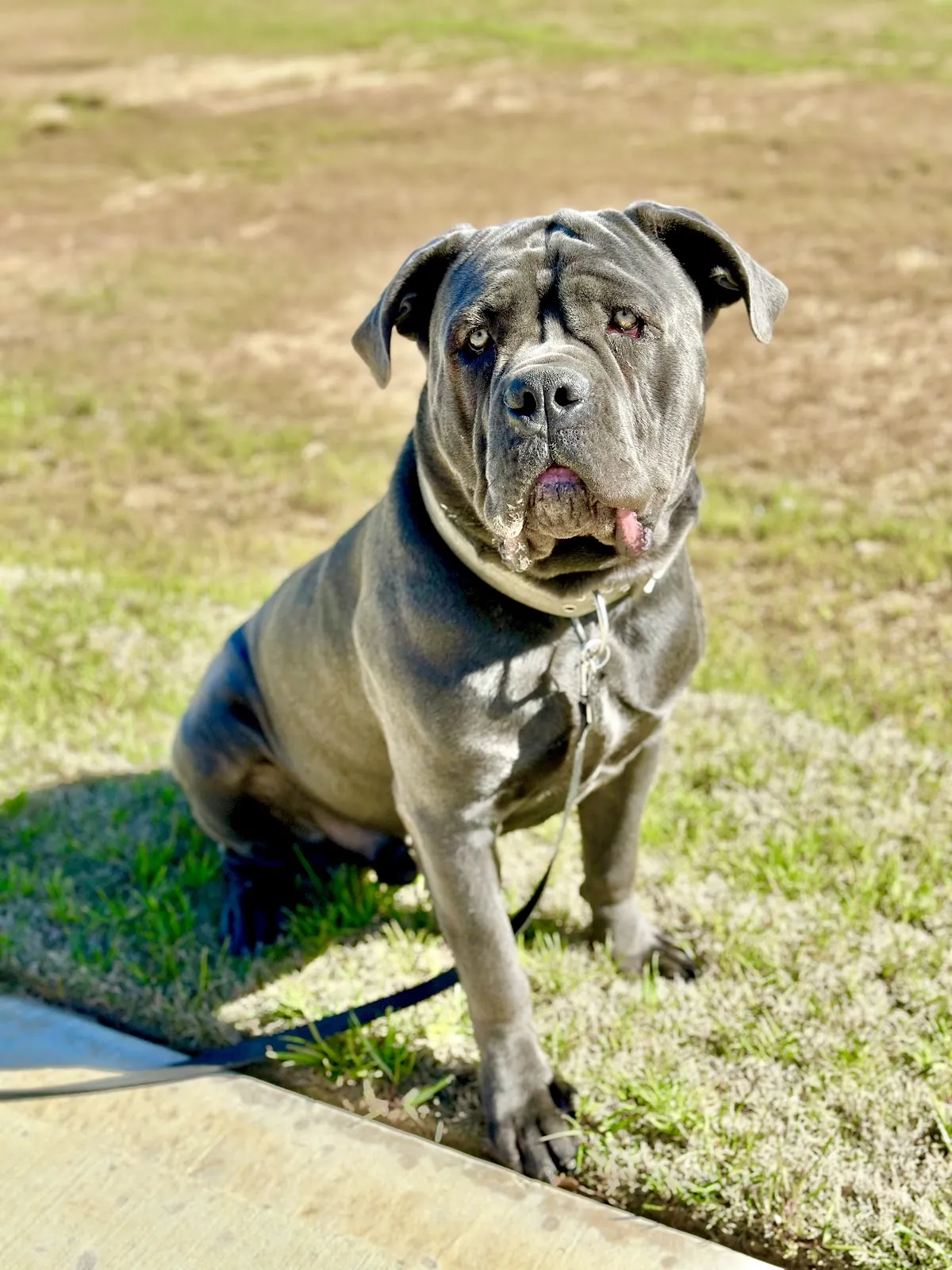
What a corso is
An Italian guardian mastiff bred to protect property and decide who belongs.
The cane corso was bred to guard farms and family, with the size and the confidence to back it up. It bonds to its household, is naturally wary of strangers, and matures late, so the adolescent testing runs longer than in most breeds. A corso raised without clear leadership grows into a dog that makes its own decisions about visitors, delivery drivers and other dogs, and at 110 pounds those decisions have consequences.
With leadership, the breed is famously stable: calm in the house, neutral on the street, watchful without acting. That stability is trained, starting young, and maintained by a household that keeps the rules.
- Guardian by design, wary of strangers
- Matures late; adolescence runs long
- Size makes every decision serious
- Stable with leadership, dangerous without
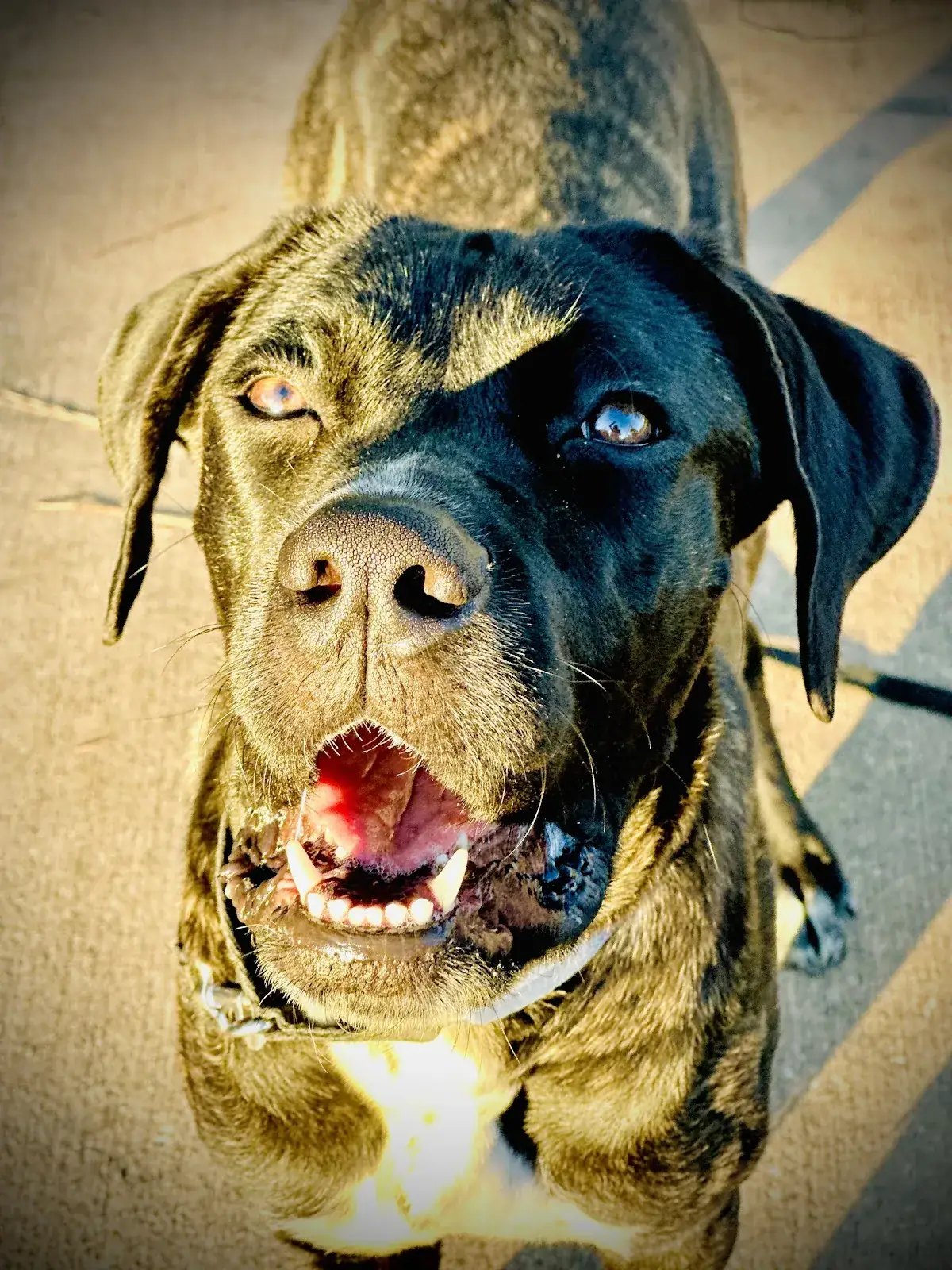
What arrives
Guarding the door and yard, dog aggression, and a dog that respects one person.
The corso cases in Cypress are guarding at the front door and the fence line, aggression toward other dogs on leash or through the fence, and a dog that obeys the man of the house and treats everyone else as optional. Some arrive after a bite or a serious near miss; those begin with an in-person consultation and an honest conversation about the plan.
The common thread is a dog that was allowed to appoint itself. The program takes the job back and hands it to the family.
The training order
Leadership and structure, then the heel and place, then the door and fence, then the other dogs, then the whole family.
Structure comes first and stays: earned meals, waiting at every door, crate calm, a structured walk. The heel makes the walk a following exercise and place builds the off switch. Then the door and the fence are worked with real deliveries and real dogs, at a distance the corso can hold. Neutrality to other dogs is built the same way, on Cypress sidewalks and in store aisles. The family finishes the job in the handover so the dog answers to every adult the same way.
Every rule is held for life. A corso that learns the rules are negotiable will negotiate at the worst moment.
Earned meals, doors, crate, structured walk from day one.
Structured heel until the leash stays slack past strangers.
Place with duration through doorbells and guests.
Door and fence line work with real deliveries and a real dog on the far side.
Neutrality to other dogs on the sidewalk, closing the distance over days.
Handover: every adult holds the leash and runs the rules.
Houston corsos
Heat, acreage, apartments and breed restrictions each shape the plan.
A corso's mass and short muzzle make Houston heat a real risk; summer sessions are short, at dawn and dusk, with water and a hard stop. Corsos on acreage in Hockley and Waller need boundaries and neutrality at the fence line; corsos in townhomes need hallway and elevator neutrality. Many Houston apartments and some HOAs restrict the breed, which is one more reason a corso needs to be visibly well-trained in public.
- Short summer sessions, hard stop
- Fence-line neutrality on acreage
- Breed restrictions make public manners essential

Which program
Platinum for guarding and dog aggression; VIP for a bite history or a finished dog.
The three-week Platinum program ($3,750) covers most corso cases with behavior modification, field trips for public neutrality and unlimited lessons afterwards, so the family holds the leadership. The six-week VIP ($10,000) suits a corso with a bite history or an owner who wants complete off-leash reliability, with the Mini-Educator introduced properly, transport home and an in-home handover. A corso puppy under four months takes the bundle; neutrality built at ten weeks is worth more than any program at two years.
The programs
Programs for a guardian mastiff.
Platinum for guarding and dog aggression. VIP for bite histories and off-leash goals.


Asked and answered
Questions people ask about this.
Are cane corsos hard to train?
They are intelligent and bond deeply, so they train well for a leader they respect. They are hard for an owner who is inconsistent or who leaves decisions to the dog. Early structure and a standard held for life are what the breed needs.
When should I start training a cane corso?
The day the puppy comes home. Neutrality to strangers and dogs built before four months, in the Puppy Development Bundle, prevents most of the guarding and aggression that a corso develops on its own by adolescence.
Why does my corso guard the door and the fence?
Because it was bred to and nobody told it otherwise. Remove the self-appointed job: place with duration through deliveries, waiting at doors, and fence work with a real dog on the other side at a distance the corso can hold. Guarding is rehearsed all day in a suburb; stopping the rehearsal is half the fix.
Can a cane corso that has bitten be trained?
In most cases the aggression can be dramatically reduced and reliably managed with structure, controlled exposure and a household that keeps the rules. It starts with the full history on the free call and an in-person consultation, and usually lands in the VIP program with a written management plan.
Which program is best for a cane corso?
The three-week Platinum program for guarding and dog aggression, the six-week VIP for a bite history or complete off-leash reliability, and the Puppy Development Bundle for pups under four months.
Keep reading
Free consultation · 10% off this fall
Take the job back from your corso.
Tell our team what your corso does at the door and the fence. The free phone consultation is a direct call.