
Reactive dogs · Houston
Reactive dog training in Houston: calm around dogs, people and traffic
A reactive dog turns every walk into a scan for other dogs. In Houston that means walking at five in the morning to avoid the neighborhood, skipping the patio, and dreading the pet store. Reactivity is our specialty, and the reason it responds so well to a stay in the training home is simple: the trigger can be rehearsed calmly dozens of times a week instead of survived once a day.
Last reviewed September 10, 2026 · by the Best Dog University Team
What reactivity is
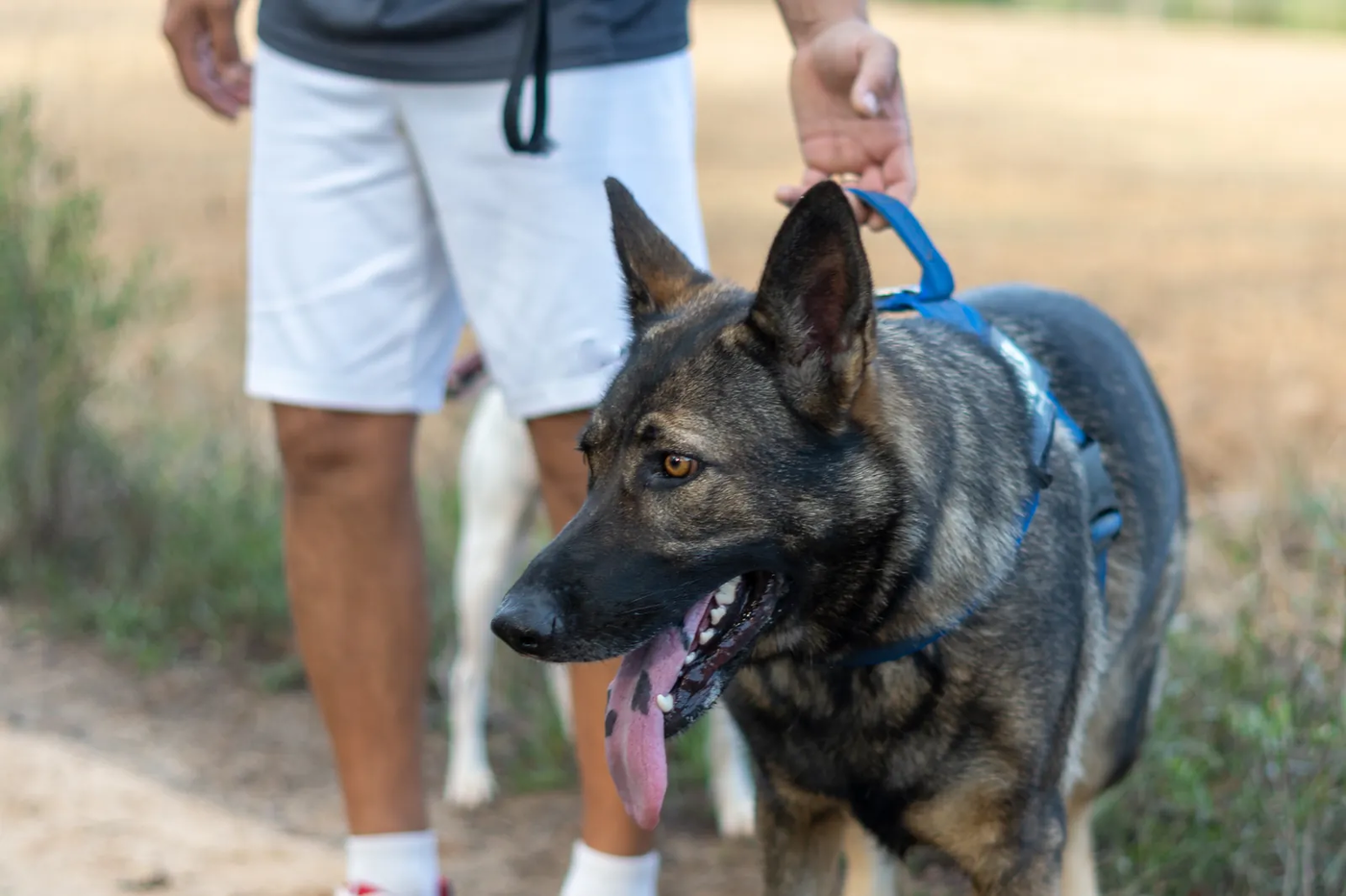
Reactivity is a state of mind first, and the state has to change before the barking does.
The lunge, the bark and the spin are the last step of a chain that started a block earlier. The dog spotted the other dog, stiffened, fixed its stare, stopped hearing you, and then exploded. Correcting the explosion alone does nothing about the fixation that produced it, which is why so many owners arrive having tried three tools and a class.
Our trainers work on the state. A dog who can hold a heel, a sit and a place while a mild distraction passes is a dog whose brain is still online. That skill is built first, in quiet places, and only then is the real trigger introduced at a distance the dog can handle. The distance shrinks over days as the dog proves it can stay thinking.
- Frustrated greeters who want the other dog
- Fearful dogs who want it gone
- Dogs who are fine off leash and a mess on it
- Dogs who only react with one family member
Why a stay works
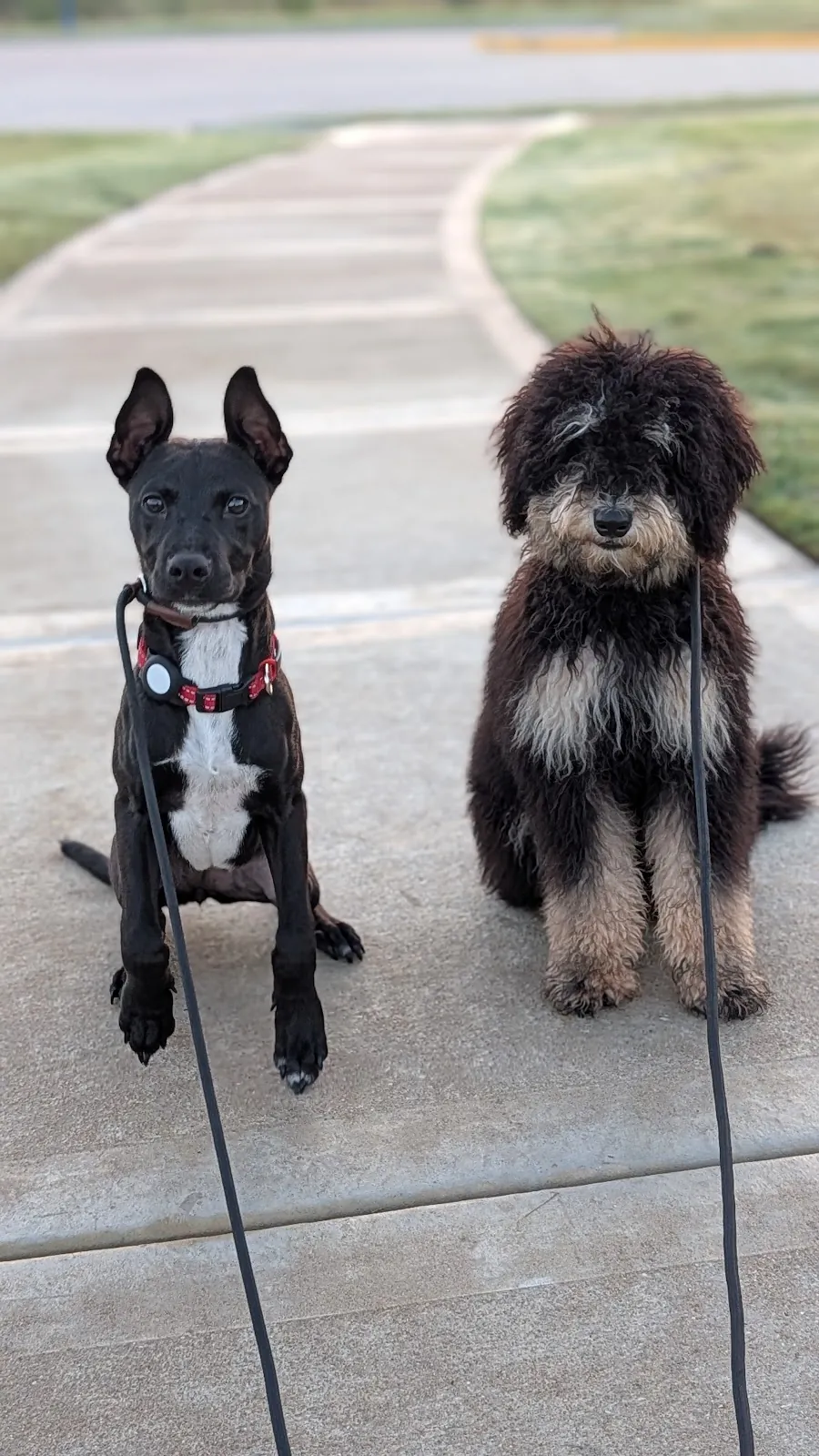
Living in our trainer's home means the trigger is rehearsed calmly every day, not survived once.
Weekly lessons ask the owner to find a trigger at the right distance, hold their own nerves, and get the timing right, all at once, once a week. It can work, and our trainers teach it in private lessons, but for most reactive dogs it is too slow. A stay compresses months of that into three weeks.
In the Cypress home your dog practices neutrality in the living room while another dog walks past the window, at the front door, and then outside: the sidewalks of Bridgeland and Towne Lake, the parking lot at the pet store, a bench where dogs go by at a distance. Each session is set up so the dog succeeds, and the successes stack until calm is the habit.
The Houston plan
Heat and geography shape where reactive dogs train, and both work in the dog's favor.
From May to September, outdoor trigger work happens early and late, when it is cool enough to hold a hand on the pavement. That timing has an upside: dawn walks in a master-planned neighborhood are full of other dogs at predictable distances. Midday work moves indoors to store aisles along 290 and Fry Road, which are ideal for controlled exposure because the sight lines are short and the dog can be moved behind a shelf in one step.
Field trips are part of Platinum and VIP. A reactive dog might spend a week seeing dogs only across a parking lot, then a week passing them on a wide sidewalk, then a week walking through a store with dogs in the next aisle. The trips are chosen for the dog in front of the trainer, not from a schedule.
Structured heel, place and impulse control in the house and yard.
Neutrality through the window and at the front door while another dog passes.
Sidewalk work at a distance the dog can hold, shrinking over days.
Store aisles and parking lots for short, controlled encounters.
Parks and busier streets as the dog proves it stays thinking.
The handover session, where you learn the handling so the calm holds with you on the leash.
Which program
Platinum for most reactive dogs; VIP when the goal includes off-leash reliability.
The three-week Platinum program ($3,750) is the shortest program that includes field trips and behavior modification, which is why it is the usual recommendation for reactivity. It ends with a comprehensive handover session and unlimited private lessons, so the handling transfers to you.
The six-week VIP program ($10,000) is for owners who want the reactive dog to become a fully finished dog: off-leash reliable, calm under heavy distraction, with the Mini-Educator e-collar introduced properly and taught to you in an in-home handover. Serious cases with a bite history usually belong here, and our team will say so on the call.
- Platinum: 3 weeks, $3,750, field trips and behavior modification
- VIP: 6 weeks, $10,000, off-leash reliability and in-home handover
- Private lessons: $160 or $220, for handler coaching after a stay
What comes home
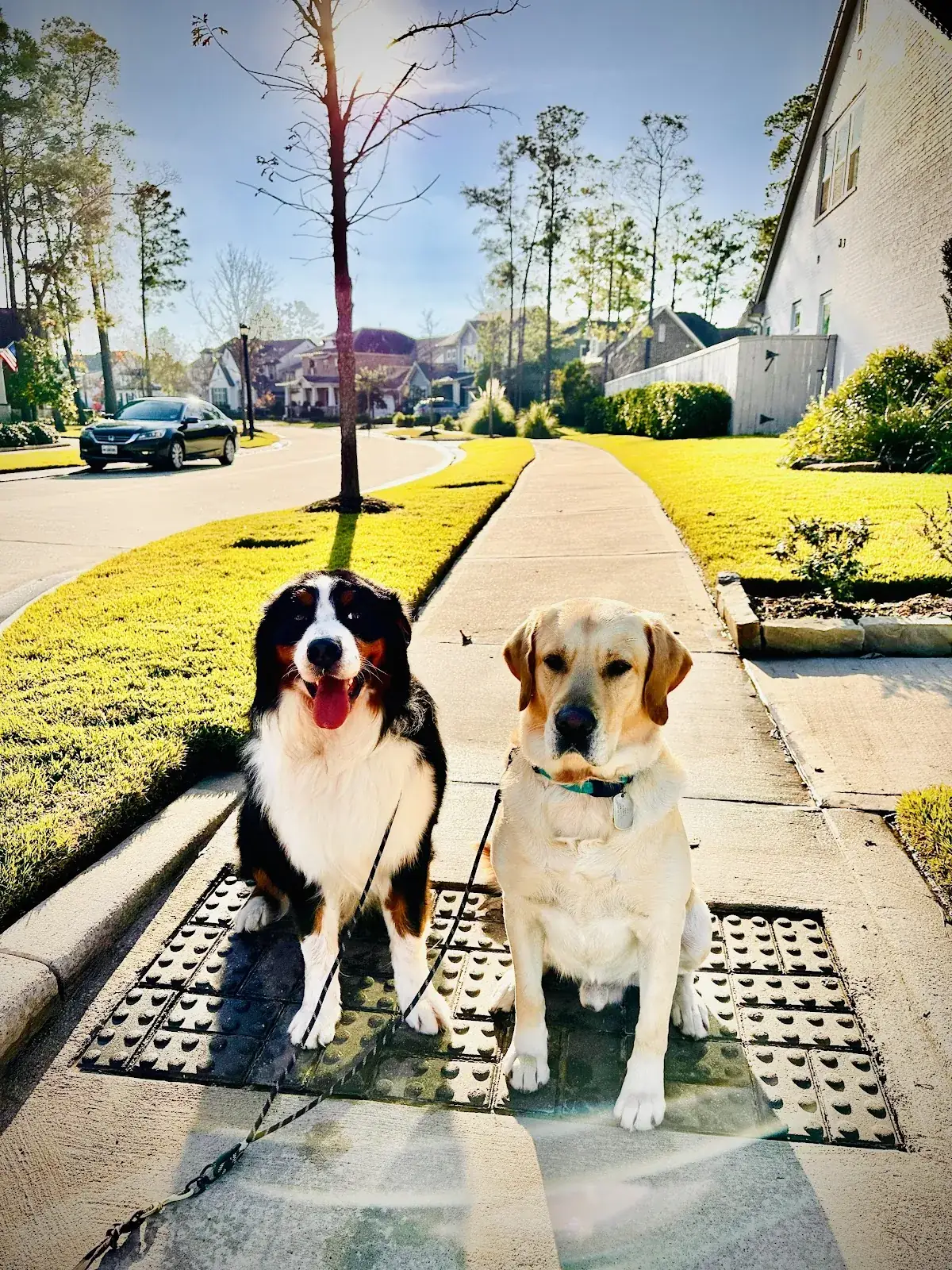
The handover session is where the walk becomes yours again.
At the end of the program our team demonstrates the walk, then hands you the leash and coaches you past real distractions. You learn the leash handling, the timing, the u-turn, and what to do the first time your dog tests the new rules. Then you have unlimited lessons to keep it sharp, which most families use in the first month and then when a new trigger shows up.
Families from Katy, The Woodlands, Spring and central Houston drive to Cypress for drop-off, or add the $250 transportation service and our team collects the dog from home and returns it with a first lesson in your driveway.
The programs
The programs that fix reactivity.
Behavior modification and field trips are built into Platinum and VIP. Lessons carry the handling to you.


Asked and answered
Questions people ask about this.
How long does it take to train a reactive dog in Houston?
Most reactive dogs need the three weeks of the Platinum program: enough time to build the foundation and then practice calm around real dogs and people every day. Serious cases, or owners who want off-leash reliability afterwards, do best in the six-week VIP program.
Will my reactive dog be around other dogs during the stay?
Yes, safely and on purpose. Best Dog University keeps a limited number of dogs in the home, and our trainers use them to teach neutrality: calm behavior near other dogs, not forced play. Exposure is controlled by distance and time, so the dog succeeds.
Is leash reactivity the same as aggression?
Not always. Many reactive dogs are frustrated or scared rather than intent on contact, though the two overlap. Our team assesses which one you are dealing with on the free call and in person, and both are handled inside the Platinum and VIP programs.
Do you use an e-collar for reactive dogs?
The Mini-Educator is included in the VIP program and introduced only after the dog understands the commands, at low levels, for clear communication at a distance. Our trainers teach you to use it the same way in the in-home handover session. Platinum dogs are trained with the tools that fit the dog.
Can you train a reactive dog from Katy or The Woodlands?
Yes. Families drive to the Cypress home for drop-off, about 25 to 45 minutes from most of the service area, or add the $250 transportation service for pick-up, return and a first lesson at home. Transport home is included in VIP.
Keep reading
Free consultation · 10% off this fall
Tell our team what happens on your walks.
Reactivity is our specialty. The free phone consultation is a direct call, and our team will tell you which program fits your dog.