
Breed training guides
How to train a Cavalier King Charles spaniel: velcro dogs, separation and the front door
Cavaliers are easy to love and easy to spoil, and that is the training problem in one line. Our trainers meet sweet Cavaliers who follow their people from room to room, cry when the bathroom door closes and greet every visitor like family. The plan below keeps the sweetness and adds the independence.
Last reviewed September 29, 2026 · by the Best Dog University Team
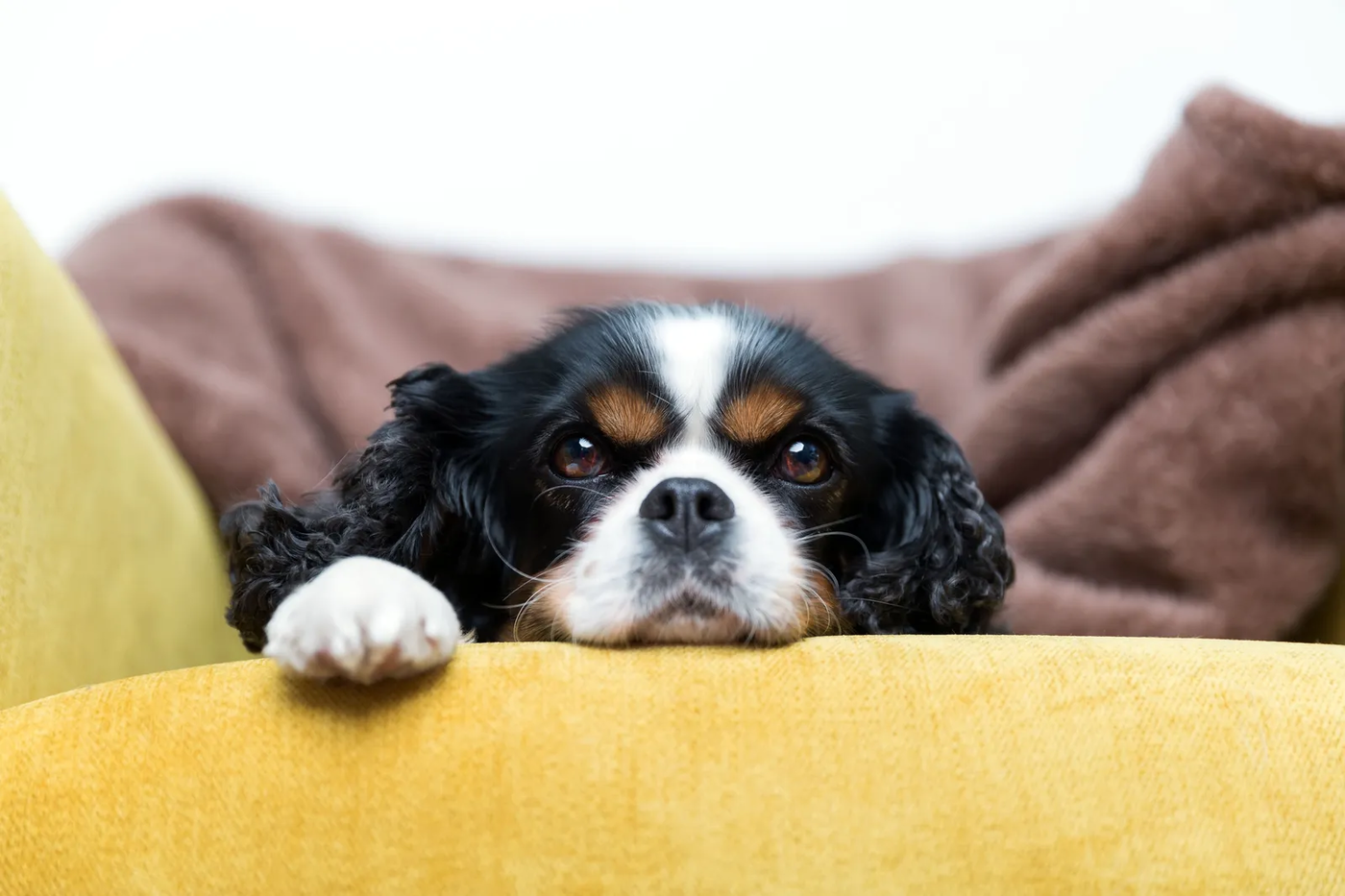
Bred for the lap
A companion spaniel by design, so the lap is the job and the doorbell is the event.
The Cavalier descends from the toy spaniels kept as companions in English royal and noble households, and the modern breed was rebuilt in the twentieth century to resemble the dogs in those old portraits. It sits in the toy group, with a silky coat, feathered ears and a spaniel nose that still notices birds. Above everything else it was selected for being near a person, which is why it learns fast when you are the reward and struggles when you leave.
At home that shows up three ways. The dog follows you, which is sweet until it cannot settle anywhere without you in sight. It greets everybody, which is charming until the guest is a toddler or an unsteady neighbor. And it reads your tone closely, so a harsh correction shuts it down while a calm, clear boundary helps. Balanced training fits the breed well: generous rewards for what you want and a quiet, fair consequence for what you do not.
- People are the main motivator, so use yourself as the reward
- A soft temperament that needs calm, clear limits
- Friendly with everyone, so greetings are the first manners job
The first year
Eight weeks to twelve months, one stage at a time.
With a Cavalier the obedience comes easily, so the first year is mostly about building a dog that can be calm without you. A puppy that sleeps in a crate beside your bed, naps in a pen while you cook and spends ten quiet minutes alone on day three has already started the most important lesson. Sit, down, come and a name response usually follow within weeks, because the breed wants to work with you.
Adolescence in a Cavalier is milder than in a retriever, but it is real. Somewhere between six and ten months the recall turns selective, the nose gets louder and the greeting manners slip. Put the leash back on in the yard for a few weeks, keep every rule the same, and shorten the absences again if the crying comes back.
Eight to ten weeks: the crate by the bed, meals inside it, name games, gentle handling of ears and paws
Ten to sixteen weeks: short planned absences, sit, down, a first place bed, the sit-to-greet with family
Four to six months: a loose leash on the sidewalk, first store trips, a long-line recall in a fenced yard
Six to ten months: the adolescent slip, answered with more leash and the same rules
Ten to twelve months: longer alone time, place through dinner and visitors, freedom earned room by room

What we see
Shadowing, separation and the front door, with the fix for each.
Shadowing comes first, and it feeds the other two. A Cavalier that follows you into every room never practices being on its own. The fix is a place bed in the kitchen and the living room, taught with food and duration, so the dog learns that staying put while you move is what earns attention. Start with thirty seconds while you cross the room and build toward an hour of settle during dinner.
Separation is the second call. A Cavalier that has never been alone may howl, scratch the door or chew whatever smells of you. Build alone time in small, boring pieces: leave for two minutes, return without fuss, and lengthen the gaps over weeks. A dog that drools, hurts itself or panics for the whole absence needs a real separation plan and a talk with your vet. The front door is third: a leash or a place bed near it, a sit before anyone says hello, and guests who wait for calm.
- A place bed for the shadowing, built from seconds to an hour
- Planned absences with dull exits and quiet returns
- A sit or place before any guest greets the dog
- Your vet and a structured plan for a dog that panics alone
Houston life
Heat, a silky coat, HOA streets and apartment hallways.
A Cavalier is small and close to the ground, so Houston concrete matters. From May to September our trainers walk small spaniels at dawn and after dark, press the back of a hand to the pavement for seven seconds before heading out, and move afternoon practice into air-conditioned store aisles. The feathered coat holds water after a summer downpour and yard grass hides fire ants, so potty trips go on a short leash to a mown patch rather than into the weeds.
The door problem changes with the housing. On a Bridgeland or Towne Lake cul-de-sac the Cavalier barks at every stroller and needs a quiet cue at the window. In a Heights townhome or an apartment near the Galleria it meets neighbors in elevators and hallways, so a sit beside you while people pass becomes the everyday skill. July 4 and New Year fireworks unsettle many soft dogs, which makes a covered crate in an interior room worth setting up before the holiday.
Getting help
When the crying starts or the door runs the house, call early.
Get help when your Cavalier cannot manage twenty minutes alone without distress, when guests dread coming in, or when the puppy you meant to train is nine months old and running the house. A puppy under four months fits the Puppy Development Bundle, four private sessions at $550 in Cypress or $750 in your home, which covers the crate, early alone time and greeting manners.
Older Cavaliers usually do well in Gold, two weeks at $2,500 in our trainer's home in Cypress, where place, the door and the leash are built inside a real household. A dog with true separation panic fits Platinum better, three weeks at $3,750 with behavior modification and unlimited private lessons afterward. The Cavalier training page lays out each option in Houston terms, and the free phone consultation is where our team hears what your dog does when the door closes.
The programs
Programs that fit a Cavalier.
The puppy bundle for the first months, Gold for door and leash manners, Platinum for a Cavalier that panics alone.


Asked and answered
Questions people ask about this.
Are Cavalier King Charles spaniels easy to train?
Yes for commands, harder for independence. A Cavalier learns sit, down and come quickly because it wants your attention. The real work is teaching it to settle without you, greet guests calmly and accept alone time. Families who focus only on tricks often end up with a polite dog that cannot be left for an hour.
Can a Cavalier be left alone during a workday?
Many can, once alone time is taught in stages from puppyhood. Start with minutes, add length slowly and keep departures and returns dull. A full workday right away is too much for most young Cavaliers, so a midday visit helps while the dog builds up. A dog that panics needs a structured plan rather than more exposure.
Why does my Cavalier bark at the door but love every guest?
Because the doorbell means the best part of its day is arriving. That barking is excitement, not guarding. Teach a place bed near the entry, reward quiet while the door opens, and ask guests to wait until the dog is calm before they greet it.
Is a Cavalier too soft for balanced training?
No. Balanced training means rewards for good choices and fair, calm consequences for poor ones, scaled to the dog in front of us. For a Cavalier that usually means plenty of food and praise, a leash for guidance and very light corrections. Harshness is never part of it, and a sensitive spaniel shows clearly when the pressure is right.
Keep reading
Free consultation · 10% off this fall
Teach the lap dog to stay put.
Tell our team what happens when you leave and when the doorbell rings. The free phone consultation is a direct call with no obligation.