
Leash grabbing, decoded
Why does my dog bite the leash?
Leash biting in a puppy is mostly teething and play, and that has its own answer. In an older dog it usually means something about the walk is too exciting or too frustrating. Here is how to tell which, and what our trainers change.
Last reviewed September 29, 2026 · by the Best Dog University Team
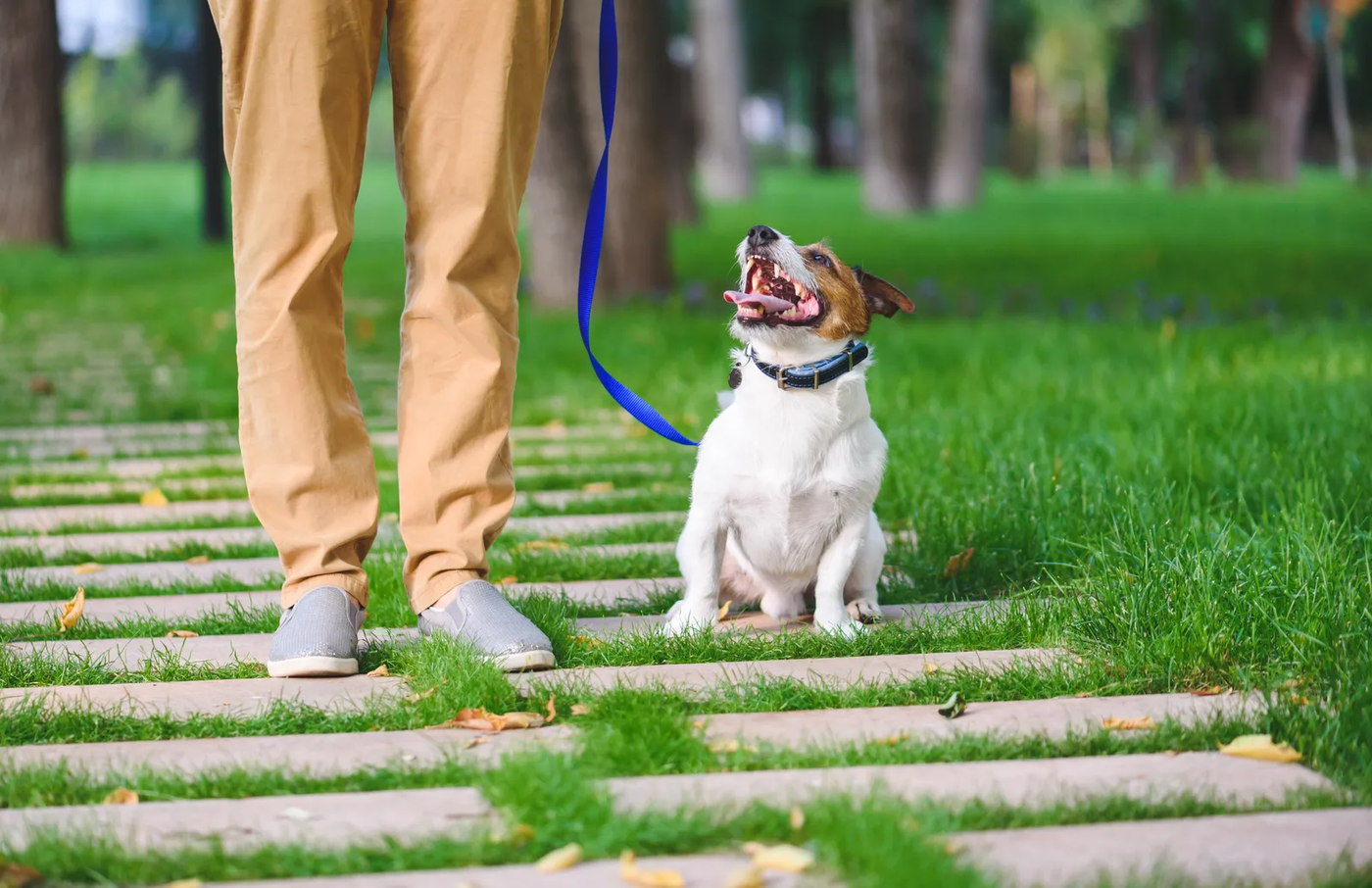
Read the grab
When the dog grabs the leash tells you why.
A dog that grabs the leash the moment you clip it on, spinning and tugging before you are out the door, is overexcited. A dog that grabs it when you stop to talk to a neighbor, or when you turn for home, is frustrated. A dog that grabs and pulls back with a playful body, tail wagging, is playing tug, often because someone once played along. And a dog that grabs the leash while staring at another dog, barking or lunging, is redirecting its reaction onto the nearest thing.
The first three are manners problems. The last one is part of reactivity, and it needs a plan for the trigger, not just the leash.
- At the clip or the door: overexcitement
- When you stop or turn home: frustration
- Playful tugging with a wagging tail: a game
- While staring at a dog or person: redirected reactivity
Why it sticks
It sticks because pulling back turns the leash into the best toy on the walk.
Every time you pull back, you are playing tug. The dog gets exactly what it wanted: a strong grip, resistance and your full attention. Yelling adds to the excitement. Even a few seconds of that game can keep the habit alive for months.
Energy and routine matter too. A young, strong dog that has been indoors all day, then walked in a rush with lots of stops and starts, is primed to grab. The walk itself needs to become calmer and more predictable, which is the idea behind a structured walk.
The fix
Go still, give the mouth a job, and pay a slack leash.
The answer is to make grabbing the leash boring and make calm walking rewarding. It takes consistency from everyone who walks the dog.
Start every walk calmly: the dog sits, the door opens, and you step out only when it is settled.
If the dog grabs the leash, stop and go completely still with your hands at your chest. Do not pull back.
When it lets go, calmly continue and reward the next few steps on a loose leash.
Carry a tug toy and offer it on your terms, so the mouth has a legal job.
For a dog that grabs the moment the leash appears, clip it on and off indoors many times a day until it stops meaning anything.
If the dog grabs at triggers, increase your distance from the trigger and work on calm walking at that distance.
Houston walks
Short summer walks and busy trails make leash grabbing worse.
From May to September many Houston dogs get short walks, early and late, because pavement and asphalt get too hot for paws. A dog that has spent the whole day inside in the air conditioning is often wound up by the time the leash comes out. Adding a few minutes of training or a puzzle feeder before the walk can take the edge off.
Busy trails add triggers. On Buffalo Bayou or the Heights hike-and-bike trail, bikes, joggers and other dogs pass close and fast. A dog that grabs the leash every time a bike passes is overwhelmed, and the fix is more distance and quieter routes while you train, not more exposure.
- A few minutes of training before the walk
- Walks early and late in summer
- Quieter routes while you train
- More distance from bikes and dogs
At Best Dog University
Lessons for the grabber, Gold or Platinum when the walk needs rebuilding.
For a dog that grabs the leash out of excitement or play, private lessons at $160 in Cypress or $220 at home usually solve it quickly. Our trainers teach the calm start, the stillness and the loose-leash walk to everyone who holds the leash.
If the whole walk is a struggle, with pulling, lunging and grabbing, the two-week Gold program at $2,500 builds loose-leash walking and impulse control. If the dog grabs the leash while reacting to dogs or people, the three-week Platinum program at $3,750 includes behavior modification for reactivity and unlimited private lessons afterward.
The programs
From a leash-grabber to a calm walker.
Lessons for most grabbers, Gold for a walk that needs rebuilding, Platinum when the grab comes with lunging at triggers.


Asked and answered
Questions people ask about this.
Is leash biting a sign of aggression in an adult dog?
Usually not. Most leash biting is excitement, frustration or play. It becomes a concern when the dog grabs the leash while staring at another dog or person, or bites toward your hands when you hold it. That is redirected reactivity, and it needs a plan for the trigger as well as the leash.
Why does my dog bite the leash when I stop to talk to someone?
Because stopping is frustrating for a dog that wants to keep moving, sniff or greet. Teach a sit or a down while you stand still, reward it frequently, and keep conversations short at first. As the dog learns that standing still pays, the grabbing fades.
Does bitter spray on the leash help?
It can make the leash less appealing for some dogs, but it does not teach the dog what to do instead, and many excited dogs ignore the taste. Use it only as a short-term aid while you teach the calm start, the stillness and the loose leash.
Should I play tug with my dog at all?
Yes, with a toy and your rules: the dog takes it on cue, lets go on cue, and the game ends if teeth touch skin. Tug can be a great outlet for energy. The leash, though, should never be part of the game.
Keep reading
Free consultation · 10% off this fall
Is every walk starting with a tug of war?
Tell our team what your walks look like on a free phone consultation. We will tell you whether lessons, Gold or Platinum fits, and a $250 deposit reserves a spot when you are ready.