
Noise on the road
Why does my dog bark in the car?
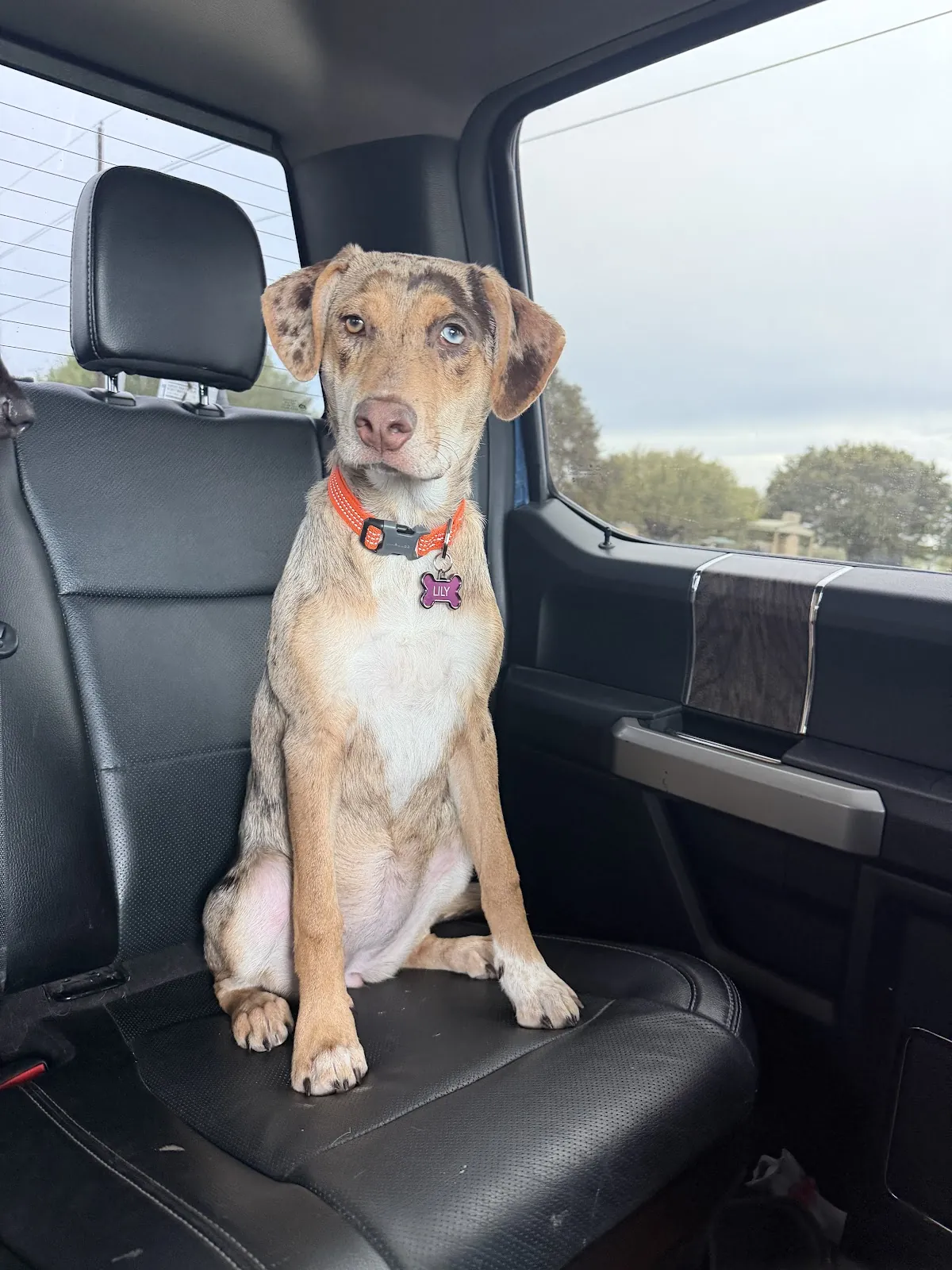
A barking dog in a moving car is more than noise. It distracts the driver on a busy road, and a loose dog bouncing between the seats is at risk in a sudden stop.
Last reviewed September 29, 2026 · by the Best Dog University Team
The answer
Excitement, frustration at the window or anxiety about the ride.
Excitement is the most common reason. If the car usually goes to the park, the lake or daycare, the dog starts barking as soon as it recognizes the route, and the noise builds as you get closer. Frustration is next. A dog that sees other dogs, joggers or bikes through the window, cannot get to them and watches them disappear barks at each one, and the car moving on makes the barking feel successful. This is the same barrier frustration that shows up at windows and fences.
Anxiety looks different. The dog pants, drools, whines or paces, and the barking has a higher, frantic tone. Some dogs are uncomfortable with motion, others were frightened on an early trip, and some only ride to the vet. If every trip ends at the vet or the groomer, the car itself predicts something unpleasant, and the dog protests as soon as it is loaded. Anxious barking needs a slower plan than excitement, and a vet's advice for a dog that drools or vomits.
- Excitement: builds on the way to the fun place
- Frustration: aimed at dogs, people and bikes outside
- Anxiety: panting, drooling, whining, pacing
- Motion discomfort: worse on winding roads or stop-and-go
Safety first
A secured dog is safer and usually quieter, and a covered crate is the best start.
A dog loose in the car can be thrown in a sudden stop, can distract you at the wrong moment and can get between you and the pedals. A crate that is tied down, or a crash-tested seat harness, keeps the dog in one spot. Covering the crate, or using window shades in the back, cuts the view that sets off frustration barking and often calms an excited dog within minutes.
Keep the car cool before the dog gets in, and never leave a dog in a parked car in the Houston heat, even for a quick stop; the AVMA's heat guidance explains why. A dog that is hot is more restless and louder. In summer, run the air for a few minutes first, park in the shade at home, and keep water in the car for longer drives, so heat is not adding to whatever else the dog is feeling.
- A tied-down crate or crash-tested harness
- A cover over the crate or shades on the windows
- Air conditioning running before the dog gets in
- No dog left in a parked car in the heat
What to do
Make the car boring, block the triggers and pay the quiet.
Start in the driveway. Put the dog in its crate or harness with a chew, sit with the engine off for a few minutes, and get out without going anywhere. Then short drives around the block, then to places that are dull, like a quiet parking lot where you sit for a minute and go home. The car stops always meaning the park, and the excitement drops.
For frustration barkers, the cover or window shades do much of the work. Keep a small bag of treats in reach of a passenger, and pay the dog for quiet moments as you pass triggers. Stay calm yourself. Shouting over the barking tends to add to it. If you are driving alone, skip the treats and rely on the cover and short, calm drives, because your attention belongs on the road, and come back to the paid work on a weekend when someone can ride along.
Secure the dog in a covered crate or crash-tested harness
Sit in the parked car with the dog and a chew, then get out
Take short drives around the block, then to boring places
Mix fun destinations with plenty of dull ones
Block the view of passing dogs and people with a cover or shades
Have a passenger pay quiet moments with a treat
Talk to your vet if the dog drools, vomits or shakes on every trip
The Houston factor
Long drives on 290, dogs in the next lane, and a car that has to be calm before hurricane season.
Almost everything in Houston is a drive: the vet, the park, the lake, the in-laws, the drive to the training home in Cypress, about 30 to 45 minutes outside rush hour from the inner loop. Stop-and-go traffic on 290, I-10 and the Beltway means a dog at the window sees dogs in the next lane, pedestrians at every light and bikes on the shoulder, over and over.
Hurricane season, June 1 to November 30, is another reason to get the car right. An evacuation drive can be many hours in heavy traffic, and a dog that is calm in its crate in the car is safer and far easier to travel with. Ready.gov's pet preparedness page covers the rest of the plan.
At Best Dog University
A lesson for most car barkers, Gold for the dog that panics, Platinum for reactive barking.
Most dogs that bark in the car improve with an in-home lesson at $220, where our trainer runs the first steps with you in your driveway and sets the plan for the weeks after. A dog that panics in the car or has never been crate trained fits the two-week Gold program at $2,500, where the crate and the car are built into daily field trips. A dog that barks and lunges at dogs and people outside the car, as it does on walks, is reactive and fits the three-week Platinum program at $3,750. Families can add the $250 transportation service, a calm crated ride to and from the training home.
The programs
Programs for the dog that barks in the car.
An in-home lesson for most, Gold for the dog that panics in the car, Platinum when the barking is reactivity at the window.


Asked and answered
Questions people ask about this.
Should I let my dog look out the window?
Not while it barks at things outside. A covered crate or window shades cut the view that triggers frustration barking. Once the dog is calm for a few weeks, you can give it a little more view on quiet roads and see how it does.
Why does my dog only bark in the car when we get close to the park?
It has learned the route. The familiar turns and sights tell the dog the fun is coming, and excitement builds into barking. Drive the same route to boring places, sit in the lot and go home, so the route stops always meaning the park.
Is it safe to give my dog something to calm it in the car?
That is a question for your vet, especially for a dog that drools, vomits or shakes on every trip. Training and a secured crate help most dogs, and your vet can advise on whether anything else is right for your dog.
Can my dog ride in the front seat?
It is not a good idea. A dog in the front seat is a distraction and can be injured in a sudden stop. The back seat, in a tied-down crate or a crash-tested harness, is the safer place.
Keep reading
Free consultation · 10% off this fall
Secure the dog, then quiet the drive.
Tell our team what your dog does in the car and where you usually drive, on a free consultation call.