
Between leash and freedom
What is a long line in dog training?
Families usually hear the term when a trainer says their dog is not ready to come off leash yet. Here is what the line is, what it teaches, and how our trainers use one in open grass and at the lake near our Cypress training home.
Last reviewed September 29, 2026 · by the Best Dog University Team
The tool
It is simply a long, light leash, and the material matters more than the brand.
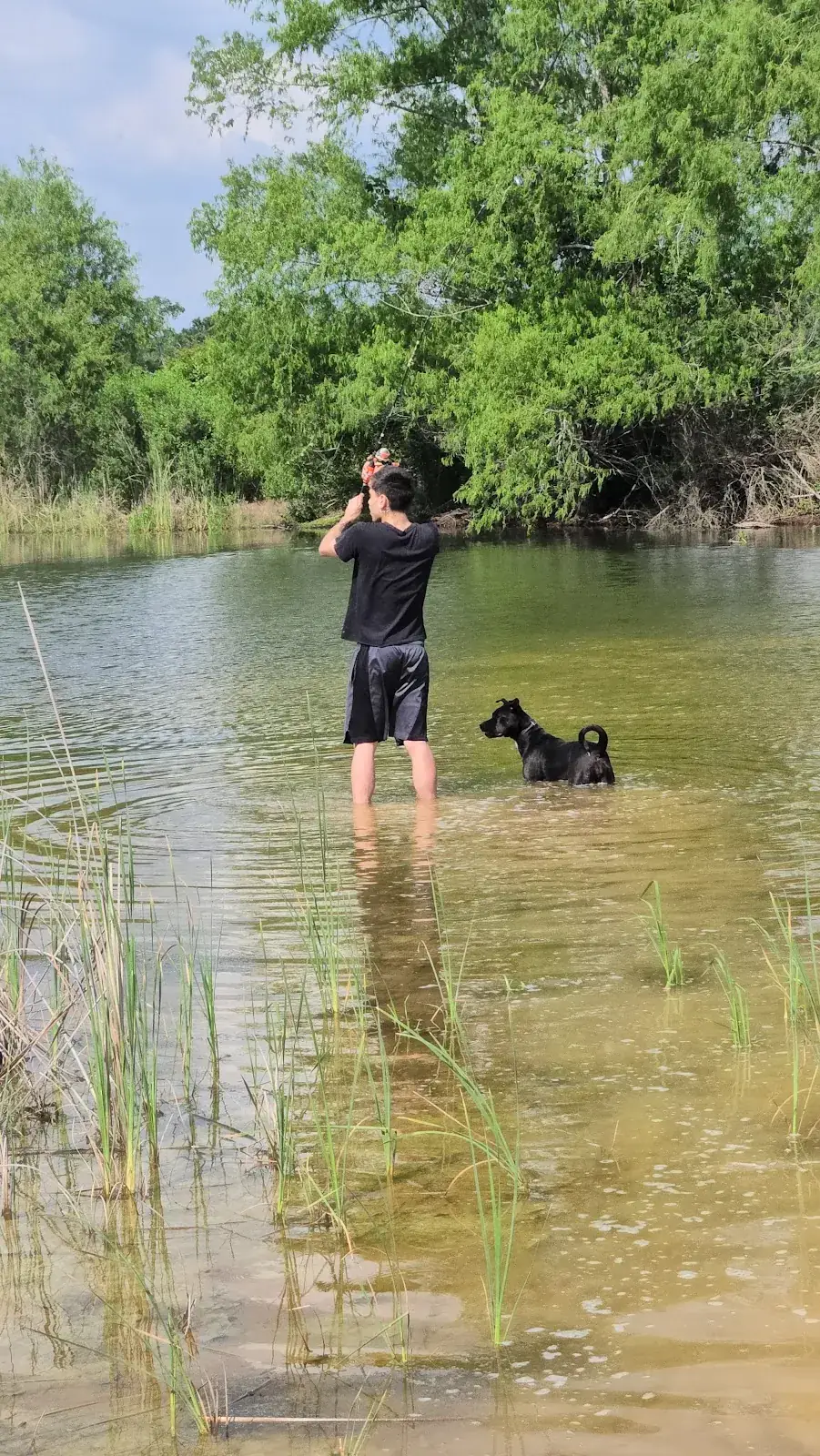
Most long lines are flat nylon webbing or coated biothane. Biothane is the better choice for Houston, because it does not soak up water, it wipes clean after a muddy trail and it does not turn into a heavy wet rope after the dog wades through a retention pond. Skip anything with a loop at the dog's end that can snag, and skip rope that burns when it runs through your fingers.
Length is a trade. A 15-foot line is easy to manage in a neighborhood green space; a 30-foot line gives a dog real room in an open field but takes practice to handle without tangles. There is no handle to hold onto in the usual sense: you gather the line in loose loops, let the rest trail, and control the dog with your feet and hands rather than your strength.
- Biothane or flat webbing, not rope
- No snag loops at the dog's end
- Short for green spaces, long for open fields
- Gathered in loops, never wrapped around a hand
What it teaches
It makes every recall enforceable, and enforceable is what makes a recall reliable.
A dog off leash that ignores a recall learns in one afternoon that the word is optional. On a long line that lesson never happens, because you can step on the line, stop the dog and guide it back every single time the word is used. The dog experiences freedom, sniffing, running out and exploring, while the rule stays constant: when the word comes, you come.
The same line teaches distance stays, calm around distractions at a range and the habit of checking in on its own. It is also useful for a newly adopted dog that has not proven it will come back, and for a dog in a new place, such as a vacation rental or a friend's acreage near Tomball, where one bolt could end on a road.
- Recall that is enforced every time
- Distance stays and distraction work
- Check-ins the dog chooses on its own
- A safety net for a new dog or a new place
Handling
Hold it in loops, let the end trail, and step on it rather than grab it.
Most long-line injuries are to people, not dogs: a hand burned by a running line, a finger caught in a wrapped loop, an ankle swept by a dog circling at speed. Gloves help on a big dog. Keep the line off your fingers and let your weight do the stopping.
Clip the line to a flat collar or a back-clip harness, never to a prong or a head halter, because a dog hitting the end at speed takes the full jolt at the neck.
Gather a few loose loops in one hand and let the rest trail on the ground behind the dog.
Let the dog drift and sniff, and say the recall word once, only when you can enforce it.
If the dog ignores it, step on the line, then reel it in hand over hand with steady, even pressure.
Pay the arrival at your feet with food or a toy, then release the dog back to what it was doing.
When recall is reliable, drop the line and let it drag for weeks before you ever take it off.
The Houston version
Choose open grass away from water, look down for fire ants, and go early.
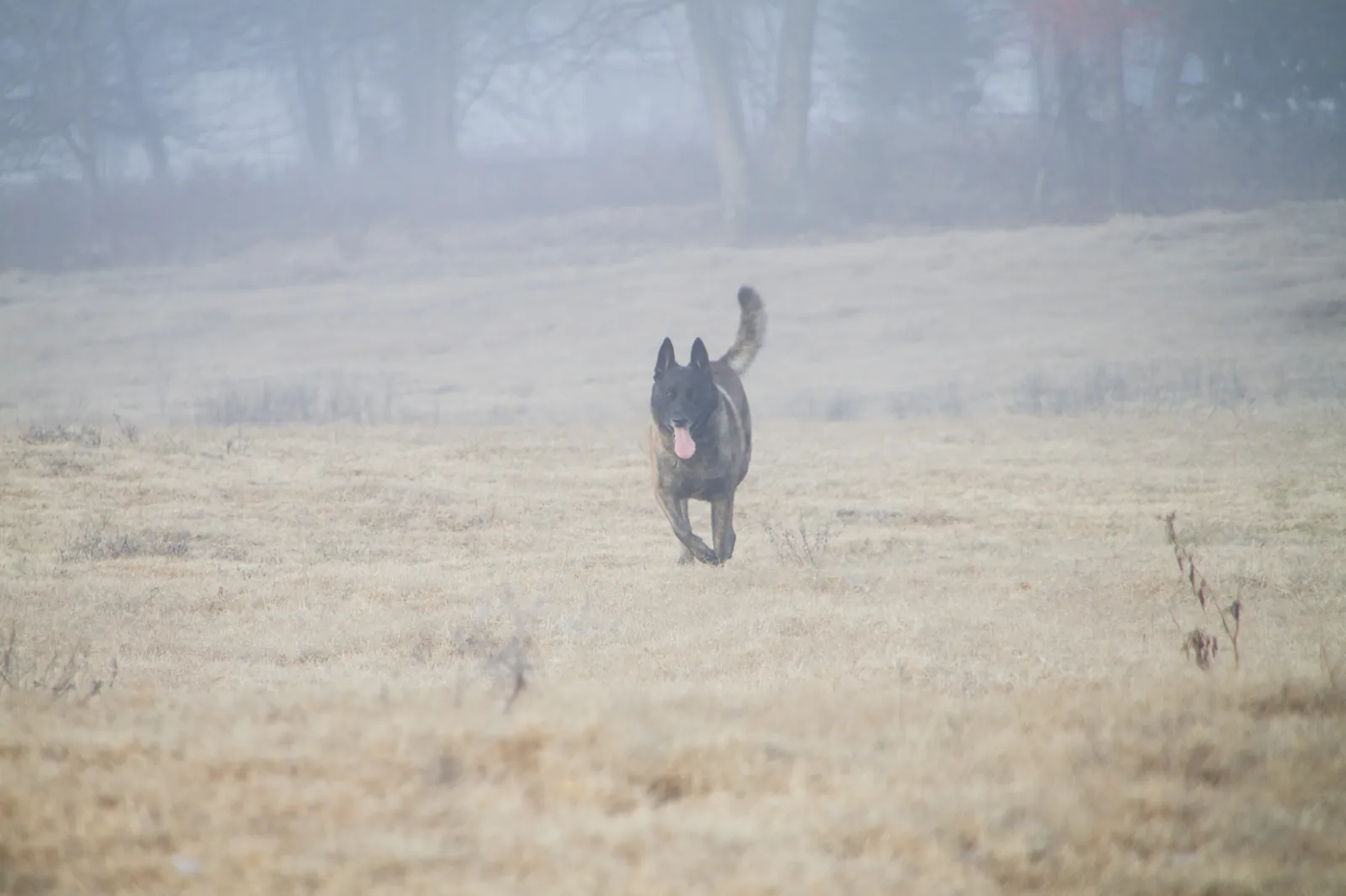
Pick the field before the dog. Bayous, drainage channels and neighborhood retention ponds across Houston can hold alligators, and a thirty-foot line gives a dog enough reach to be at the water's edge before you have taken a step. Fire-ant mounds catch a trailing line and send a dog, or a hand, straight into the ants. Walk the ground first and stay well back from the edge of any water.
From May to September the work moves to early morning and evening, when the grass has cooled and the pavement passes the back-of-hand test. Leash rules in city parks and on many trails apply at the time of writing, and a line stretched across a busy path is a hazard to cyclists and other dogs. Never bring a long line into an off-leash dog park, where it tangles in the first play session.
At Best Dog University
Our trainers use a long line to build distance work, and VIP turns it into off-leash reliability.
For the family whose dog comes back in the kitchen and nowhere else, private lessons are the honest fit: $160 at our Cypress location or $220 in your home, where our trainer shows you how to hold the line, set up the first sessions and read when the dog is ready to drag it. Two or three lessons usually get a family handling it cleanly.
For the family that wants the leash off entirely, the six-week VIP program at $10,000 builds recall on the long line first, then layers in the Mini-Educator e-collar at a level the dog can barely feel, and only then removes the line. Transport home, the in-home handover and unlimited in-home lessons are included, and the free phone consultation is where our team tells you which path fits.
The programs
Learn the line in lessons, or go all the way off leash.
Lessons teach you to handle a long line safely; VIP uses it as the first stage of a dog that is reliable with no leash at all.

Asked and answered
Questions people ask about this.
How long should a long line be?
For most families, 15 to 30 feet. A shorter line is easier in a neighborhood green space and around trees; a longer one suits an open field once you can handle it without tangles. Start shorter than you think, because a line you can manage beats a longer line that ends up wrapped around your legs.
Can I use a retractable leash instead?
No. A retractable leash keeps constant tension on the dog, which teaches pulling, and the thin cord can cut skin. If the handle is dropped, it chases the dog and can frighten it into running. A long line is slack until you need it, and you decide when it tightens.
Should the long line go on a collar or a harness?
A flat collar or a back-clip harness. A harness spreads the stop across the chest if the dog hits the end at a run, which is why many trainers prefer it for recall work. Never attach a long line to a prong collar or a head halter.
When can my dog come off the long line?
When the dog has come back on the first call, every time, for weeks, in several places with real distractions, and then after more weeks of dragging a dropped line. Most families underestimate that stage. Taking the line off is the last step, and it happens in a safe, legal place first.
Is a long line allowed in Houston parks?
A long line is still a leash, but park rules on leash length and off-leash areas vary and change. At the time of writing, most city parks and trails require dogs to be leashed; check the Houston Parks pages or the county precinct that runs the park for the current rules before you go.
Keep reading
Free consultation · 10% off this fall
Want recall you can trust?
Tell our team where your dog stops listening on a free phone consultation. We will say whether lessons or a VIP stay fits, and a $250 deposit reserves a spot when you are ready.