
Duration, distance, distraction
What are the three Ds of dog training?
Trainers use the phrase constantly, and families nod along without always knowing what it means for their dog. Here is the idea in plain terms, how to use it at home and why it explains most of the failures you see.
Last reviewed September 29, 2026 · by the Best Dog University Team
The three dials
Duration is time, distance is space, and distraction is everything else going on.
Duration is how long the dog holds the position before you release it. Distance is how far you can move away while it holds, including stepping out of sight. Distraction is whatever competes for the dog's attention: a dropped treat, a child running past, a doorbell, a squirrel, another dog on the far side of a parking lot.
A command is only as good as its weakest D. A dog that holds a sit for two minutes with you standing close, in a quiet kitchen, has duration and nothing else. The same dog may break the moment you step back or a delivery driver knocks, which is why so many families say their dog knows the command but will not do it.
- Duration: how long it holds
- Distance: how far you can go
- Distraction: what else is happening
- A command is as strong as its weakest D
One at a time
Raise one D at a time, and make the other two easy while you do it.
The rule that makes the system work is simple: when one dial goes up, the other two come down. If you are adding distance, ask for shorter holds. If you are adding distraction, stand close again and keep it brief. Asking for a long stay at a distance with a distraction all at once is how dogs fail, and repeated failure teaches a dog that breaking is normal.
| The D | Easy version | Harder version | A real-life test |
|---|---|---|---|
| Duration | Three seconds | Several minutes | Place through a family dinner |
| Distance | You beside the dog | Across the room or out of sight | A stay while you answer the door |
| Distraction | A quiet kitchen | A dropped treat or a ball rolling past | A sit in a busy store aisle |
Reading a failure
When a dog breaks, look at which D went up, and step back on that one.
A broken stay is information. If the dog gets up the moment you step away, distance rose too fast. If it holds nicely for twenty seconds and then drifts, duration outran the training. If it holds in the living room and breaks when the doorbell rings, distraction is the missing piece. Each has the same fix: go back to a level of that D where the dog succeeds, and climb again in smaller steps.
Do not keep repeating a failed rep louder. Calmly put the dog back where it was, make the next rep easier, and end the session on a success.
- Breaks as you step away: distance
- Drifts after a while: duration
- Breaks at the doorbell: distraction
- Fix: back to success, then smaller steps
The front door
Put all three together for the front door, one layer at a time.
The front door is where most Houston families want the three Ds, with delivery drivers, lawn crews and guests arriving all week.
Teach place or a sit near the door with you close and nothing happening, and build a minute of duration.
Keep the hold short and add distance, walking to the door and back.
Stay close and add a mild distraction: touch the handle, then open the door a crack.
Add a knock or the doorbell, still with you close and short holds.
Ask a friend to play delivery driver while you open the door and the dog holds.
Only now combine a longer hold, you at the door and a real visitor.
At Best Dog University
The last layer is real places, and that is where field trips come in.
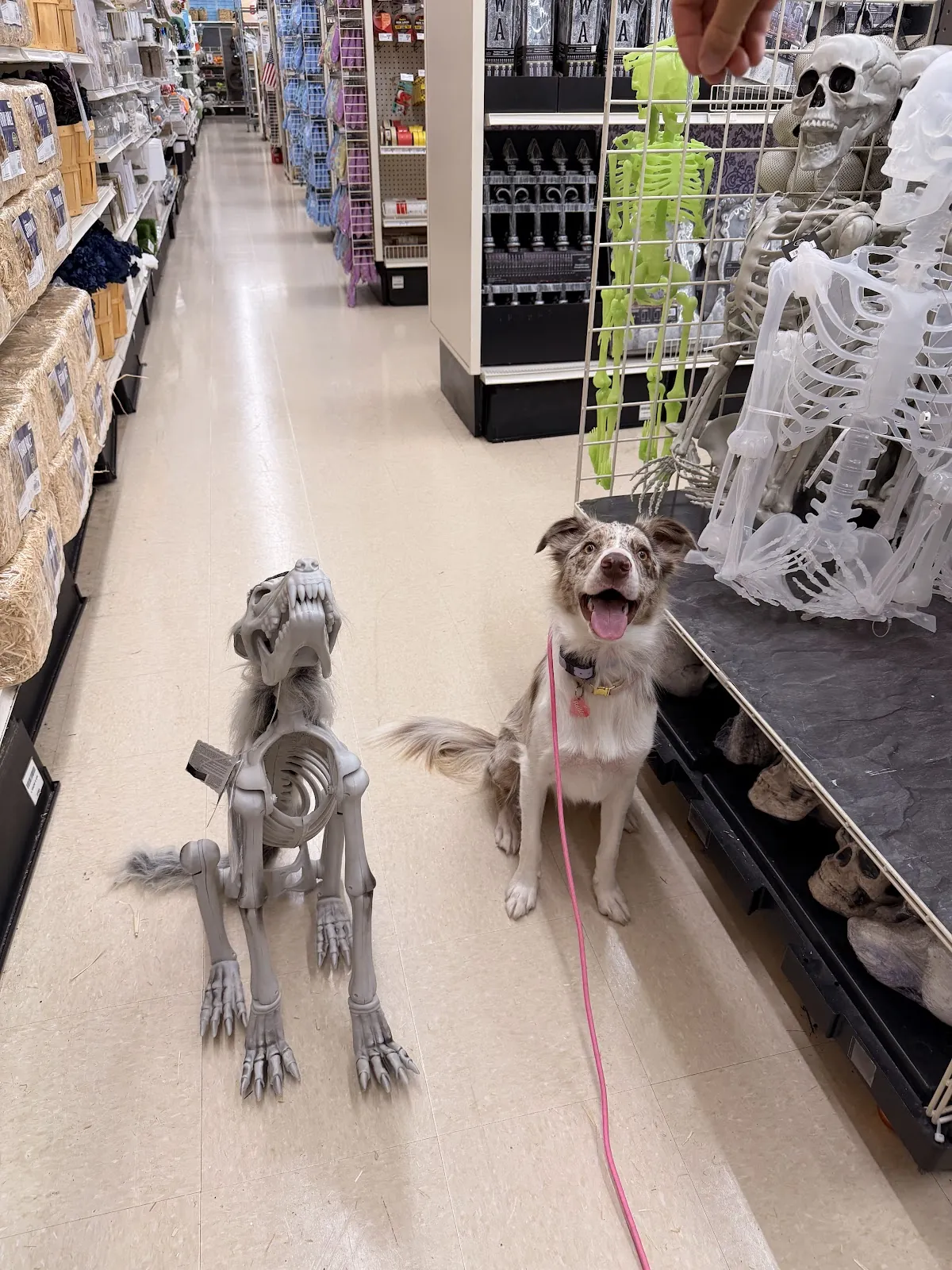
A dog that has the three Ds at home still has to learn that they apply everywhere. Our Platinum and VIP dogs practice on field trips to the pet and hardware stores along US-290 and Fry Road, on Cypress sidewalks and at the lake, so a sit in a busy aisle becomes normal. The two-week Gold program at $2,500 builds sit and stay and place and stay at the training home; the three-week Platinum program at $3,750 adds the field trips and a down and stay; the six-week VIP program at $10,000 builds duration stays and off-leash reliability.
From May to September, public practice runs early in the day and inside air-conditioned stores, which suits distraction work well. Private lessons, $160 in Cypress or $220 at home, cover the three Ds for a family that wants to do it themselves.
The programs
From home stays to real places.
Gold builds the stays, Platinum proofs them on field trips, and VIP makes them reliable off leash.



Asked and answered
Questions people ask about this.
Which D should I train first?
Duration, with you close and nothing going on. It is the easiest to build and gives the dog the habit of holding a position. Distance comes next, then distraction, although in practice you move back and forth between them as the dog improves. Always lower the other two while you raise one.
Is there a fourth D?
Some trainers add one, usually location, meaning the same behavior practiced in many different places. It is a useful reminder that dogs do not generalize well. A stay learned in your kitchen has to be taught again, more quickly each time, in the yard, on the street and in a store.
My dog does everything at home but nothing at the park. Why?
The park raises distraction far above anything at home. Go back to short, close, easy reps at the edge of the park, reward heavily and leave before the dog fails. Build up over several visits. It is not stubbornness; the distraction dial jumped too far at once.
How long does it take to proof all three?
It depends on the dog and how often you practice, so we do not put a number on it. Short daily sessions beat long weekly ones. Families who work five minutes a day across several places see steady progress, and our trainers can show you where to start.
Sources
Keep reading
Free consultation · 10% off this fall
Commands that fall apart in public?
Tell our team where your dog's training breaks down on a free phone consultation. We will say whether Gold, Platinum or lessons fits, and a $250 deposit reserves a stay.