
Crate and a workday
Is it ok to crate a puppy during the day while I work?
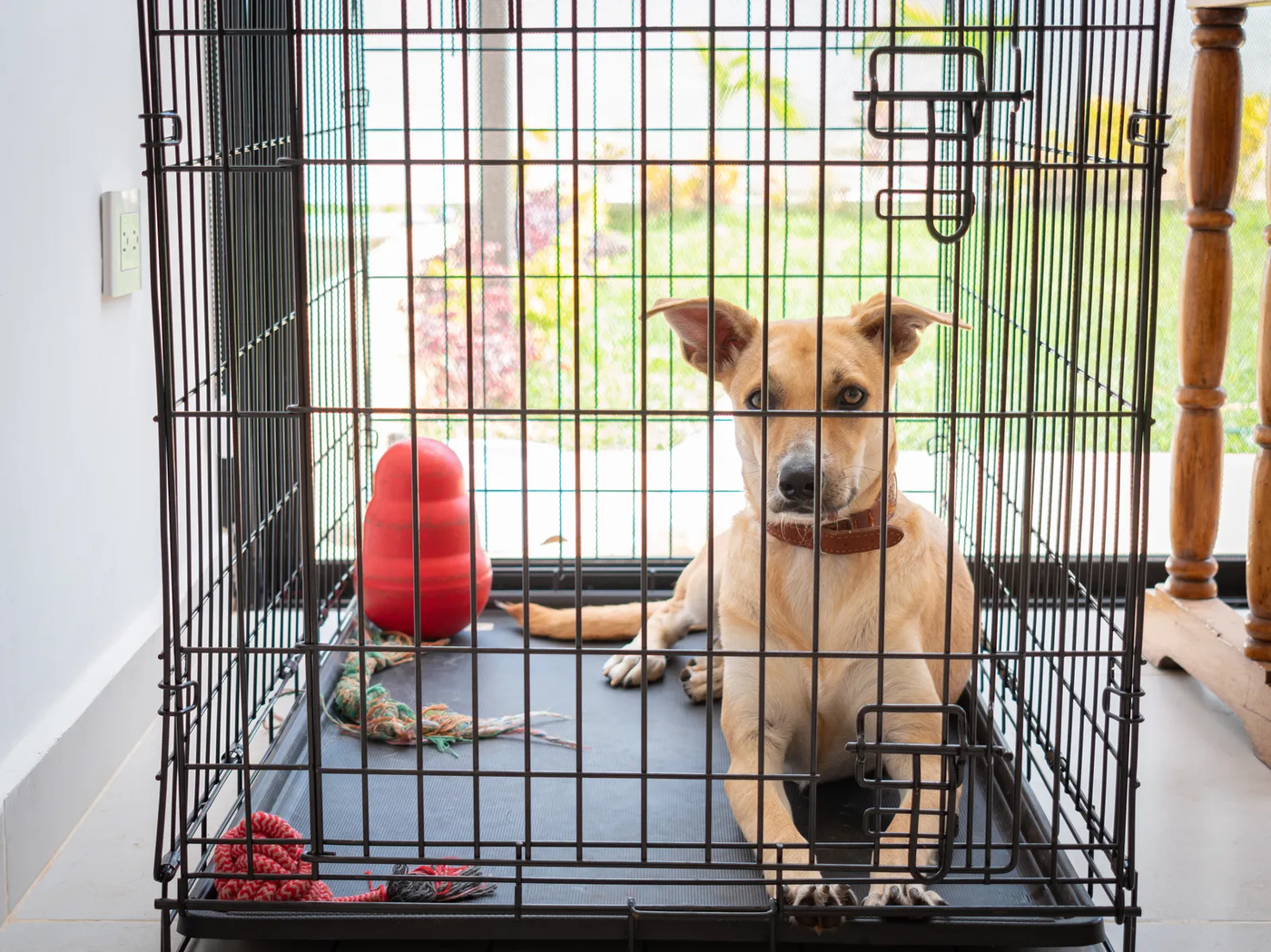
Most families asking this have a start date at work and a puppy arriving the weekend before. The crate is the right tool; the question is how to split the day so it stays a den and never becomes a place the puppy dreads.
Last reviewed September 29, 2026 · by the Best Dog University Team
The short answer
Yes, in stretches the bladder can handle, with someone coming by in the middle.
A crate keeps a young puppy away from cords, shoes and the back of the sofa, and it keeps the house clean because a puppy will not soil where it sleeps if the stretch is short enough. It also makes being alone ordinary, which prevents the separation problems that start when a puppy is never apart from its people.
What makes it unkind is length. An eight-week puppy crated for nine hours will soil the crate, learn that the crate is a toilet and start to dread the door closing. The fix is not skipping the crate; it is breaking up the day.
- Safe from cords, shoes and furniture
- Clean, if the stretch is short enough
- Alone time becomes ordinary
- Too long, and the crate becomes a toilet
The workday math
Count the hours door to door, not the hours at your desk.
An eight-hour job with a commute from Bridgeland or Fairfield into central Houston is usually ten hours or more away from the house, since that drive alone runs about 30 to 45 minutes each way outside rush hour and longer in it. That is why the plan needs a midday visit until the puppy is well past six months, and often longer.
The visit is a trip to the potty spot on a leash, a few minutes of calm handling and a short training game, then back in the crate with a chew. It is not an hour of wild play that leaves the puppy wound up for the afternoon.
Morning: out to the spot, breakfast in the crate, out again, a short walk or yard game
Before you leave: out once more, then crate with a chew, no long goodbye
Midday: a visitor takes the puppy out, a few minutes of calm, back in the crate
Afternoon: a second visit for a puppy under about four months
Return: calm greeting, straight out to the spot, then play and training
Evening: naps in the crate between short sessions, last trip before bed
Beyond the crate
A playpen with the crate door open is the next step, not a replacement.
Once a puppy is clean in the crate and settles without protest, a small exercise pen or a gated laundry room with the crate inside and the door open gives it a little more room for a workday. The crate stays the bed; the pen is a larger den. Keep it in the air conditioning, with water clipped in place and nothing chewable but its own toys.
Skip pee pads in the pen if you can. They teach the puppy that indoors is a bathroom, which is the most common reason a five-month puppy still has accidents in the house.
- The crate stays inside the pen as the bed
- Air conditioning and clipped water
- Only its own chews within reach
- No pee pads if you can avoid them
Working from home
A puppy that is never apart from you needs crate time anyway.
Families who work from home often skip the crate because someone is always there. The result is a puppy that follows every step, cries at the bathroom door and panics the first day everyone leaves. Crate it for naps and for an hour or two of focused work each day even while you are home, in another room part of the time.
In a Houston summer, the long indoor days make this easy to forget, because the puppy cannot go out at noon anyway and the couch feels like a good compromise. Put the crate naps in the calendar like meetings.
What we do at Best Dog University
The bundle builds the crate and the alone time together, around your schedule.
Our Puppy Development Bundle is four private sessions for puppies under four months, $550 at the Cypress training home or $750 at your house, and it covers the crate, the potty schedule and alone time in the first session, planned around your real workday and commute. Crate training is one of the most common reasons families call us before a return to the office.
The honest fit: a puppy past four months that panics in the crate, rather than protesting, may need more than a schedule, and our team will talk through private lessons at $160 or $220, or a stay from about four to five months.
The programs
Programs for the working family's puppy.
The bundle for a young puppy's crate and schedule, lessons for an older puppy, a Gold stay when the crate needs rebuilding.

Asked and answered
Questions people ask about this.
How long can a puppy stay in a crate while I work?
About two hours at eight weeks, gaining roughly an hour a month, to a four or five hour stretch around five to six months. A full workday needs a midday visit at every age for a puppy. Count your commute too; a long Houston drive can add an hour or more each way at rush hour.
Is it cruel to crate a puppy for eight hours?
Eight hours straight is too long for a puppy, and that is where the harm comes from, not from the crate. Break the day with a visitor at lunch, and for a puppy under about four months a second visit in the afternoon. The crate itself, used within the bladder limit, is a safe den.
Should I leave water in the crate?
Yes, in a Houston summer and during any long stretch, clipped to the door so it cannot tip. The puppy will need its trips a little sooner, and the schedule should allow for that. Ask your veterinarian if you have concerns about water and overnight crating for your puppy.
What if I cannot get home at lunch?
Arrange a neighbor, a family member or a dog walker for the midday trip until the puppy is well past six months. The visit only needs to be a leashed trip to the spot, a few calm minutes and back in the crate. It is what makes a working family's first months possible.
Keep reading
Free consultation · 10% off this fall
Plan the workday before the puppy arrives.
Tell our team your hours and your commute. The free phone consultation is a direct call, and we will help you build the crate schedule.