
Board and train · Safety
Is board and train safe?
Safety is the question underneath most of the others families ask. Here are the risks that are real in a Houston stay, how each one is handled, and what to ask any program before you trust it with your dog.
Last reviewed September 29, 2026 · by the Best Dog University Team
The short version
Safe programs control four things: the housing, the other dogs, health and the weather.
Housing is first. A dog in a house with people in it all day is watched, cool and never left alone in a building overnight. The other dogs are second: a limited number, all known to our team, introduced at a pace each one can manage. Health is third: vaccination records from every dog, your vet's details on file and a trainer who notices a change in appetite, stool or energy on the day it happens.
Weather is the fourth, and in Houston it is not optional. Heat, storms and hurricanes each have a plan before the season starts. Those four together cover almost every real risk in a stay, and they are the things to ask about in any program. A trainer who answers each one with specifics, rather than reassurance, has thought about them before your dog arrives.
- A house with people in it, not a kennel building
- A limited number of known dogs
- Vaccination records from every dog
- Changes noticed the same day
- A plan for heat, storms and hurricanes
The other dogs
Most of the risk in group settings comes from unplanned dog meetings, so ours are planned.
Dogs are not turned out together to sort themselves out. A new dog meets the house slowly: other dogs at a distance first, then short, supervised contact with a well-matched dog, and more only as each dog shows it can stay calm. Dogs rest and sleep in their own crates, eat apart and are never left loose together unsupervised. Reactive and aggressive dogs are managed on a leash and at a distance until the work says otherwise.
The mix itself is planned. Only a limited number of dogs live in the home at once, and our team considers who is already booked when setting your dates, including intact males and females. That is part of why dates are reserved in advance rather than first come, first served, and why our team asks about your dog's history with other dogs on the consultation call before offering any dates.
- Introductions at a distance first
- Supervised contact with a well-matched dog
- Separate crates, separate meals
- The mix of dogs planned around your dates
The Houston risks
Heat, fire ants, mosquitoes and storms are the hazards that actually cause trouble here.
Heat is the most serious. From May to September outdoor work runs at first light and after sunset, the pavement is checked by hand, water is always down and midday work moves into the house and air-conditioned stores. Fire ants are in every Cypress yard, so meals are indoors and walks stay on paths. Mosquitoes carry heartworm all year, which is why prevention should be current before the stay.
Storm season needs a plan too. Hurricane season runs June 1 to November 30, and every dog's records and an evacuation contact are on file from drop-off; if a storm threatens, our team calls you before any plan changes. July 4 and New Year's Eve are planned as quiet indoor nights, because a dog that bolts from fireworks is a dog in danger.
Confirm vaccinations and heartworm, flea and tick prevention with your vet.
Send medications in their containers with written doses.
Give us your vet's details, an emergency contact and consent for treatment.
Add an evacuation contact if your dates fall in hurricane season.
Tell our team about any health condition, fear or bite history on the call.
Watch the Monday, Wednesday and Friday updates and text with any concern.
If something goes wrong
We call you first, then act, and your vet's details are already on file.
Because your dog lives in the house, a change is noticed the same day. Anything beyond a mild upset stomach means a vet visit, using your own vet where possible and the nearest clinic in an emergency, and you hear from us before the decision is made unless an emergency cannot wait. A sick day pauses the training; the rest of the stay is planned with you.
No program can promise a dog will never be sick or hurt, and one that claims so is not being straight with you. What a program can promise is attention, a plan and a phone call. Ask any trainer what they would do in a heat emergency or an evacuation, and listen for specifics: who drives, where the dogs go, who calls you and when.
What we do at Best Dog University
Every program runs in the same home under the same safety rules.
Silver, one week at $1,500, Gold, two weeks at $2,500, Platinum, three weeks at $3,750, and VIP, six weeks at $10,000, all live under the same roof and the same rules. Field trips in Platinum and VIP are chosen for the dog and the weather, never a crowded hot sidewalk at noon. The $250 door-to-door transport, included in VIP, keeps a car-anxious dog's trip short and supervised.
The best safety check is transparency. You see your dog three times a week on video, a quick text gets a quick reply, and the same trainer who takes your dog on day one hands you the leash at the go-home session. Ask our team anything about safety on the free consultation call before you reserve.
The programs
Programs run in one home, under one set of rules.
Gold, Platinum and VIP all live in our trainer's house in Cypress, with the same care and safety plans.



Asked and answered
Questions people ask about this.
Do dogs get hurt playing with the other dogs?
Unplanned play is where most injuries in group settings happen, so play here is planned: well-matched dogs, short sessions, supervision throughout and nothing loose together unsupervised. Dogs that do not enjoy other dogs are not forced into contact. Tell our team how your dog plays so the plan fits.
What if my dog gets sick during the stay?
We call you first, then act. Anything beyond a mild upset stomach means a vet visit, with your own vet where possible and the nearest clinic in an emergency. At drop-off we take your vet's details, an emergency contact and your consent for treatment. Our team confirms how vet costs are handled when you reserve.
Is it safe to train in the Houston summer?
Yes, with the right schedule. Outdoor work moves to first light and after sunset from May to September, pavement is checked by hand, water is always available and the hot hours are spent training indoors and in air-conditioned stores. Short-nosed breeds get extra care in the heat.
What happens if a hurricane is forecast during my dog's stay?
Our team tracks the forecast from June through November and calls you early if a storm threatens the dates. Depending on the track, dogs either go home ahead of it or shelter in place with us. Every dog's records and evacuation contact are on file from drop-off.
Are the tools you use safe?
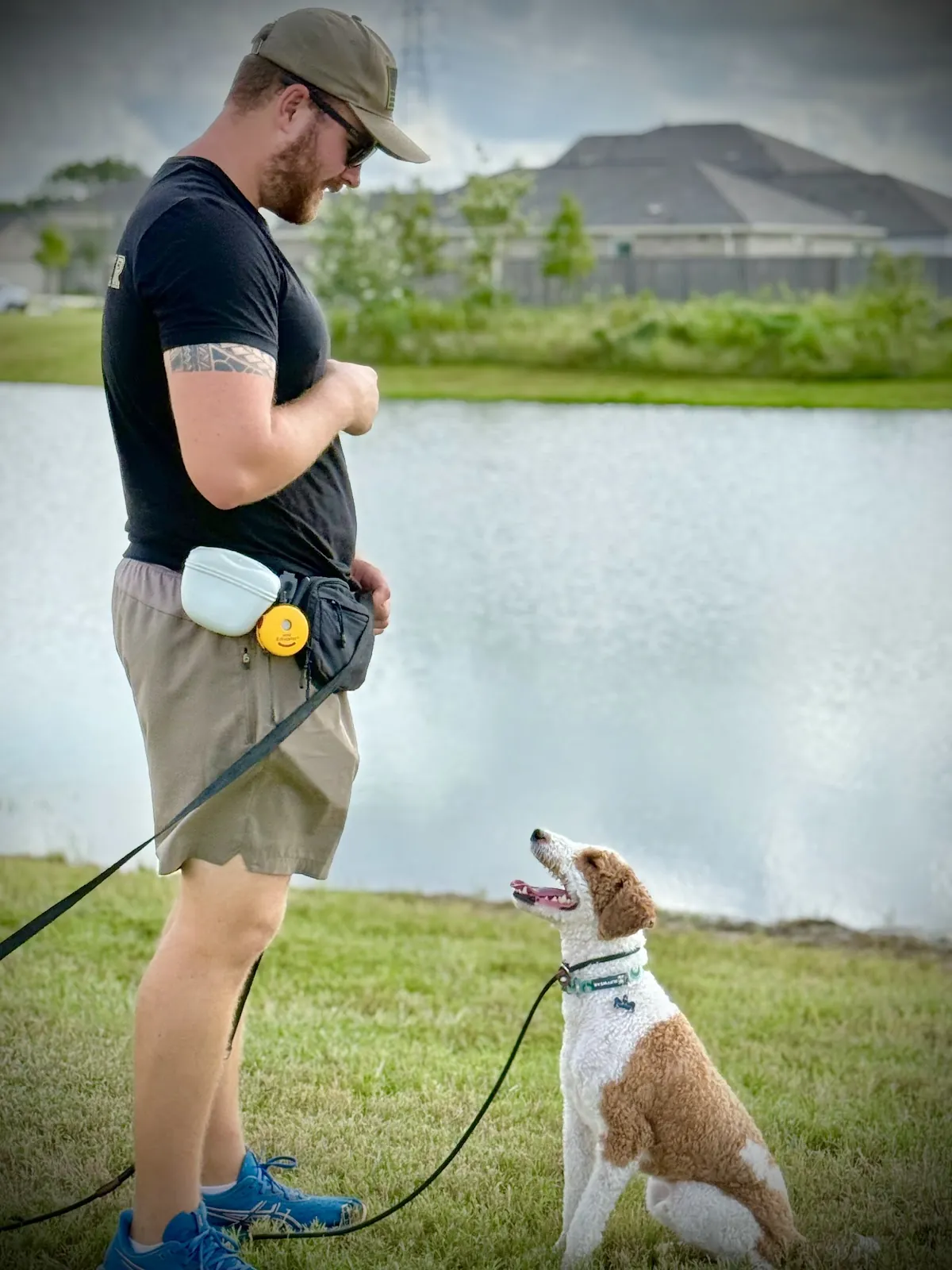
Tools are chosen for the dog, fitted correctly and used only after the command has been taught. Many dogs finish on a flat collar or a slip lead. The Mini-Educator e-collar is included in VIP and introduced at a low level after the dog understands the command. Our training methods page explains each tool.
Keep reading
Free consultation · 10% off this fall
Ask our team anything about safety.
Book the free consultation call and ask every safety question you have. When the program fits, a $250 reservation deposit holds your dates and comes off the price.