
Inside the remote collar
How do e-collars work?
Most people have strong feelings about e-collars before they have held one. This page explains the mechanics plainly, so you can judge the tool, and the way our trainers use it, on what it actually does.
Last reviewed September 29, 2026 · by the Best Dog University Team
The hardware
A remote, a receiver and two contact points, with a dial that decides everything.
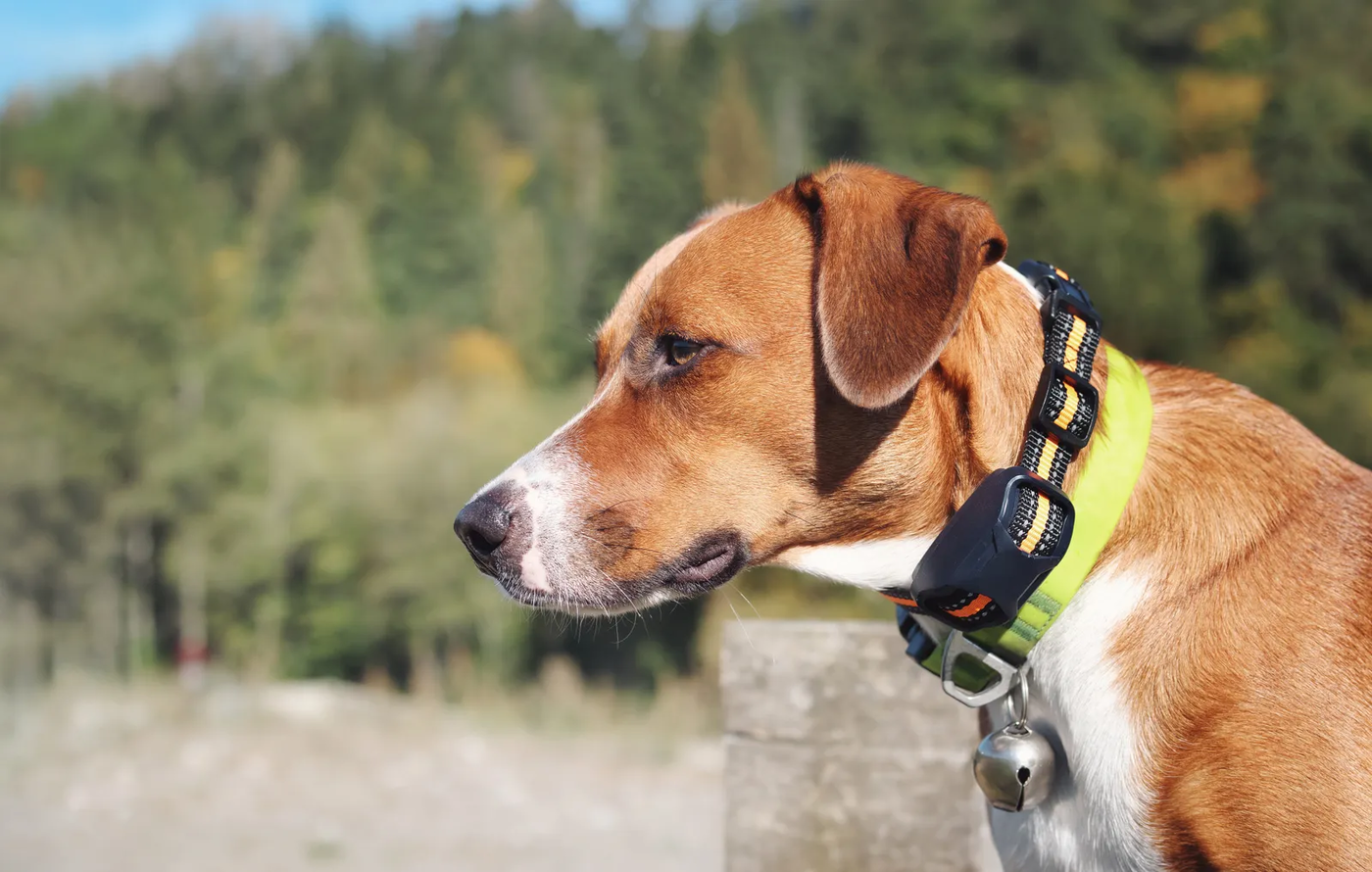
The handler holds a remote with a dial or buttons for the level. The dog wears a receiver on a snug strap, with two small contact points that touch the skin of the neck. Press a button and the receiver delivers whatever the remote asked for: a stimulation at the level on the dial, a vibration, or a tone. Better collars offer a quick tap that lasts a fraction of a second and a continuous mode that lasts as long as the button is held.
The dial is where collars differ most. A collar with a wide range of fine steps lets a handler find a level the dog can just feel. A cheap collar with a few coarse settings jumps from nothing to startling, and that is where most of the bad stories start. The Mini-Educator our trainers use in VIP has fine adjustment at the low end, which is the point of choosing it.
- Remote in the hand, receiver on the neck
- Stimulation, vibration or tone
- A momentary tap or a continuous hold
- Fine low levels matter more than anything else
The learning
It works through pairing: the tap comes to mean a command the dog already knows.
Think of the tap as a leash cue that works at a distance. A dog that already comes on a long line feels the tap at the same moment it hears the word and feels the line guide it in. The tap stops the instant the dog turns toward you, and the arrival is paid with food or praise. Over many repetitions the dog learns two things: the tap means the word it knows, and turning toward you switches the tap off.
Once that link is solid, the leash can fade and the tap still carries the message. Timing is the whole skill. A tap that lands a second late, or lasts after the dog has already responded, teaches confusion instead. That is why the handler is taught as carefully as the dog.
- Taught on a leash first
- Tap paired with a word the dog knows
- Tap ends the moment the dog responds
- The response is still rewarded
What it is not
It is not a bark collar, an invisible fence or a punishment button.
Bark collars and electric containment systems fire automatically when a sensor is triggered, with no person deciding the moment. A remote training collar only does something when a handler presses the button, and in our hands that happens at a level the dog barely notices, on a cue it has already learned.
It is also not a way to skip teaching, and it has no place with a frightened dog. Pressure on a dog that is afraid of fireworks, a stranger or another dog confirms the fear rather than resolving it. Fear is worked with distance, structure and food. A trainer who reaches for the collar to fix a dog that was never taught, or a dog that is scared, is using the tool wrong.
Day one on the collar
The dog wears it before it is ever used, and the first tap is barely there.
Our trainers introduce the collar in the VIP program only after weeks of leash and long-line work, when heel, come and place are already reliable. The order matters as much as the level.
The dog wears the collar, switched off, for a few days so it means nothing on its own.
The trainer fits it high on the neck with the contact points on skin.
The trainer finds the lowest level at which the dog shows a small sign of noticing.
The tap is paired with a command the dog already performs on a long line.
Every correct response is rewarded, and the tap ends the moment the dog responds.
Distance and distraction are added in stages, on field trips, before the line comes off.
At Best Dog University
The Mini-Educator is part of VIP, and most dogs never need an e-collar at all.
The six-week VIP program at $10,000 includes the Mini-Educator, transport home, an in-home handover where you learn the timing with a trainer beside you, and unlimited in-home lessons. It exists for families who want a dog that is reliable off leash at the lake, on acreage around Magnolia or on a trail in The Woodlands where deer break cover.
A dog that pulls, jumps or barks at the window does not need one, and our team will say so on the phone. Families in other programs who want to learn the collar can do it in a private lesson, $160 in Cypress or $220 at home. In Houston's summer the collar comes off between sessions, and off-leash work happens early, before the heat builds.
- VIP: Mini-Educator included, $10,000
- Most Silver, Gold and Platinum dogs: no e-collar
- Lessons for families who want to learn it
- Summer: collar off between sessions, work early
The programs
The collar belongs to one program; the method belongs to all of them.
VIP includes the Mini-Educator for off-leash reliability. Platinum does behavior work without one, and lessons teach the collar to families who want it.


Asked and answered
Questions people ask about this.
Does an e-collar shock the dog?
The stimulation is electrical, so the word is not wrong, but at a working level the dog feels something closer to a tap or a tingle, not the jolt people imagine. The painful version comes from high settings and coarse collars. Our trainers work at the lowest level the dog notices and teach you to do the same.
Why not just use the vibration or the tone?
Some dogs find vibration more startling than a low tap, and a tone alone has no meaning until it is taught. Many handlers use the tone as a marker or a warning and the low tap as the cue. Which a dog responds to calmly is something a trainer finds with that dog.
Will my dog only listen when the collar is on?
Only if the collar was the whole plan. A dog that learns the command on a leash first, wears the collar for days before it is used and keeps getting rewards for responding listens to the word. The collar is the backup for distance, not the reason the dog obeys.
Does it work through a thick coat?
Yes, when it is fitted so the contact points reach the skin. A double-coated dog such as a husky or a shepherd may need longer contact points, and the fit is checked every time. If the dog does not notice the level it normally does, check the fit before you touch the dial.
Keep reading
Free consultation · 10% off this fall
Curious whether your dog needs one?
Tell our team what you want your dog to do off leash on a free phone consultation. We will tell you honestly whether the collar belongs in the plan, and a $250 deposit holds VIP dates.