
Houston questions
Do Houston dogs need coats in winter?
Pet stores stock sweaters every November, and families wonder whether their dog is cold or just being a dog. Here is how to tell, which dogs really benefit, and how to fit a coat that helps instead of annoying.
Last reviewed September 29, 2026 · by the Best Dog University Team
Most dogs
A typical Houston winter is mild enough that most dogs walk comfortably in the coat they were born with.
Houston's winter is a series of cool fronts with mild days between them. A front can drop the morning temperature sharply for a day or two, and then the afternoons warm up again. A Lab, a doodle, a shepherd or a mixed breed of average size walking at a steady pace makes plenty of heat, and its own coat handles the chill without help. On many winter afternoons a coat would make that dog too warm.
The dog tells you. Shivering, a hunched back, a tucked tail, lifting paws off cold ground or refusing to go out are the signs of a dog that is genuinely cold. A dog that trots happily down the street is not asking for a sweater.
- Mild days between cool fronts
- Medium and large dogs make their own heat
- Shivering and hunching mean cold
- A happy trot means no coat needed
Who benefits
Small, short-coated, lean, old and young dogs are the ones who shiver first.
Chihuahuas, toy breeds, Italian greyhounds, whippets and other lean sighthounds lose heat quickly, and so do short, single-coated dogs like Dobermans, boxers, pit bulls and French bulldogs on a raw morning. Seniors, especially those with stiff joints, often move more comfortably when kept warm, and young puppies regulate temperature poorly. Dogs recovering from surgery or illness, or with a shaved coat, may need help as well.
For those dogs, a light coat or a snug sweater on cold mornings and evenings makes a walk comfortable rather than miserable. Take it off indoors, and on mild afternoons leave it at home. A dog that is warm enough will walk freely, sniff and keep a steady pace, while a cold one hurries, hunches and wants to turn back. Watch your dog for a few cold mornings and you will know quickly whether it belongs in the coat group.
- Toy breeds and lean sighthounds
- Short, single-coated breeds on raw mornings
- Seniors with stiff joints
- Young puppies and dogs recovering from illness
Freezes and cold rain
A hard freeze or a cold, wet front is when even sturdy short-coated dogs need extra care.
Houston gets a hard freeze only every few winters, and the National Weather Service Houston office usually warns of it days ahead. When one comes, the risks are often ice and power outages more than the cold itself: slick decks and steps, and houses that lose heat fast without electricity. Short-coated and older dogs should wear a coat for potty trips, taken quickly on a leash, and sleep on a bed off the tile in the warmest room.
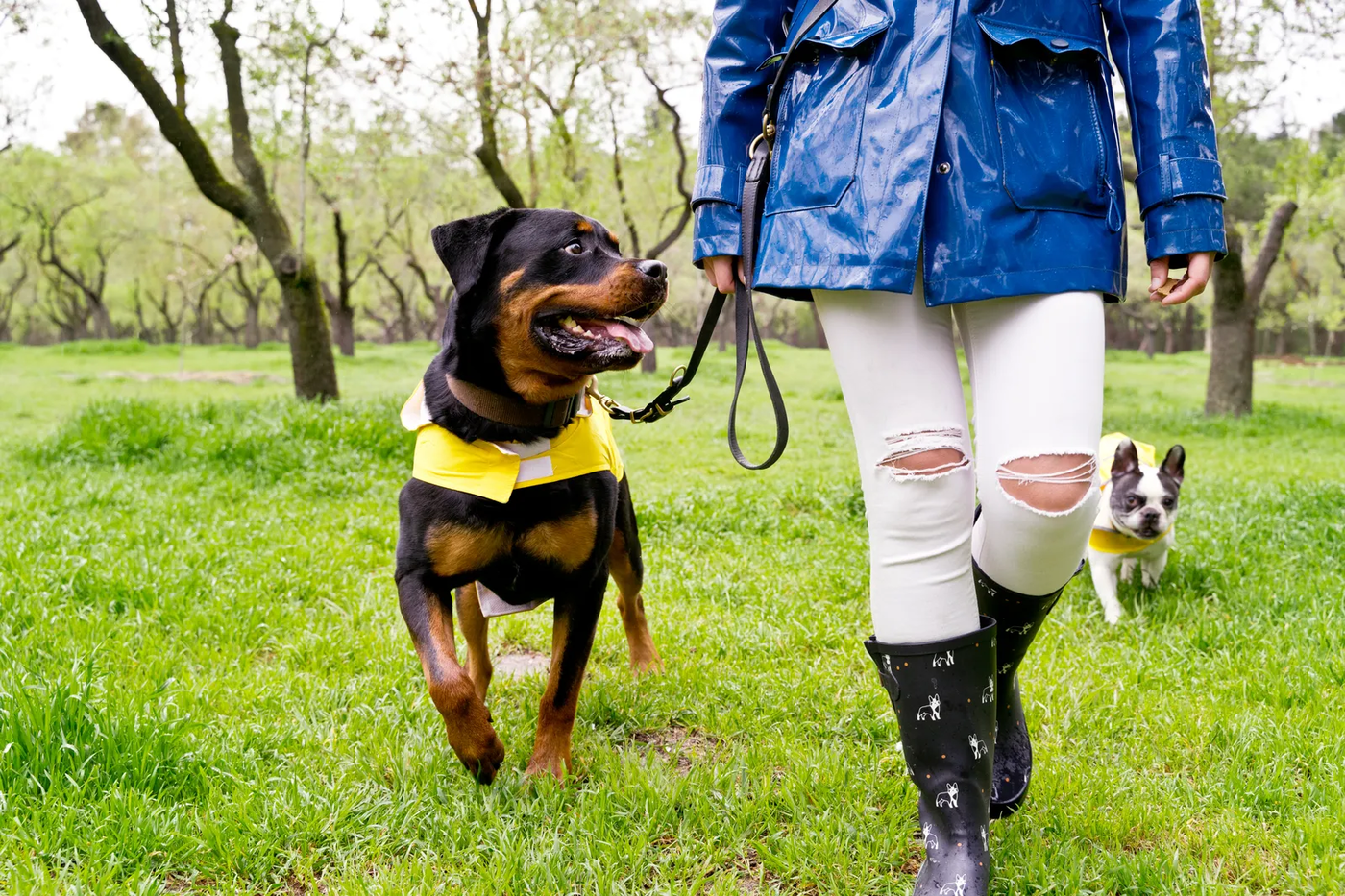
Cold rain is the more common problem. A wet dog in a 45-degree north wind chills fast, and a waterproof coat like the one in the photo keeps a short-coated dog dry on the walk. Towel the dog off at the door either way.
- Freeze warnings arrive days ahead
- Ice and outages are the real risks
- Quick potty trips on a leash
- A waterproof coat for cold rain
Fitting a coat
A coat helps only if it fits, stays put and the dog is comfortable moving in it.
Most dogs accept a coat quickly if it goes on calmly and pays off with a treat and a walk. The steps below take a few short sessions. Introduce it in the fall, before the first cold front, rather than on the morning you need it.
Check under the straps after the first few walks for rubbing, especially behind the front legs, and wash the coat regularly; a damp coat left on a dog keeps the chill in rather than out. Hang it to dry between walks, and keep a spare if your dog wears one every morning.
Measure from the base of the neck to the base of the tail, and around the deepest part of the chest
Choose a coat that leaves the shoulders and legs free to move
Put it on indoors with treats, then take it off after a minute
Build up to wearing it around the house for a few minutes
Go for a short walk in it on a cool morning
Remove it once the dog is indoors or the afternoon warms up
At Best Dog University
Winter is prime training season in Houston, and our trainers work outdoors at comfortable hours all through it.
From October to April, outdoor training at our Cypress home opens back up: longer field trips, trail walks at Josey Lake and more time on neighborhood sidewalks. The few freeze days turn into indoor training days, with place, the crate and door manners, which is exactly the structure a family needs when a freeze keeps everyone inside. Gold at $2,500 and Platinum at $3,750 run the same in January as in any other month.
Private lessons, $160 in Cypress or $220 at home, fit the cool season well, and winter is a good time to fix leash manners before the heat returns. A dog that learns a loose leash in January has months of comfortable practice ahead of it, and by May the family has a walk that fits easily into the short summer windows.
The programs
Training through the cool season.
Gold and Platinum in the best outdoor months of the year, lessons to fix the walk before summer returns.


Asked and answered
Questions people ask about this.
How cold is too cold for a walk in Houston?
Most healthy medium and large dogs handle a normal walk at freezing temperatures without trouble. Small, short-coated, senior and young dogs need a coat and a shorter outing. During a hard freeze with ice, keep every dog to quick potty trips on a leash, because slipping on ice is a bigger risk than the cold itself.
Should my double-coated dog wear a coat?
Rarely in Houston. Huskies, shepherds, Aussies and similar breeds carry an undercoat built for much colder weather, and a coat on top can make them overheat on a mild afternoon. A soaked senior shepherd on a cold, wet morning might appreciate a light waterproof layer, but most never need one here.
Does my dog need a coat to sleep at night?
Usually not. A bed off the tile floor, a blanket and a spot away from drafts keep most dogs comfortable. During a power outage in a freeze, a short-coated or older dog may need a coat indoors, in the warmest room with the family.
Do Houston dogs need boots in winter?
Almost never. Ice is rare and brief here. On the few freeze days, short leashed potty trips on grass keep paws safe without boots. Most dogs in Houston will only ever need foot protection from hot pavement in summer, not cold.
Can a sweater make my dog too hot?
Yes, especially once the dog is moving or the sun comes out. Take the coat off indoors and on mild afternoons, and watch for panting on a cool day, which means the dog is too warm. A coat is for cold mornings and cold rain, not for the whole day.
Keep reading
Free consultation · 10% off this fall
Dress the dog for the day, not the month.
Tell our team what your dog finds hard. On the free consultation call we will explain how a winter stay or lessons would work, and a $250 deposit reserves the dates.