
Leash pulling, coached remotely
Can virtual training fix leash pulling?
Every time a dog pulls and gets to the next tree, the pulling pays off. Most owners are not doing anything wrong on purpose; they just follow the dog. A trainer's job is to change that deal, and you do not need one in person to do it.
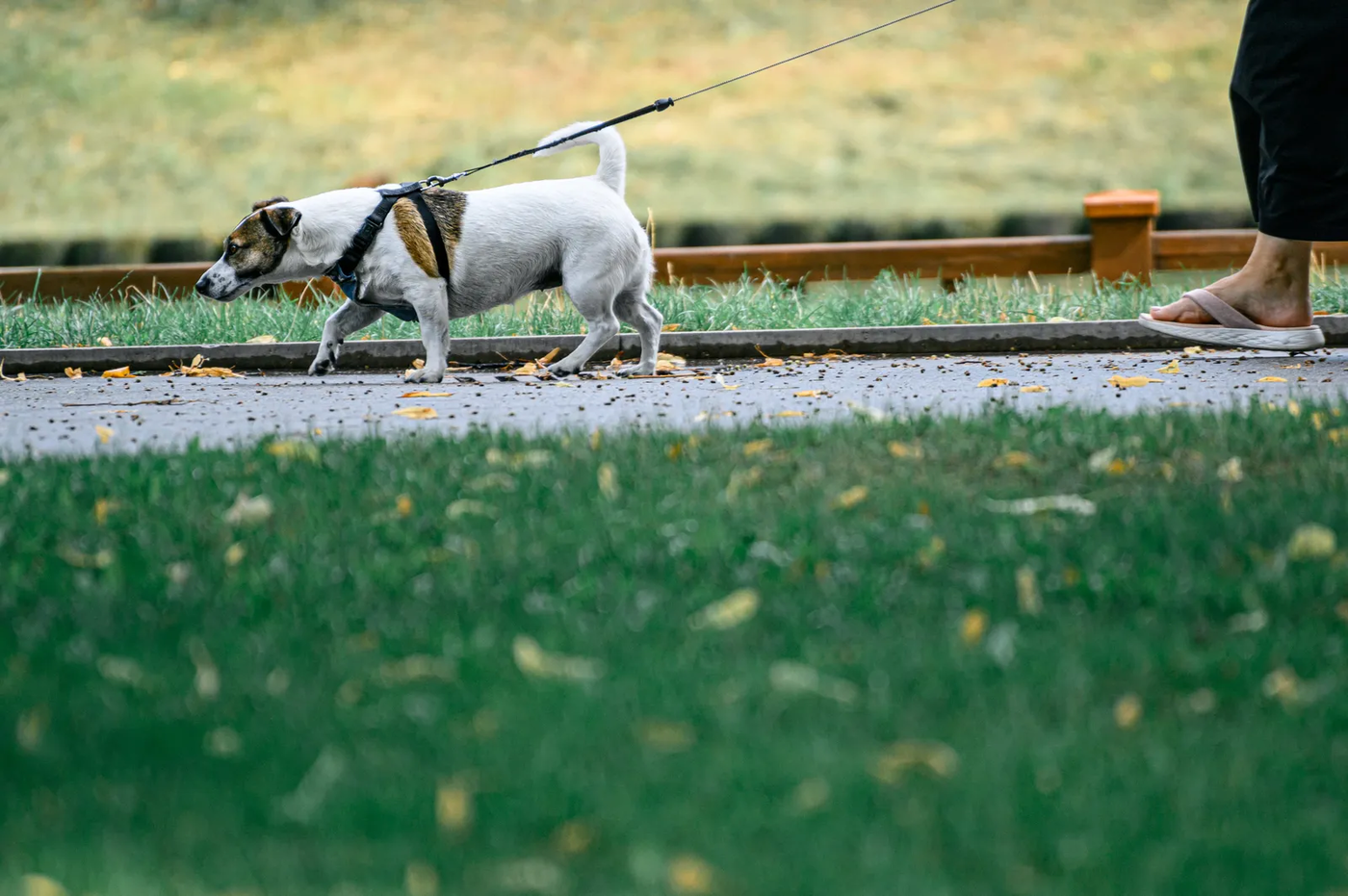
Why dogs pull
Dogs pull because pulling works: it gets them where they want to go.
Dogs walk faster than people, and everything interesting is ahead: the smell at the hydrant, the dog across the street, the squirrel at the fence line. When the dog leans into the leash and the owner follows, the dog learns that tension on the leash means forward motion. Do that on every walk for a year and you have a strong habit.
That is good news for virtual training. Because the habit lives in the routine, changing the routine changes the dog. The dog does not need a trainer's hands on the leash; it needs you to stop moving forward when the leash goes tight, every time, without exceptions.
- Pulling gets the dog to the smell
- Following the dog rewards the pull
- Every walk is another repetition
- Changing the routine changes the habit
The method
Teach a loose leash in your driveway or hallway before you try the sidewalk.
Start where your dog can actually succeed, then add distraction gradually. This is the order we coach.
- Begin in a hallway, driveway or quiet backyard with a standard leash and a pouch of small treats.
- Take a step. If the leash stays loose, mark it with a word like yes and reward at your leg.
- The moment the leash goes tight, stop and stand still until the dog lets the leash slacken, then continue.
- When your dog can walk ten loose steps at home, move to the front of the house, then the quiet end of your street.
- Keep early walks short and frequent rather than long, so the dog practices the new habit more than the old one.
- Add busier routes only when the dog holds a loose leash at the current level most of the time.
What the trainer checks
On video, a trainer looks at your hands, the leash length and the first ten seconds out the door.
Most walks are decided before you reach the sidewalk. A dog that charges through the front door, spins on the porch and hits the end of the leash on the driveway has already practiced pulling before the walk even starts. A short clip of you leaving the house tells a trainer a great deal.
The trainer also watches for small handling habits: a leash wrapped tight around the hand, an arm stretched forward, treats delivered in front of you instead of at your leg, or a walking pace that changes to match the dog.
- How the dog exits the front door
- Leash length and where your hand sits
- Where you deliver rewards
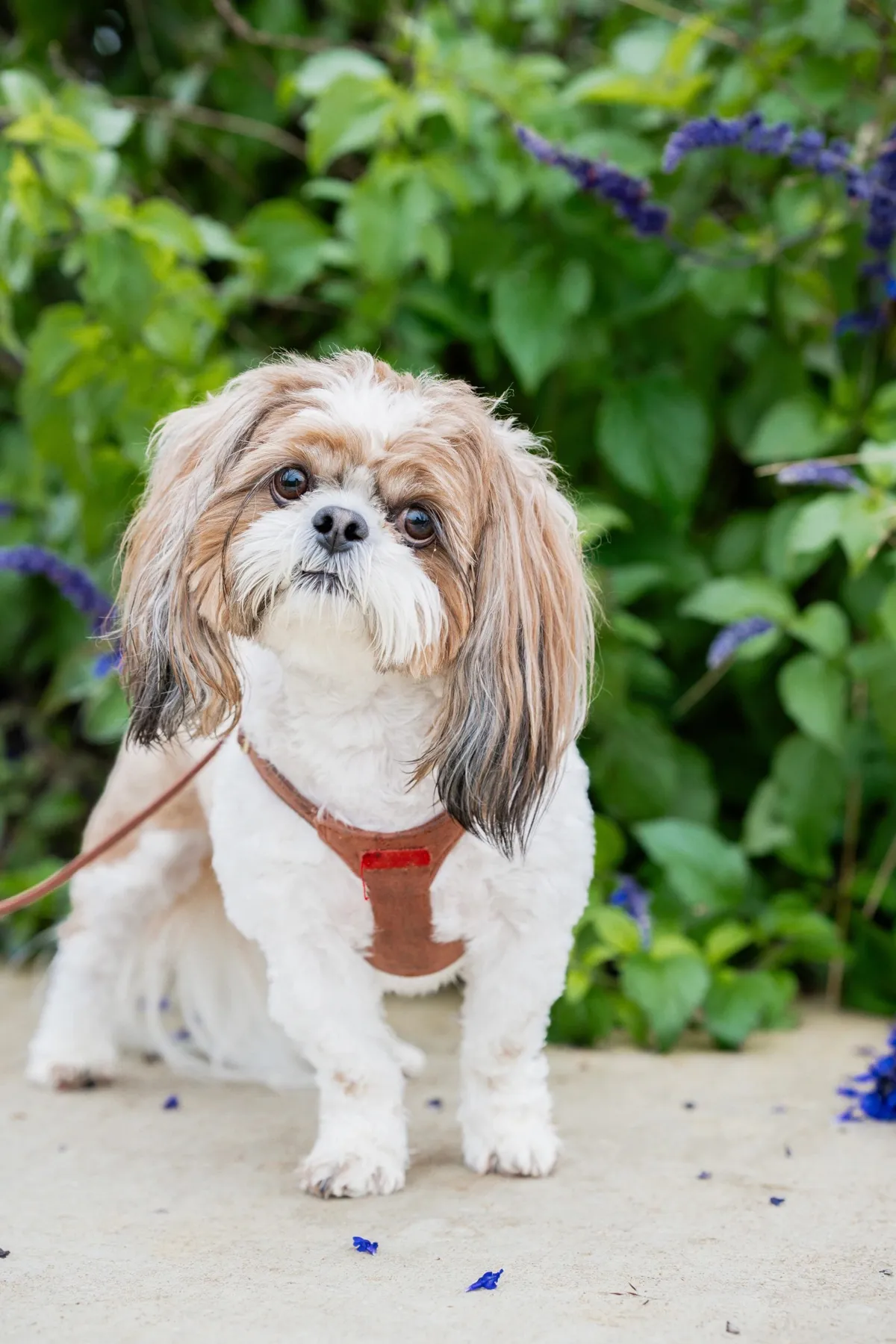
- How your current collar or harness fits
- Whether you speed up or slow down to match the dog
Equipment
The right tool helps, but no collar or harness fixes pulling by itself.
We use balanced training: reward what you want, set fair and consistent boundaries, and choose the right tool for the dog. Some dogs walk well on a flat collar once the routine changes. Others, especially big, strong dogs walked by a smaller owner, benefit from a different tool introduced properly. That choice depends on your dog, your strength and how it is used.
During a session, show the trainer what you use now and how it fits. The worst outcome is buying a new tool, using it inconsistently, and adding it to the pile of things that did not work.
When it is more than pulling
If your dog lunges, barks or snaps at dogs or people, plan for reactivity instead.
Pulling toward a smell is a manners problem. Lunging at another dog with a stiff body, a fixed stare and barking is reactivity, and it needs distance, careful management and a plan that goes beyond loose-leash steps. A virtual session can help you tell the two apart and decide on the next step.
If your dog has bitten or redirected onto you during a reaction, that calls for an in-person professional who can manage safety while you learn. Do not try to push through it on busy sidewalks.
The programs
Get your walks back.
A $99 virtual session by phone or Zoom, anywhere in the US.
$99per session
Phone or Zoom, anywhere in the US
Virtual consultation with our head trainer
One-on-one guidance for behavior, a new dog, introductions or a new puppy.
How long does it take to stop a dog pulling on the leash?
It depends on how long the habit has been practiced and how consistent every walk is. Dogs often improve in the quiet practice spot within days, while busy streets take longer. The key is that every walk follows the same rule, because one pulling walk rebuilds the old habit.
Should I use a harness or a collar for a dog that pulls?
There is no single answer. The right tool depends on your dog's size and strength, yours, and how consistently you can use it. A virtual session lets the trainer see your current equipment and its fit, then recommend whether to keep it, adjust it or change it.
Why does my dog walk nicely at home but pull outside?
Outside is far more exciting, and the dog's habit of pulling was built there. Loose-leash walking has to be practiced in stages, from quiet to busy, so the dog learns that the rule applies everywhere. Moving to the sidewalk too soon is the most common reason it falls apart.
Is my dog pulling or is it leash reactivity?
Pulling usually looks loose and eager, aimed at smells or places. Reactivity looks stiff and focused, often with barking or lunging at dogs, people or cars, and the dog struggles to calm down afterward. A short video is the easiest way for a trainer to tell which one you have.
Can my kids walk the dog while we fix leash pulling?
Only once the dog walks reliably on a loose leash with an adult in quiet areas. A strong puller can pull a child over or slip away. Have the kids practice short loose-leash sessions in the driveway with an adult beside them before they walk the dog on the street.
Virtual session, $99
Bring your leash and a short video.
Book a $99 virtual session by phone or Zoom. Our head trainer will watch your walk start and coach a loose-leash plan for your dog.