
Puppies and pressure
Can I use a prong collar on a puppy?
The question usually comes from the owner of a big-breed puppy, five months old and already strong enough to pull someone off their feet. The frustration is real. Here is why the prong is the wrong fix at that age, and what works instead.
Last reviewed September 29, 2026 · by the Best Dog University Team
The short answer
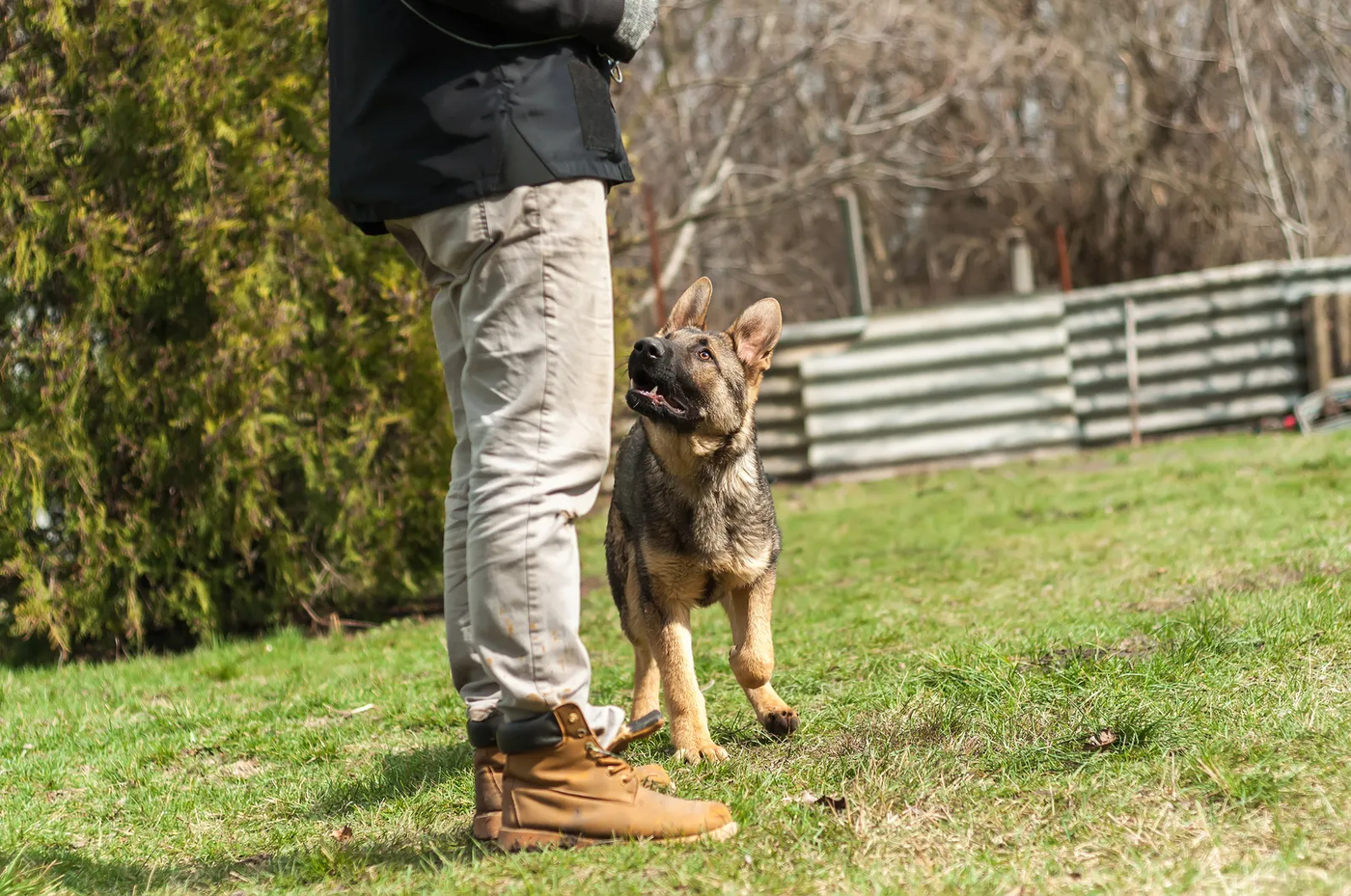
No for a young puppy, because a puppy needs to learn the walk and a prong cannot teach it.
A prong collar is a signal tool. It works on a dog that already knows where to be on the walk and needs a clearer message when the world gets loud. A puppy does not know that yet. Pressure on a dog that has never been shown the position just adds discomfort to confusion, and a puppy that learns the leash means discomfort often starts to balk, bite the leash or panic at the sight of it.
Our trainers do not put a prong on a puppy under six months, and our page on whether prong collars hurt dogs says the same. Even past that age it is not a default. It is one option among several, considered only after the walk has been taught with food.
- A prong signals; it does not teach
- Pressure plus confusion equals a worried puppy
- No prong under six months
- Past six months: considered, never assumed
What goes on the puppy
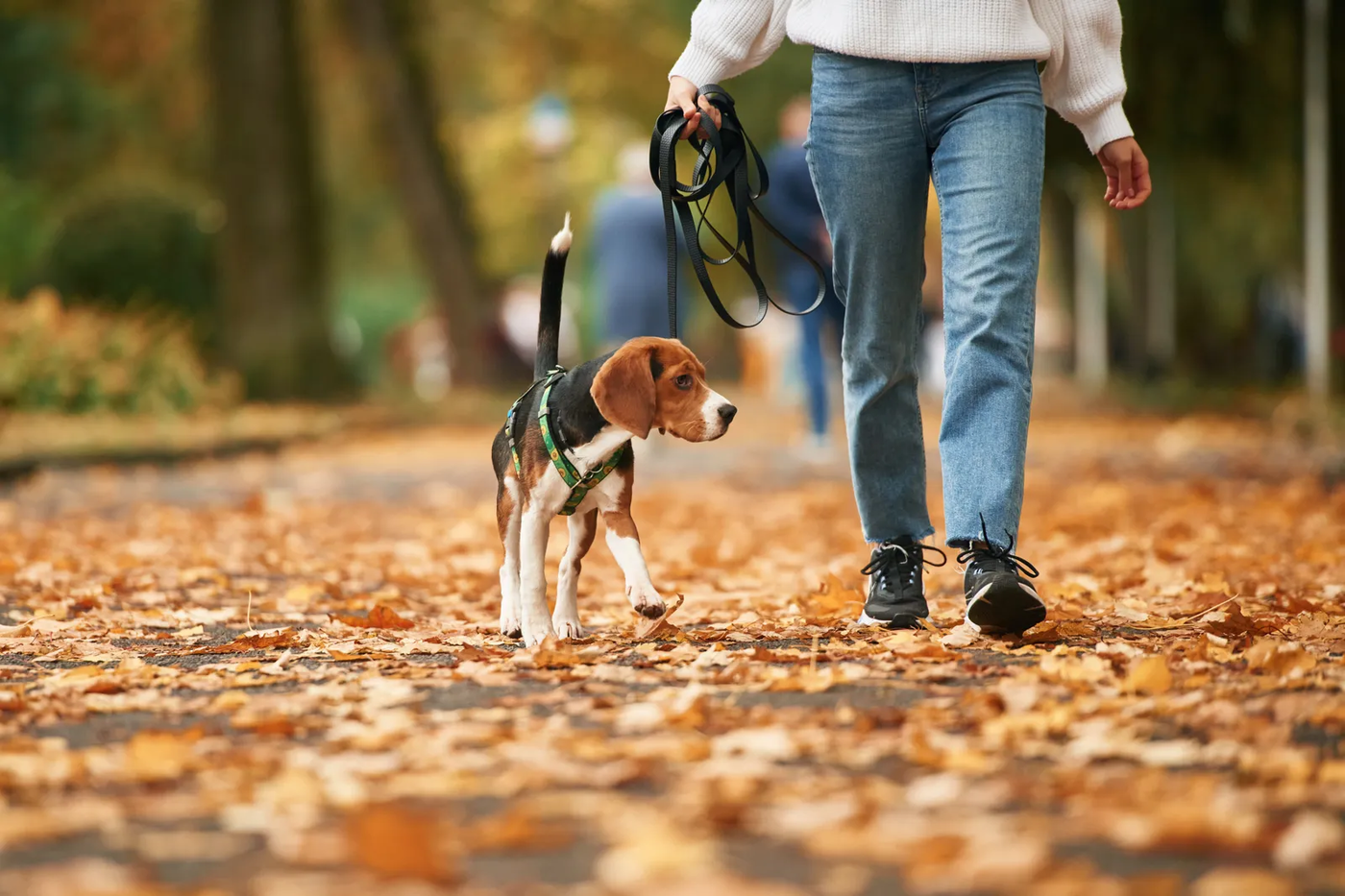
A flat collar or a light harness in the yard, then a slip lead as the walks get real.
For a puppy of eight to sixteen weeks, a flat collar or a light harness and a six-foot leash are all it needs, because the lesson is a place at your knee and the reward is food. As the puppy grows into the neighborhood walk, many of our families move to a slip lead placed high on the neck, used for a brief, light touch of direction and an immediate release.
The equipment matters less than what you do with it. A puppy on a slip lead that is held tight for the whole walk learns to pull against it, just as it would on a prong. A puppy on a flat collar with a handler who rewards the position every few steps learns to stay there.
- Eight to sixteen weeks: flat collar or light harness
- Older puppies: a slip lead, used lightly
- A six-foot leash, never a retractable
- Food at the knee does the teaching
Teaching it instead
Five minutes in the yard, twice a day, builds the walk before pulling becomes a habit.
Start before the puppy has a pulling history, and keep sessions short. A puppy that practices the position a hundred times in the yard has something to fall back on when the sidewalk gets busy.
Start in the yard or a quiet driveway with a pocket full of small, soft food.
Reward the puppy for being at your knee, every few steps at first.
When the leash tightens, stop, wait for slack, and reward the step back to your side.
Change direction often so following you becomes a game.
Move to the quiet end of your street once the yard is easy, then to busier sidewalks.
Add a sit at every door and curb so the walk has structure from day one.
The big adolescent
A seven-month shepherd dragging you through Bridgeland is a different conversation, decided in person.
Large breeds hit adolescence with an adult's strength and a puppy's judgment. For that dog, the walk is taught first, exactly as above, often with a trainer's help. If the dog knows the walk and still loses it when a squirrel or another dog appears, a trainer may consider a prong, fitted high and snug and used as a brief cue, as the prong collar answer describes. A fearful adolescent never gets one.
Houston adds its own rules for young dogs. From May to September, walks move to early morning and evening, and the pavement gets the back-of-hand test because puppy pads burn easily. Fire-ant mounds along sidewalk edges in Towne Lake and Fairfield are worth steering around, and a puppy that stops to investigate one learns an unpleasant lesson fast.
At Best Dog University
Puppies start with the Puppy Development Bundle, and older pups learn the walk in a stay.
For a puppy under four months, the Puppy Development Bundle is four private sessions of 45 to 60 minutes, $550 at our Cypress training home or $750 in your home. It covers sit, place, stay, recall, crate and potty guidance, socialization and the first leash work, with no prong in sight.
From about four to five months, board and train opens up. The two-week Gold program at $2,500 builds the loose leash, door boundaries and impulse control that most pulling adolescents need, and the go-home session teaches you the handling on whatever the dog goes home wearing, usually a flat collar or a slip lead. Private lessons at $160 in Cypress or $220 at home suit families who want to teach it themselves.
The programs
Teach the walk first, at any age.
The puppy bundle starts leash manners before pulling sets in; Gold builds the loose leash for the strong adolescent.

Asked and answered
Questions people ask about this.
At what age can a puppy wear a prong collar?
We do not set it by the calendar, but not before six months, and not as a default after that. The deciding question is whether the dog already knows the walk and needs a clearer signal. For most young dogs the answer is no, and a flat collar or slip lead does the job.
Is a slip lead safe on a puppy?
For an older puppy, used lightly, yes: a brief touch of direction and an instant release. It should sit high on the neck and never be held tight for the whole walk. For a very young puppy in its first leash lessons, a flat collar or light harness is the simpler choice.
Won't a prong fix my puppy's pulling faster?
It may reduce pulling in the moment, but it does not teach the puppy where to be, and it risks making the leash something the puppy dreads. The fastest lasting fix is a taught position, rewarded often, in short daily sessions before the pulling habit sets in.
My puppy chokes himself on his flat collar. What should I use?
Try a light harness while you teach the walk, and stop moving forward whenever the leash goes tight. The coughing is a sign the puppy has learned that pulling works, not a sign it needs a harsher tool. A lesson with our trainers can show you the timing.
Are the small puppy-size prongs gentler?
The size does not change the problem. A small prong on a puppy still delivers pressure to a dog that has not learned what the pressure means. The issue is the stage of learning, not the link size, and that is why we start puppies with food and a simple collar.
Keep reading
Free consultation · 10% off this fall
Big puppy, big pulling?
Tell our team your puppy's age, breed and how the walks are going on a free phone consultation. We will suggest the bundle, lessons or Gold, and a $250 deposit reserves a stay.