
Apartment dogs
What is the best dog breed for an apartment?
An apartment changes the questions. Will the dog bark at every footstep in the hallway? Can you get a puppy down six floors in time for a potty break? Will the dog settle while you work from the kitchen table? Breed helps you predict those answers.
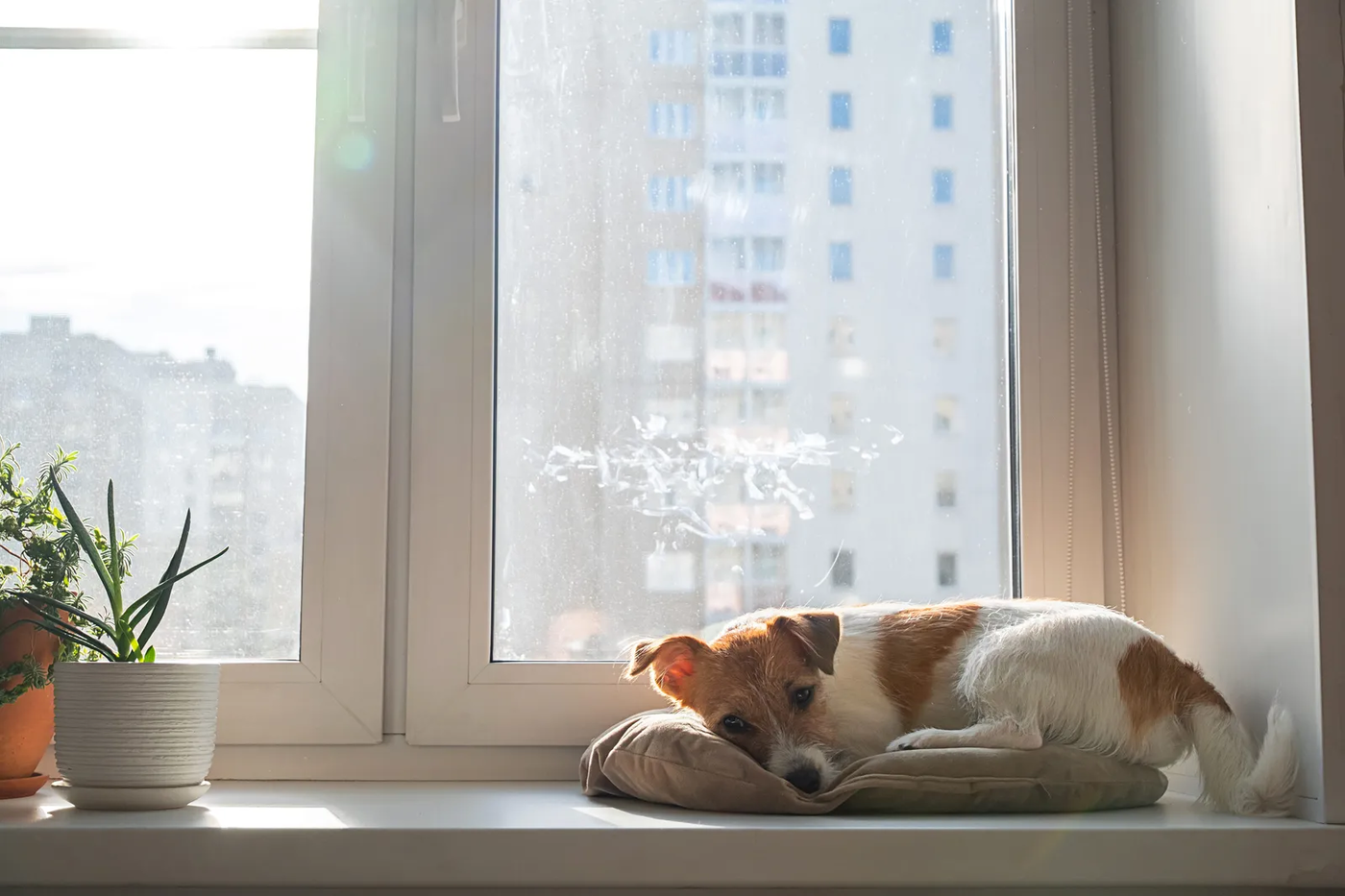
What matters
Energy, barking and settling matter more than size.
A small dog who barks at every neighbor in the hallway will cause more trouble than a large, calm dog who sleeps most of the afternoon. The traits that make apartment life easy are a moderate exercise need, a low tendency to bark at noises, comfort being left alone for part of the day, and the ability to settle on a bed while you are home.
Logistics count too. Potty breaks mean stairs or an elevator every time, so a dog who can wait a reasonable time and walks calmly past strangers and other dogs in tight spaces makes daily life easier. Many buildings have weight or breed restrictions as well, so read your lease before you fall in love with a puppy.
- Moderate daily exercise needs
- Low tendency to bark at hallway noise
- Relaxes alone for part of the day
- Calm in elevators, stairwells and lobbies

Often a good fit
Calm companion breeds and greyhounds often suit apartment life.
Companion breeds such as the Cavalier King Charles spaniel, shih tzu, bichon frise and Havanese were bred to live closely with people, and many are content with a few walks and indoor play. The bichon and shih tzu need regular grooming, so budget for it. Boston terriers are friendly and compact, though some are lively as young dogs.
Retired racing greyhounds surprise many people. They are large, but many are quiet, gentle and happy to sleep most of the day, with a couple of walks and a chance to run in a safely fenced area. They usually need to stay on leash in open spaces. As with any breed, individual dogs vary, and an adult with a known temperament is the most predictable choice.
Flat faces
French bulldogs and pugs fit small spaces but need care in heat.
French bulldogs and pugs are popular apartment dogs for good reasons: they are compact, often quiet and do not need long runs. They are also flat-faced breeds, which can mean breathing difficulty, low tolerance for heat and exercise, and higher veterinary costs. Hot stairwells and summer walks need planning.
If you choose a flat-faced breed, ask the breeder about the parents' breathing and health, walk in the cooler parts of the day and ask your veterinarian what to watch for. These dogs can be wonderful companions, but they are not a low-maintenance choice simply because they are small.
Often a struggle
High-drive working dogs, vocal hounds and busy terriers often find apartments hard.
Some breeds were built for hours of work and tend to struggle in small spaces without a very committed owner. Border collies, Australian shepherds, Belgian Malinois and huskies often need more physical and mental work than a typical apartment schedule allows, and the frustration can show up as chewing, barking or pacing.
Beagles and other scent hounds can be loud, and many terriers are quick to alert bark at every sound in the hallway. That does not mean nobody can make it work. It means the owner needs a realistic plan for exercise, training and quiet time, and a building where some noise will not end in an eviction notice.
- Herding and working breeds with high drive
- Vocal scent hounds
- Terriers prone to alert barking
- Any young dog without a solid exercise plan
Daily routine
A simple routine makes any suitable dog a good apartment dog.
Breed sets the starting point, and routine does the rest. These habits help a new dog settle into apartment life from the first week.
- Set fixed potty times, including right after waking, after meals and before bed, so trips down the stairs or elevator are predictable.
- Teach a calm wait at the apartment door and the elevator, so the dog does not bolt into the hallway.
- Practice short absences from day one: a few minutes, then longer, so being alone becomes normal.
- Give the dog a bed or place away from the front door to cut down on hallway barking.
- Plan daily mental work, such as food puzzles and short training sessions, alongside walks.
The programs
Find a breed that fits your building.
A $99 new dog consultation by phone or Zoom helps you weigh breeds against your space, schedule and lease before you commit.
$99per session
Phone or Zoom, anywhere in the US
Virtual consultation with our head trainer
One-on-one guidance for behavior, a new dog, introductions or a new puppy.
Can a large dog live in an apartment?
Yes, if the dog is calm indoors and you can meet its exercise needs. Many retired greyhounds and mellow adult dogs of larger breeds do well in apartments. The bigger obstacles are often building weight limits and stairs, so check the lease and think about how an older large dog will manage the stairs.
What is the quietest dog breed for an apartment?
Breeds often described as quiet include the Cavalier King Charles spaniel, greyhound, and many companion breeds, while terriers and scent hounds tend to be more vocal. But barking depends heavily on the individual dog, training and boredom, so meet the dog and ask the breeder or rescue directly.
Are puppies a good idea in an apartment?
They can be, with planning. Puppies need frequent potty trips, which means many trips down stairs or an elevator, day and night. A pen with a potty area can help in the early weeks. An adult dog who is already house trained is often an easier start for apartment life.
How do I stop my apartment dog barking at hallway noise?
Give the dog a resting spot away from the door, use a white noise machine, and reward calm when footsteps pass. Teach a quiet cue and interrupt barking early, before it builds. If barking is constant or tied to being alone, a trainer can help you work out the cause.
Can a trainer help me choose an apartment-friendly breed?
Yes. The new dog consultation costs $99 and runs by phone or Zoom wherever you live in the US. Our head trainer talks through your building, schedule and lifestyle, helps you narrow breeds that fit, and sets up a first-week routine for apartment life.
Virtual session, $99
Pick a dog that fits your apartment and your life.
Book a $99 new dog consultation by phone or Zoom from anywhere in the US. Talk through your space, your lease and your schedule, then narrow the breeds that fit.