November
Daylight saving ends: the 5 p.m. dark walk
When the clocks fall back in early November, the evening walk becomes a night walk. Our trainers on lights, leashes, cats, coyotes and keeping the walk structured after sunset.
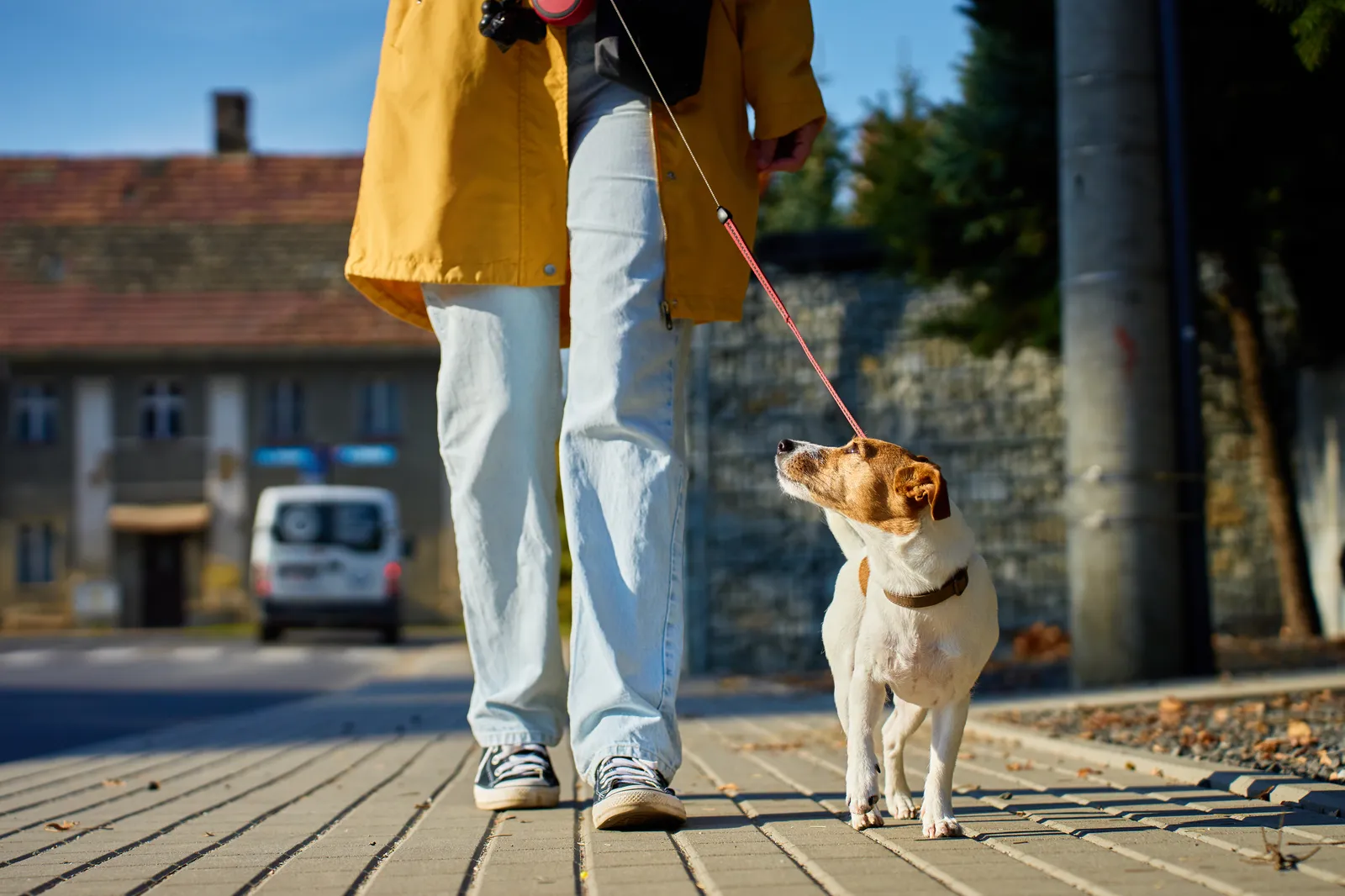
The clocks fall back on the first Sunday of November, and by that Monday the evening walk is a night walk. Sunset lands before six for the rest of the year, which for most working families means the dog's second outing is in the dark until spring. The dark changes the walk more than people expect, and it changes it more for the dog than for you.
What the dog sees that you do not
A dog's night vision is better than ours, and its nose does not care what time it is. At dusk the neighborhood cats come out, the rabbits move along the fence lines, and in Cypress, Tomball and The Woodlands the coyotes start their rounds through the greenbelts. Your dog notices all of it. A dog that walked calmly at seven in September may be scanning, stiff and reactive at the same hour in November, and the only thing that changed is the light.
The other thing that changes is you. People walk faster in the dark, look at their phones more, and let the leash out because they cannot see the dog pulling. The dog learns the new rules in about three days.
Keep the walk structured after sunset
- Same route as the daytime walk for the first two weeks, so the only new variable is the dark.
- A lit collar or clip light on the dog and a headlamp on you, so a cyclist on the Spring Creek Greenway sees you both.
- A shorter leash than you use in daylight, held with two hands, dog at your side.
- Sit at every driveway, because a car backing out cannot see a black dog at dusk.
- Turn around the moment you see eyes reflecting in the brush. Do not let the dog rehearse a chase.
The stopping problem
The most common November call to our team is a dog that plants its feet and will not go out after dark. Sometimes it is fear, sometimes it is a bad moment at the corner, and sometimes it is a dog that has simply learned that stopping ends the walk. The fix starts inside: a structured walk down the hallway, then to the mailbox, then one house farther each night, with the dog rewarded for moving and never dragged. If the dog is trembling, that is an anxiety case and our trainers want to see it before it settles into a pattern.
If the dark walk is where it falls apart
The two week Gold stay, $2,500, is built around exactly this walk: loose leash, door boundaries and impulse control practiced on real sidewalks morning and evening, which in November means at least one session in the dark every day. Your dog comes home with the habit already built, and the go-home session includes the walk on your own street, at the time you actually do it. If you would rather keep the dog home, a $220 in-home lesson at half past five on a weeknight is the next best thing, because the trainer sees what you see.

Best Dog University Team
Board and train trainers in Cypress, Houston. 16+ years, 900+ dogs. About our team