February
Adolescence hits: the February puppies from last fall.
The puppies that came home in September are six months old now, and the sweet phase is over. What adolescence looks like, what to hold, and when to call.
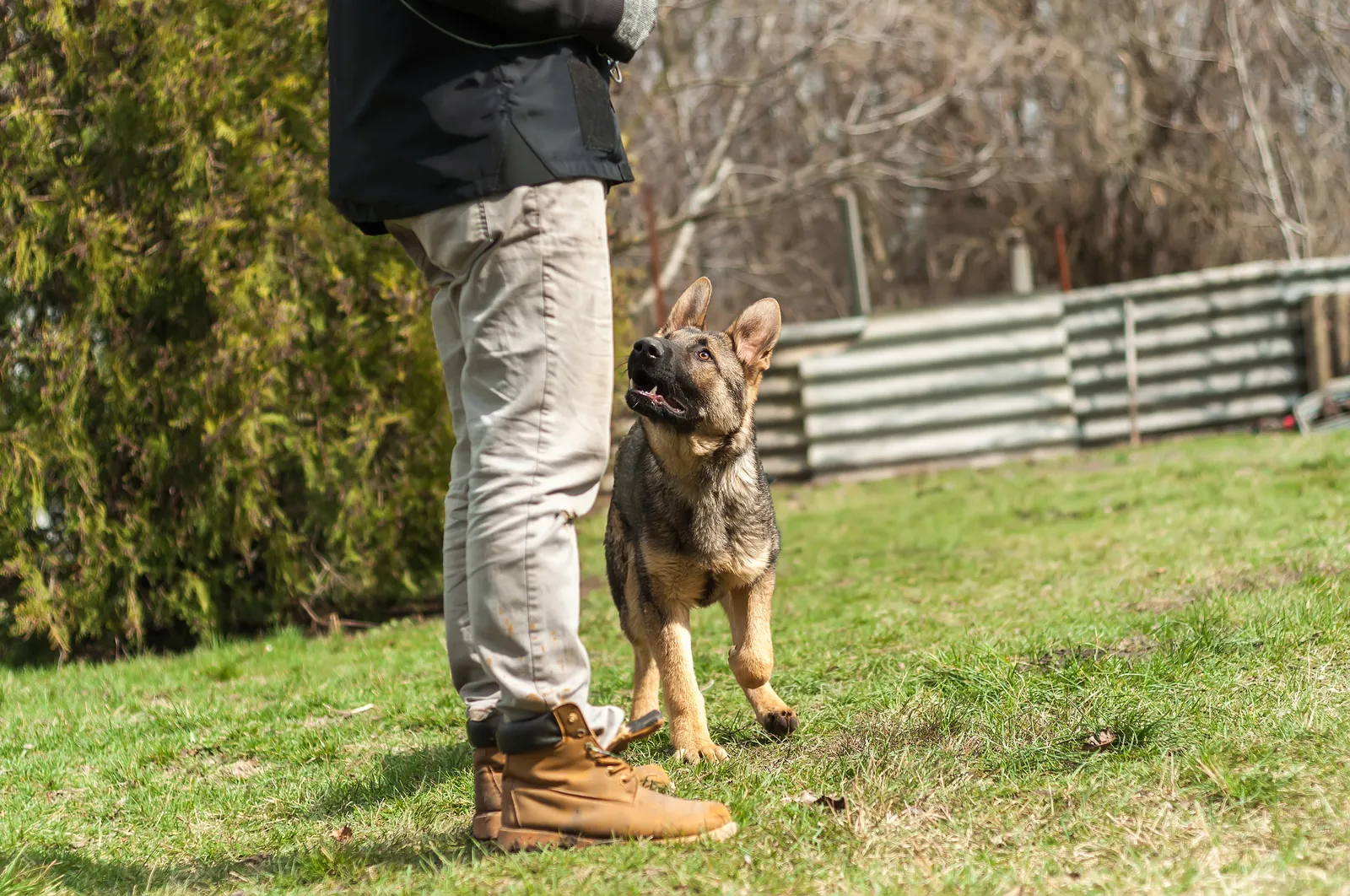
Every February the calls change. The puppy that came home in the fall, that sat on command and came when called, is six months old and has stopped doing both. It is not broken. It is an adolescent, and adolescence in a dog runs from about six months to eighteen.
What adolescence looks like
- The recall works in the house and vanishes in the yard
- Leash pulling that was not there in December
- A first bark at a stranger, a first growl over a bone
- Testing every rule that was previously accepted, especially with the person who enforces it least
What to hold
Everything. The worst response to adolescence is to relax the rules because the dog is pushing on them. Meals on place, the walk in a heel, the door waited at, the crate at night. Keep the recall on a long line for the whole spring so the dog cannot rehearse ignoring it. The families who hold the structure through adolescence get a calm adult at eighteen months; the ones who let it slide get a call to us at two.
If the adolescent has started lunging at dogs, guarding or nipping the children, that is the point where a lesson or a Gold stay is cheaper than a year of drift.
A month-by-month sketch
Six to eight months: the recall fades outdoors, the leash tightens, and the puppy that slept through the night starts pacing at nine. Eight to twelve months: the first real reactivity appears if it is going to, usually toward other dogs on leash, and the first guarding of a bone or a couch. Twelve to eighteen months: the drive settles into whatever the household has allowed. A dog that held structure through all three phases becomes a calm adult; a dog that was allowed to run the house through them becomes the two-year-old that arrives at our door with a list.
- Keep the long line on for outdoor recall until the dog is eighteen months
- Feed on place, every meal, for the whole adolescence
- Neutral exposure to dogs at a distance, never on-leash greetings nose to nose
- No new freedoms as rewards for pushing; freedoms are earned by holding the old rules
Where the programs fit
The Puppy Development Bundle ends at four months, and adolescence starts at six. Families who did the bundle and then held the structure usually need nothing more than a lesson or two during the teenage year. Families whose adolescent has started lunging, guarding or ignoring every command outdoors are the core of our Gold and Platinum stays: two or three weeks of daily structure in the training home resets the dog, and the go-home session resets the household. The earlier in adolescence that happens, the less there is to undo.

Best Dog University Team
Board and train trainers in Cypress, Houston. 16+ years, 900+ dogs. About our team