
Hyperactivity
Hyperactive dog training in Houston: building an off switch
The doodle that has been to daycare four days a week, walked five miles and is still bouncing off the walls at nine at night is the Houston hyperactive dog, and its family has done everything except the one thing that works, which is teaching it to do nothing.
Last reviewed September 11, 2026 · by the Best Dog University Team
What it is
A dog with no off switch, and a household that keeps flipping it on.
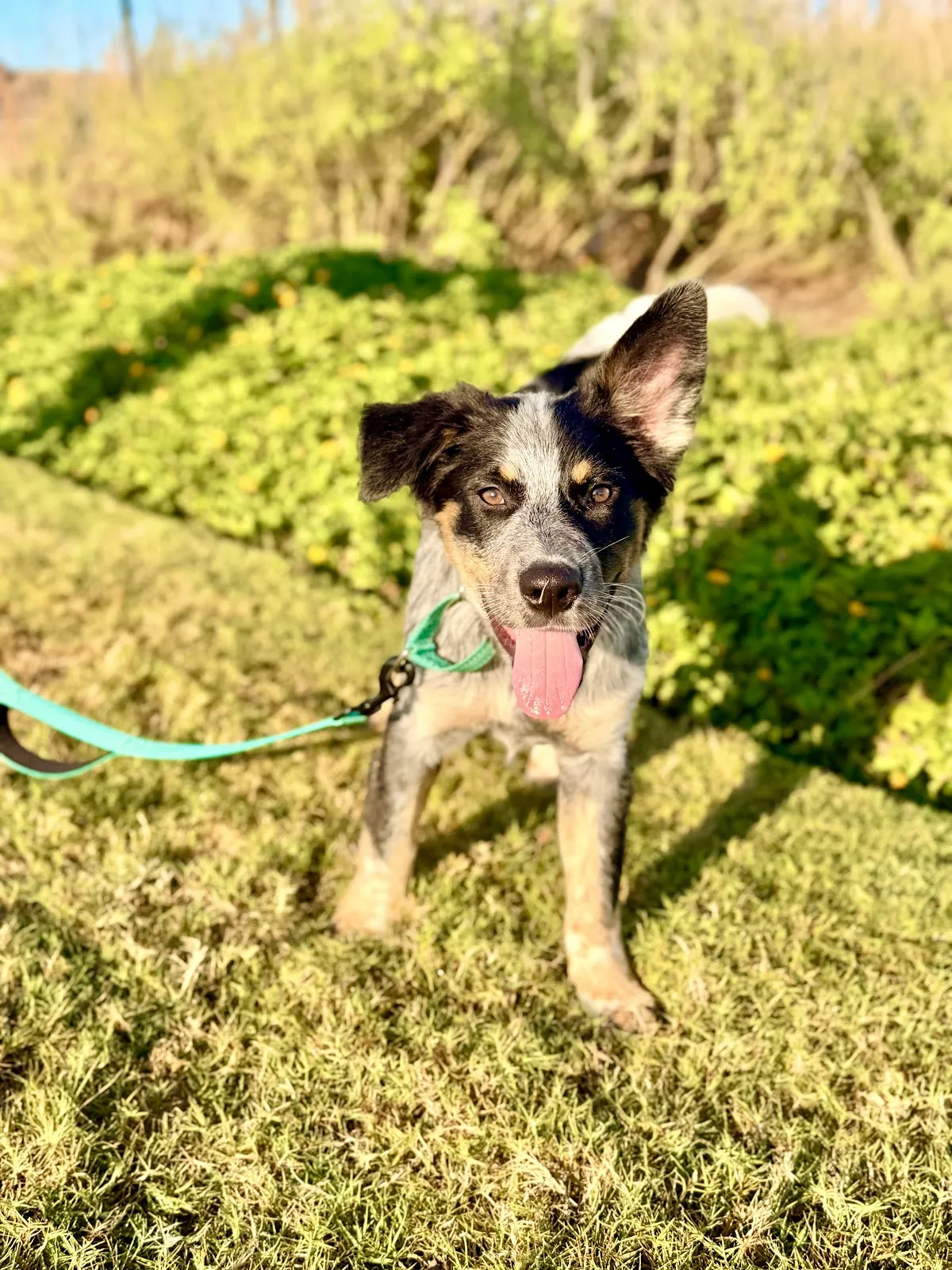
The hyperactive dog paces, jumps, mouths, barks for attention, cannot settle when the family sits down and greets every event with its whole body. It is usually an adolescent or young adult of a working, sporting or doodle breed with energy built for a job, in a house with no job for it. The family responds with more: more walks, more daycare, more toys, more attention, and the dog learns that the house is a place where something is always about to happen.
What hyperactivity is not is a medical condition in most dogs, though a vet check is sensible for a dog that has changed suddenly. It is a training gap, and the gap is stillness.
- Pacing, jumping, mouthing, demand barking
- Cannot settle when the family sits down
- Working, sporting and doodle breeds most often
- More exercise has not fixed it
Why exercise makes it worse
You are building an athlete, not a companion.
Five miles a day makes a dog that needs six. Daycare four days a week makes a dog that expects stimulation every hour. Fetch until the dog drops makes a dog that cannot function without fetch. None of it teaches the dog to lie on a bed while dinner is cooked, which is the skill the family actually wants. Physical exercise has its place, and a structured walk is part of every plan, but the thing that tires a hyperactive dog is mental: impulse control, place with duration, leave-it, a heel that asks for attention every step.
Ten minutes of place with the family moving around the room tires a working-breed adolescent more than an hour at the park, and it teaches the right lesson while it does.
- Mileage builds stamina, not calm
- Daycare teaches that stimulation is constant
- Fetch to exhaustion teaches dependence on fetch
- Ten minutes of mental work beats an hour of running
How we build calm
Place, impulse control, a structured walk and a routine.
Place is the foundation: the dog on a bed, released only on a word, for a minute, then ten, then through a meal, then through the doorbell. Impulse control follows: waiting at doors, waiting for the bowl, no jumping for anything, a leave-it that holds. The walk becomes a structured heel that asks for attention rather than a drag toward every smell. Short training sessions replace the third walk, and the routine becomes predictable: the same meals, the same walk, the same place time, the same crate at night. In the training home that runs every day for two weeks, and the dog comes home with an off switch it did not have.
The handover teaches the family the ten minutes a day that keeps it, and the honest warning that going back to five miles and daycare four days a week goes back to the old dog.
Place with duration, built from a minute to a meal
Impulse control at doors, bowls and greetings
A structured heel that asks for attention every step
Short mental sessions in place of the third walk
A routine the dog can predict
Crate calm at night and when alone
Handover: ten minutes a day, and less mileage
Which program
Gold for most; Platinum when the energy comes with reactivity or anxiety.
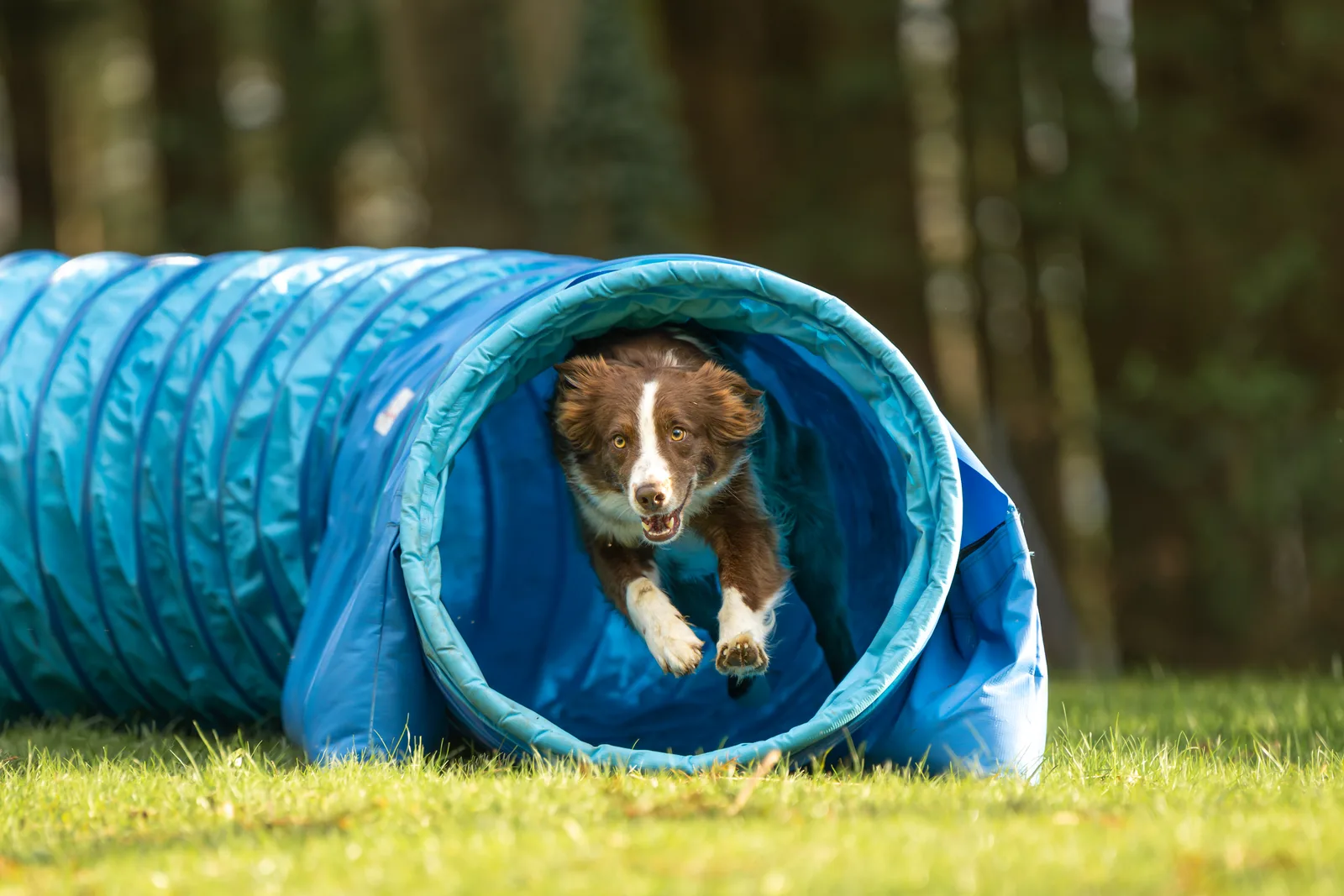
A hyperactive dog with no other problems is the classic two-week Gold case at $2,500: place, impulse control, the structured walk and the routine, with a go-home session and an extra lesson. A hyperactive dog that also lunges at other dogs, panics when left or guards is a three-week Platinum case at $3,750, because the behavior work needs the extra week and the unlimited lessons. The two-week Agility or Free-Style programs at $2,500 are the right second stay for a working-breed dog that has learned calm and now needs a job; they are not the first stay, because a dog with no off switch cannot learn agility.
| Dog | Program | Price |
|---|---|---|
| High energy, no off switch, otherwise friendly | Gold, 2 weeks | $2,500 |
| High energy plus reactivity, anxiety or guarding | Platinum, 3 weeks | $3,750 |
| Calm learned, now needs a job | Agility or Free-Style, 2 weeks | $2,500 |
Houston specifics
The summer indoors, the doodle and the daycare habit.
Houston's summer keeps dogs indoors for five months, which is when hyperactivity calls peak: the dog cannot get its five miles and the family cannot cope. The indoor sessions and store aisles that carry a summer stay in the training home are the answer, and they teach the dog that calm is possible without mileage. The doodles and Aussies that fill Cypress and Katy are the breeds we see most for this, and the daycare-four-days-a-week habit of the busy suburbs is usually part of the story. The AVMA's heat guidance is one more reason a dog needs an off switch here: a dog that cannot settle in July is a dog that overheats.
The programs
Programs for a dog with no off switch.
Gold builds the off switch; Platinum when reactivity or anxiety comes with the energy; Agility once calm is learned and the dog needs a job.


Asked and answered
Questions people ask about this.
My dog is hyper. Does it just need more exercise?
No. More exercise builds a fitter dog with the same problem. Hyperactive dogs need to learn stillness: place with duration, impulse control and short mental work, with a structured walk as the exercise. Ten minutes of place tires a working dog more than an hour of running.
Is daycare good for a hyperactive dog?
Usually not. Daycare four days a week teaches a dog that stimulation is constant and sends it home wound up rather than tired. A structured routine at home with place and short sessions does more, and a Gold stay installs it in two weeks.
Which breeds are most hyperactive?
Working, sporting and herding breeds and the doodles, which is most of the dogs in the Houston suburbs. They were bred for a job, and without one they invent chaos. The fix is the same for all of them: an off switch first, a job second.
How long does it take to calm a hyperactive dog?
Two weeks of daily structure in a Gold stay produces a dog with an off switch; the daily ten minutes afterwards keeps it. Going back to five miles a day and daycare four days a week goes back to the old dog, and our team says so at the go-home session.
Could my dog's hyperactivity be medical?
Rarely, but a sudden change is worth a vet check for thyroid and pain before training is blamed. Most hyperactive dogs are healthy adolescents of energetic breeds that have never been taught to be still.
Sources
Keep reading
Free consultation · 10% off this fall
Teach the dog to do nothing.
The free phone consultation is a direct call: what your dog does at nine at night, and whether Gold or Platinum builds the off switch. A $250 deposit holds the dates.