
Household changes
A new partner moving in: introducing people to your dog's structure
The call usually comes three months after the move-in: the dog growls when the partner gets into bed, ignores the partner's commands, or has become clingy and anxious. The partner thinks the dog hates them. The dog does not; it has simply not been told where the new person fits.
Last reviewed September 11, 2026 · by the Best Dog University Team
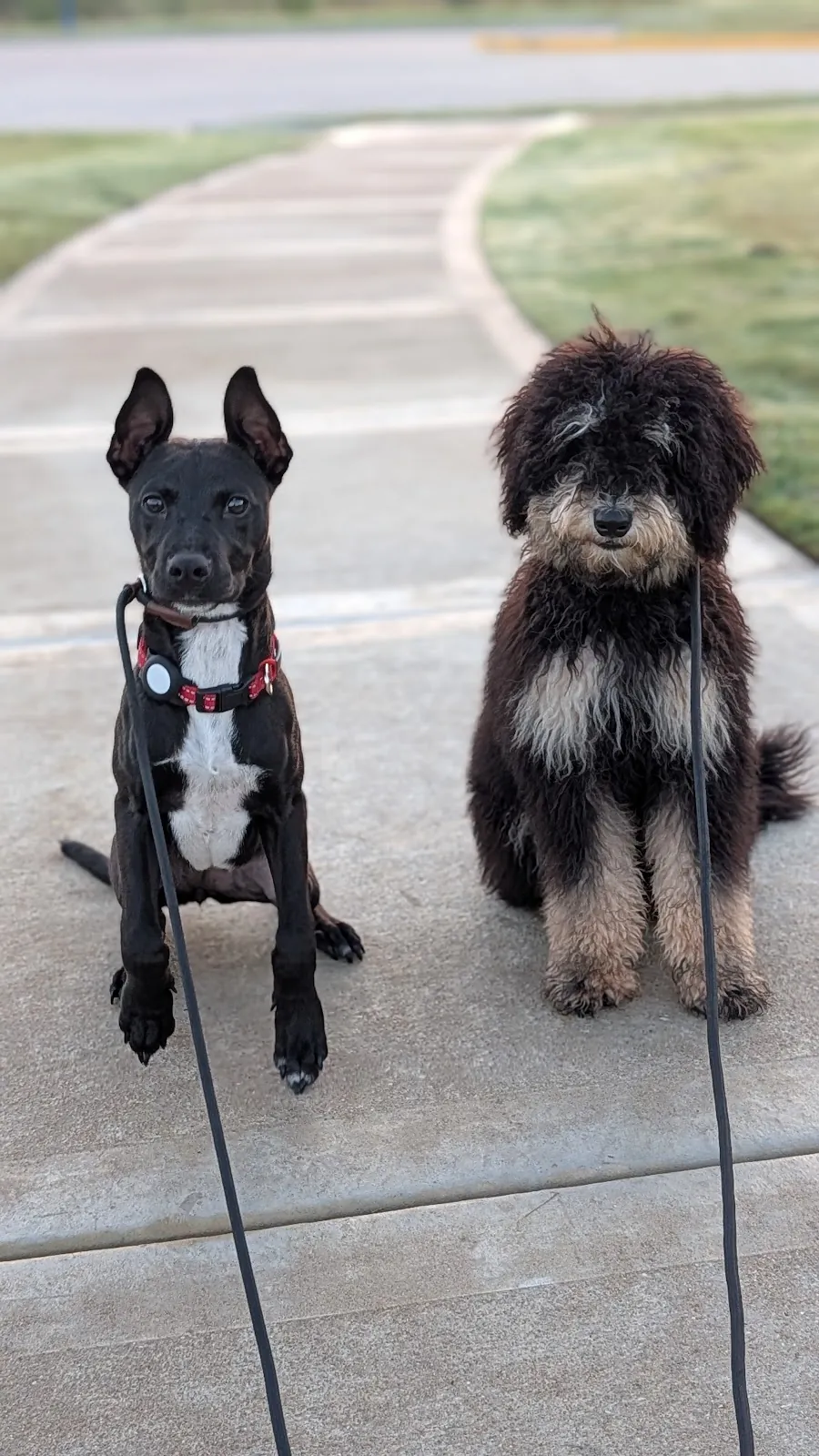
The week before
Tighten the structure you already have.
A dog with solid rules absorbs a new person easily; a dog with no rules absorbs a new person as a new thing to negotiate. So the week before the move-in is a week of the basics: meals on place, waiting at doors, a structured walk, the crate at night, and no free access to the bed or the couch. The dog does not need to know why. It needs the rules to be clear enough that adding a person to them is simple.
Decide with your partner, now, what the house rules are: where the dog sleeps, whether it is on the furniture, who feeds it, who walks it. Two people with two sets of rules is the fastest way to a dog that plays one against the other.
- Place at meals, the crate at night, waiting at doors
- The furniture rule decided together
- Who feeds, who walks, agreed in advance
- A dog with rules before the partner arrives
The first two weeks
The partner is a handler from day one, not a guest.
The new person feeds the dog on place, holds the leash on the structured walk, sends the dog to its bed and releases it, and runs the five-minute training session every other day. That is how a dog learns that a person is part of its structure: not from affection, which it will accept from anyone, but from the person controlling the things the dog values. A partner who only pets and feeds treats is a vending machine; a partner who runs the walk is a leader.
Keep the greetings calm. A dog that jumps on the partner is not welcoming them; it is testing them, and the four-paws-on-the-floor rule applies to the new person on day one.
- The partner feeds, walks and trains from the first week
- Same commands, same words, same rules
- Calm greetings, four paws on the floor
- Affection after work, not instead of it
Week before: tighten place, the walk, the crate, the furniture rule
Days 1 to 3: the partner feeds on place and walks the dog with you
Days 4 to 7: the partner walks alone, runs a training session, sends and releases from place
Week 2: the partner handles the door, the guests and the bedtime routine
Any growl or guard: the bed and the couch close to the dog until the structure holds
The bed, the couch and the growl
Guarding you from your partner is a resource problem, and the resource is you.
A dog that growls when the partner gets into bed, wedges itself between you on the couch, or stiffens when the partner hugs you is guarding a resource, and the resource is your attention and your space. It is one of the most common things we hear about after a move-in, and it is not fixed by the partner being nicer to the dog. It is fixed by the dog losing free access to the bed and the couch until it has earned them back with a place command and a release, from both of you.
If the growl has become a snap or a bite, that is an in-person consultation and usually a program, because guarding a person escalates. The ASPCA's guidance on guarding describes the signs; our aggression pages describe what we do.
- No bed or couch until place and release are solid from both people
- The partner sends and releases the dog from furniture
- No punishing the growl; change the setup
- A snap or a bite: call our team
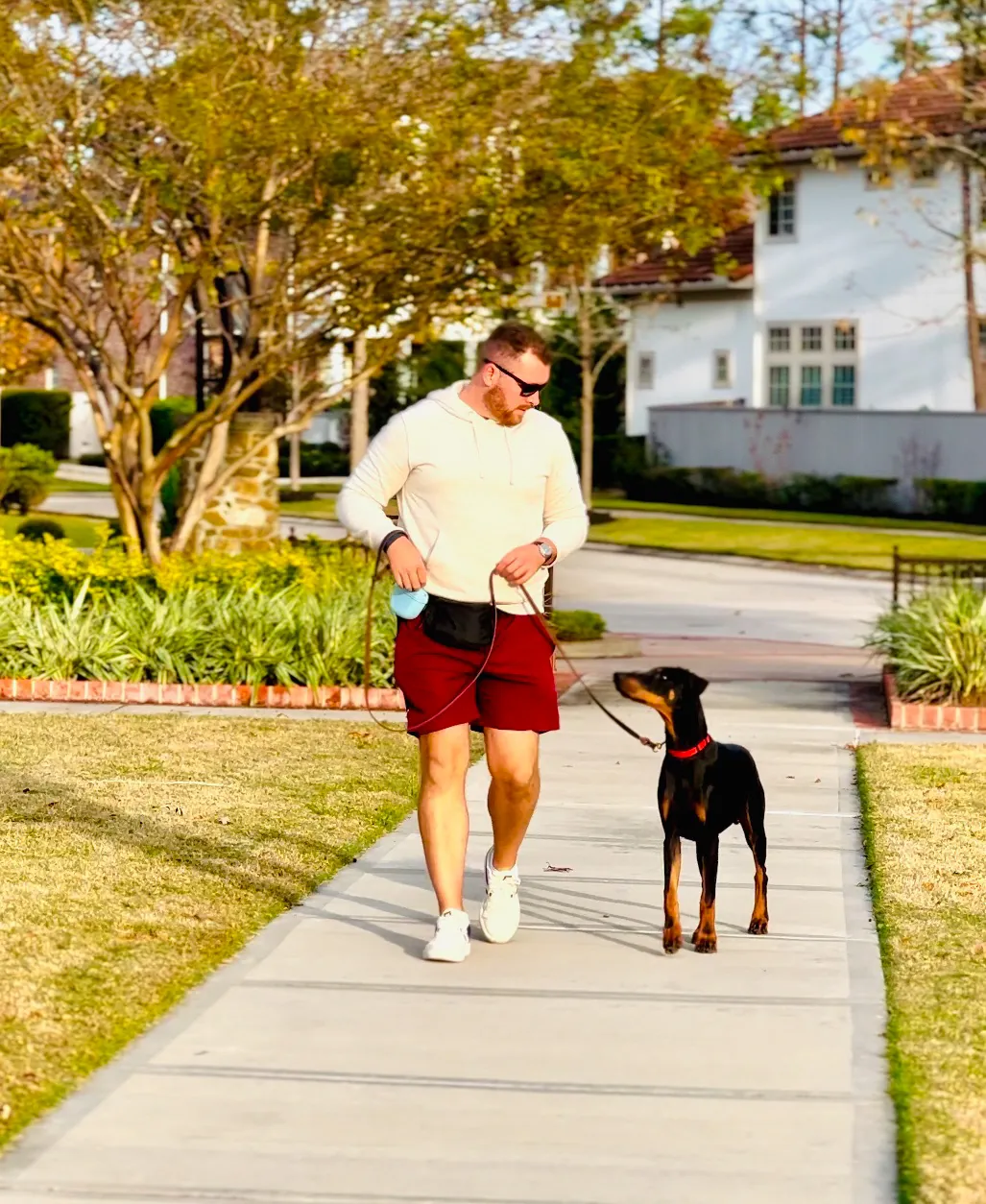
When one person is ignored
The dog listens to one of you and not the other.
Dogs listen to the person who controls the resources and holds the rules, and ignore the person who does not. A partner the dog ignores is usually a partner who has been kept out of the handling, often because the original owner did not want to burden them. The fix is the handling schedule above: the ignored person feeds, walks and trains for two weeks and the dog reorganizes its opinion. The go-home session after any of our programs is run with every adult in the house for exactly this reason.
In-home lessons at $220 are the right format for a household that has tried the two weeks and is still stuck, because the problem is between the people and the dog, in the house, and that is where it gets fixed.
Houston households
Two schedules, one dog and a long summer.
Houston commutes and shift work mean many couples hand the dog off morning and evening, and the dog gets two routines unless the couple agrees on one. Write the walk times, the meal times and the rules on the fridge for the first month. In summer, whoever has the dawn shift gets the walk, because the evening one is too hot until after eight, and a dog that gets its structured walk from only one person every day of the summer learns who the leader is.
The programs
Programs for a household with a new person in it.
In-home lessons for the household that is stuck, a Gold stay when the dog needs the rules installed before the partner can hold them.

Asked and answered
Questions people ask about this.
My dog growls at my partner in bed. Is it jealous?
It is guarding you as a resource, which looks like jealousy and is fixed the same way: no free access to the bed until the dog has a place command and a release that both of you control. If the growl has become a snap, get an in-person consultation before anyone is hurt.
How long does it take a dog to accept a new partner?
Two weeks of the partner handling the dog, feeding, walking and training, changes most dogs' opinion. A dog that is still guarding, ignoring or anxious after a month of real handling needs a lesson at home to find what is missing.
Should my partner give the dog treats to win it over?
Treats from a stranger make the dog like the stranger's hand. Feeding on place, running the walk and giving the dog its cues make the dog respect the person. Do the second; the first follows on its own.
Can we do a board and train so the dog comes home to the new rules?
Yes, and the go-home session is run with both of you so the dog answers to both from the first day back. It works best when both people commit to the same rules afterwards, which the follow-up lessons help with.
Keep reading
Free consultation · 10% off this fall
Tell our team about the household.
The free phone consultation is a direct call: who the dog listens to, what it does in bed and on the couch, and whether a lesson at home or a stay is the answer.