
Household changes
Moving house with a dog: keeping the structure through the boxes
Houston families move a lot, within the metro and into it, and every move produces the same call a month later: the house-trained dog is peeing on the new carpet, the calm dog barks at every new sound and the recall that worked in the old yard does not exist in the new one. The dog is not being difficult. It has lost its map.
Last reviewed September 11, 2026 · by the Best Dog University Team

Before the move
The routine is the thing that travels.
Packing changes the house for weeks, and a dog reads boxes, ladders and strangers as disruption. Keep the crate where it has always been until the last day, keep meals on place at the same times, keep the walks, and keep the departures boring. If the dog has never been crate-trained, the weeks before a move are the time to do it, because moving day and the first nights in a strange house are much easier for a dog that has a den it trusts.
Visit the new house with the dog if you can: a leashed walk through the empty rooms and around the block, then home. A dog that has smelled the new place once arrives there with a memory instead of a shock.
- Crate and place bed unmoved until the last day
- Meals and walks on the old schedule through packing
- Crate training built now if it never was
- One leashed visit to the new house and street
Moving day
The dog is not part of the move.
Doors open all day, strangers carry things, and a dog underfoot gets stepped on, lost or out the front door. The dog spends moving day somewhere else: boarded with us if it is a graduate, at a friend's house, or in its crate in a closed bathroom with a sign on the door and a chew, walked at fixed times by one person whose only job is the dog. Update the tag and the microchip record before the day, because a dog that bolts from a new address has no way home.
When the truck has gone, the crate and the place bed are the first things set up in the new house, in the spot that will be theirs, before a single box is opened.
- Boarded, at a friend's, or crated in a closed room with a sign
- One person responsible for the dog all day
- Tag and microchip updated before the move
- Crate and place bed set up first in the new house
Two weeks before: crate calm if it was never built; a visit to the new house
The week before: routine unchanged; the dog's things packed last
Moving day: the dog out of the house or crated in a closed room
First night: crate in its new spot, dinner in it, a walk around the block on leash
Weeks 1 and 2: crate, place, structured walks, leash in the house, no free roaming
Week 3 onward: freedoms earned room by room; the yard only once the fence is checked
The first two weeks
Treat the new house like a new dog.
The dog does not know the new doors, the new yard, the new sounds or the new neighbors' dogs, so it gets the new-dog protocol: crate when unsupervised, a leash in the house for the first few days, meals on place, structured walks on the new street at the quiet hours, and no free roaming of the house or the yard until you have checked the fence and the dog has learned the layout. House-training resets a little in a new house; take the dog out on the old schedule as if it were a puppy for the first week.
Explore the neighborhood on leash, at the quiet hour, a little further each day. Every new sound gets place practice. The dog builds its new map in two weeks, and the family that held the routine has a dog that behaves in the new house the way it did in the old one.
- Crate when unsupervised, leash in the house at first
- Potty schedule as if for a puppy for the first week
- Fence checked before any yard freedom
- New street explored on leash at the quiet hours
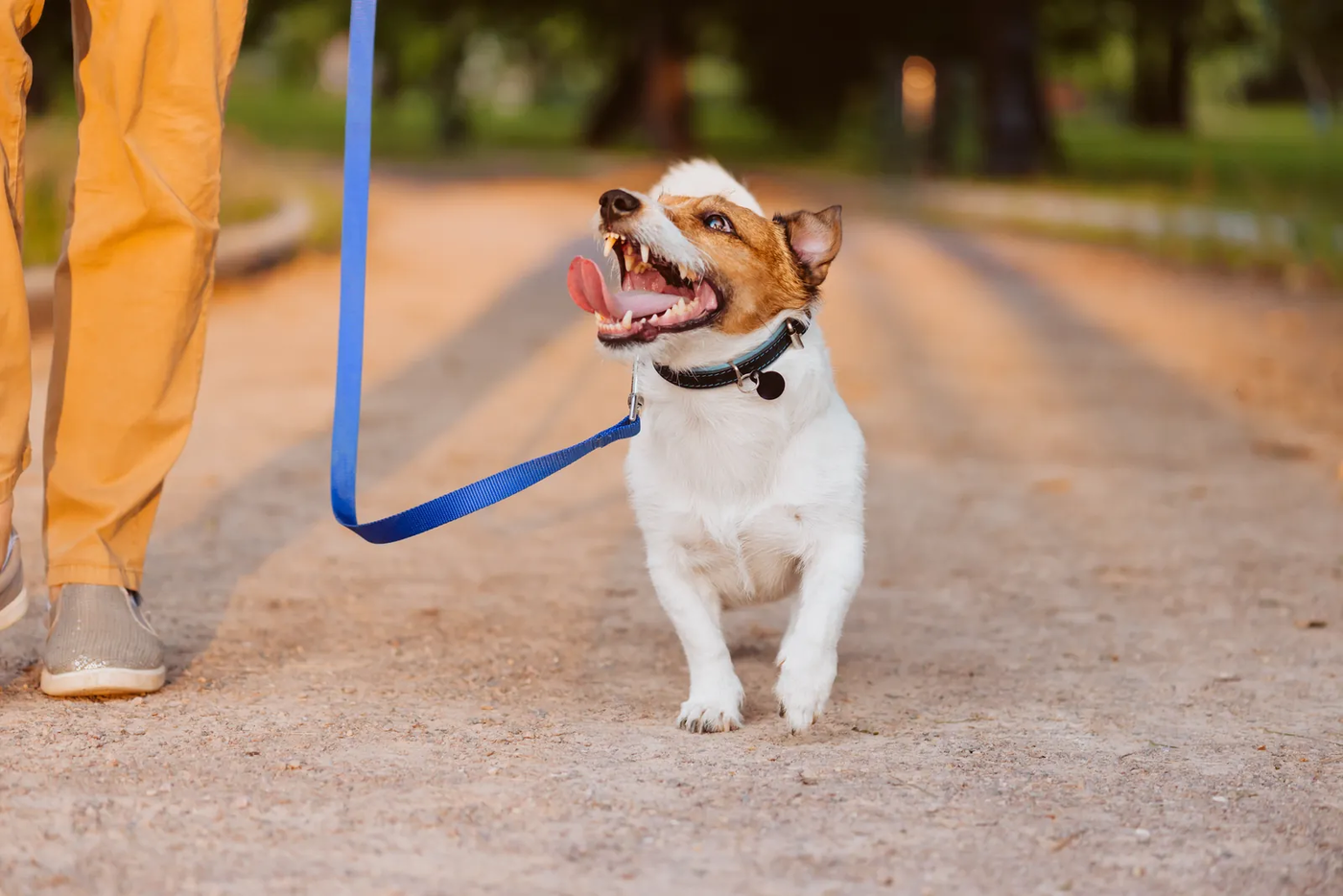
When the move reveals a gap
The recall that only worked in the old yard, and the new-house reactivity.
A move exposes training that was really just habit. The recall that worked in the old yard was the old yard; in the new one it needs rebuilding on a long line. The dog that was quiet in the old house because nothing happened there barks at every new sound in the new one. The dog that walked nicely on the old street lunges at the new neighbors' dogs. None of it is caused by the move; the move simply removed the familiarity that hid it.
A lesson at home in the new house, in week two or three, is the fastest way to set the rules for the new place. A Gold stay resets a dog that has fallen apart, and the go-home session in the new house is where the new map gets drawn with you.
Moving in Houston
Heat, fences, storm season and the new HOA.
Moving into a Houston summer means the new-street walks happen at dawn and dusk from the first day, and the new yard is a heat trap until you know where the shade is. Check the fence before the dog is loose in it, because a Houston fence hides gaps under gates and behind sheds, and a new dog in a new yard will find them. If the move lands in hurricane season, the crate work doubles as storm prep. And read the new HOA's rules on barking, leashes and breeds before the first letter arrives; the master-planned communities enforce them.
The programs
Programs after a move.
A lesson at home in the new house to set the rules, a Silver or Gold stay for the dog that has fallen apart.


Asked and answered
Questions people ask about this.
Why is my house-trained dog peeing in the new house?
The map is gone. Take the dog out on a puppy schedule for the first week, crate it when unsupervised, and reward every success outside. It usually resets in days. If it continues past two weeks, or the dog is a senior, the vet should rule out a medical cause.
What should I do with my dog on moving day?
Get it out of the house: boarded, with a friend, or crated in a closed room with a sign on the door and one person responsible for walks. A dog loose during a move gets underfoot, stepped on or out the front door, and a dog lost from a new address has no way home.
How long does it take a dog to settle after a move?
Two to four weeks for most dogs, if the routine is held and the new house is introduced like a new dog would be. A dog that is still anxious, barking at every sound or soiling the house after a month needs a lesson at home to reset the rules for the new place.
Can you board my dog during the move?
Graduates of our programs can board in the training home with training refreshers during the move, and come home to the new house sharper than they left. For a dog that has not trained with us, a Silver week around the move is often the right introduction.
Sources
Keep reading
Free consultation · 10% off this fall
Tell our team about the move.
The free phone consultation is a direct call: when the move is, what the dog is like now, and whether boarding, a lesson in the new house or a stay makes sense.