
Manners and obedience
How to teach a dog to wait at the food bowl
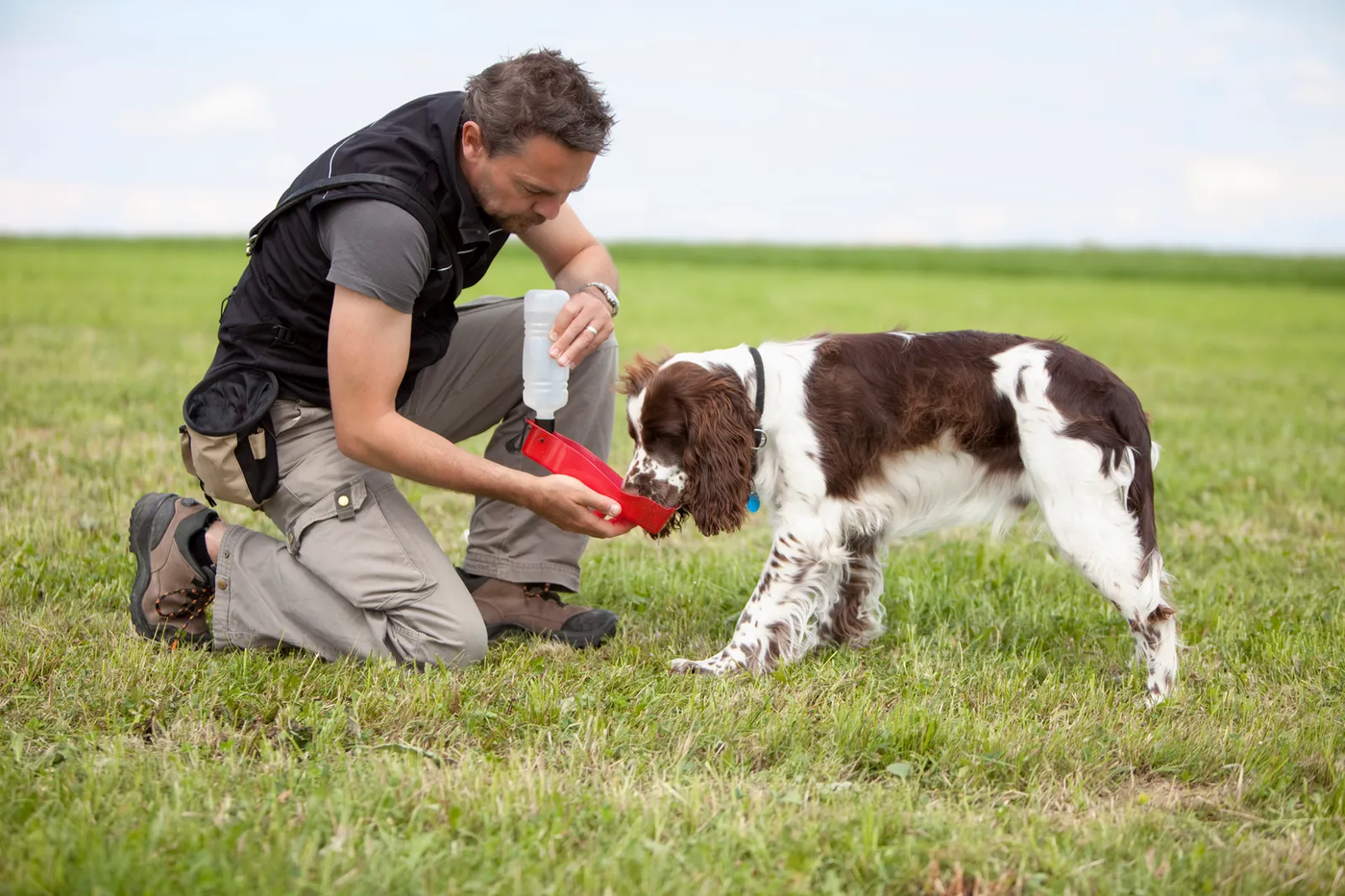
The wait at the bowl is the cheapest training a family will ever do and the one our trainers set up on the first day of every stay, because a dog that eats on a word is a dog that has learned, twice a day, that holding still gets it what it wants. Here is the method and the two mistakes.
Last reviewed September 11, 2026 · by the Best Dog University Team
Why it matters
Two meals a day, and each one teaches impulse control for free.
A dog eats twice a day and the moment before the bowl goes down is the most motivated the dog will be all day, which makes it the best moment to teach the thing most family dogs lack: holding still when something they want is right there. A dog that waits at the bowl for a word has practiced the wait at the door, the wait at the car and the wait at the pool without knowing it, and the word that releases it to eat is the same word that releases it everywhere. The wait is short, a few seconds, because the lesson is in the release, not in the endurance. A dog that lunges at the bowl the moment it touches the floor has been taught, twice a day, that lunging works.
- The most motivated moment of the day
- Impulse control practiced twice daily for life
- The same release word as the door and the pool
- A few seconds; the lesson is the release
The method
Five steps, and it usually takes three meals.
Use the dog's ordinary meal in its ordinary bowl, in the place it always eats. No cue is needed at first; the bowl's movement teaches everything.
Hold the bowl at chest height and start to lower it; the moment the dog moves toward it, lift it back up and wait; when the dog holds still or sits, lower again
Continue until the bowl reaches the floor with the dog still; the first time it may take a dozen lifts; say the release word and step back so the dog eats
At the next meal, the dog will hold still sooner; lower the bowl to the floor, keep a hand near it for one second, release
Add the release from a step away, then from across the room, so the dog waits with you at a distance
Add a sit or a down as the position if you want one, and keep the wait to a few seconds; the dog eats on the word every meal for life
The mistakes
Making it a long stay, using the wait as a dominance display, and ignoring a growl.
The wait at the bowl is not a stay contest: a dog held off its food for a minute while the family watches learns anxiety about meals, not impulse control, and a few seconds is the whole exercise. The old advice to stand over the bowl, to take it away mid-meal or to eat first to show the dog who is in charge has been abandoned by the people who study dogs, and taking a bowl from an eating dog is how food guarding is created. And a dog that stiffens, eats faster or growls when a person is near the bowl is not a wait-at-the-bowl case; that is resource guarding, and the method for it is hand-feeding and trades, on its own page, never a bowl that is lifted away.
Everyone in the house uses the same release word and the same short wait, and children do not run the exercise until the adults have it working.
- A few seconds, never a stay contest
- No standing over the bowl, no taking it away
- A growl at the bowl is guarding, not a wait problem
- One word and one wait for the whole house
- Adults first, children later
Proofing around Houston
The same wait at the door, the car and the pool edge.
The wait at the bowl is the rehearsal for the waits that matter in a Houston house: at the front door while a delivery driver stands there, at the car door in a parking lot off 290, at the back door before the yard, and at the pool edge in a Katy backyard before the dog is released into the water. The release word learned at the bowl is the release word at all four, and our trainers teach it at the bowl on day one of every stay because it is the fastest place to teach it. In a summer of indoor days it is also one of the few reliable training moments a hot afternoon offers.
- The front door with a delivery
- The car door in a parking lot
- The back door before the yard
- The pool edge before the water
When to call
Guarding at the bowl, or a dog with no impulse control anywhere.
A dog that growls, freezes or snaps near its bowl is a resource guarding case, and the safe method, hand-feeding, trades and a bowl that goes down in a crate, is on that page; a guarder with a bite history is a Platinum case at $3,750 with an consultation first. A dog that cannot wait for anything, the bowl, the door, the leash, the car, needs the whole foundation, and a Gold stay at $2,500 builds it in two weeks with the release word in every piece. The puppy bundle at $550 or $750 in-home sets the wait up at eight weeks, which is the easiest time to teach it.
The programs
Programs where the wait is taught on day one.
Gold for the wait inside the foundation, the puppy bundle to start it at eight weeks, Platinum for the dog that guards the bowl.


Asked and answered
Questions people ask about this.
How long should a dog wait for its food?
A few seconds. The exercise is about eating on a word, not about endurance, and a dog held off its food for a minute learns anxiety about meals. Lower the bowl, get the wait, release, and let the dog eat. Twice a day for life is the lesson.
Should I make my dog wait to show I am in charge?
No. The wait teaches impulse control and a release word, not rank, and the old advice about standing over the bowl, eating first and taking food away has been abandoned by the people who study dogs. Taking a bowl from an eating dog is how guarding starts.
My dog growls when I go near its bowl. Same method?
No. A growl at the bowl is resource guarding, and lifting the bowl away makes it worse. The method for a guarder is hand-feeding, food dropped in as you pass and trades, on the resource guarding page. A dog that has snapped over food needs an consultation.
Can a puppy learn to wait for its food?
Yes, at eight weeks, in about three meals. The bowl rises when the puppy moves and lowers when it holds still, and the release word ends the wait. It is the first impulse-control lesson a puppy gets and the easiest, and the puppy bundle sets it up in the first session.
Keep reading
Free consultation · 10% off this fall
Lower the bowl, get the wait, say the word.
Tell our team what your dog does when the bowl comes out. The free phone consultation is a direct call.