
Manners and obedience
How to teach a dog down with duration
The down is the position a dog can hold for twenty minutes under a restaurant table, and the one most families teach as a trick and never as a wait. Here is the method, the reward placement that makes it stick, and the mistakes that turn it into a bounce.
Last reviewed September 11, 2026 · by the Best Dog University Team
Why it matters
The down is the position for anything longer than a minute.
A sit is tiring and a dog holds it for a minute or two at most; a down is restful, and a dog that has learned to hold a down can wait through a dinner, a vet's waiting room or a school pickup. The down is also the position that says the dog has settled, which is why it is the foundation of place and of every patio settle. Most families teach the down as a trick, lure it once, reward it, and let the dog bounce up, which produces a dog that lies down for a second to collect and stands. The method below puts the reward on the floor between the paws so the dog stays down to eat, and grows the time between rewards until a minute is nothing.
- A sit lasts a minute; a down lasts twenty
- The down is the settle position
- Reward on the floor, between the paws
- Grow the interval, not the trick
The method
Six steps from the fold to a ten-minute down under a table.
Two-minute sessions, a soft floor at first, a marker word and a release word taught before you begin. Feed on the floor throughout, never from your hand at chest height, because where the reward arrives is where the dog goes.
From a sit, lure the nose to the floor and slightly forward until the elbows fold; mark the instant they touch and reward on the floor between the paws; ten repetitions, then fade the lure to a hand signal and a word
Add duration: cue the down, count two seconds, reward on the floor, count three, reward on the floor, release; grow the intervals over days to thirty seconds, a minute, three minutes, always feeding low
Teach the dog to stay down through your movement: shift your weight, step sideways, sit in a chair, reward on the floor each time
Add distance one step at a time, returning to reward on the floor, never calling the dog out of the down to reward
Add distraction: a toy dropped, a door opened, a person walking past, food on a plate at table height, rewarded through
Take it to the yard, a store aisle and a quiet patio, restarting the duration at a few seconds in each, until a ten-minute down under a table is ordinary
The mistakes
The bounce, the high hand, the missing release and the down as punishment.
The bounce comes from rewarding at chest height, so the dog stands to collect; feed on the floor. Repeating the cue, down, down, down, teaches the dog that the first one is a suggestion; cue once and wait, or lure again silently. A down without a release word ends when the dog decides, and a dog that decides gets up when the plate arrives. And a down used as a punishment, snapped at the dog after it did something wrong, becomes a position the dog avoids. Pushing the dog down by the shoulders teaches it to resist; the lure and the fold take a few more repetitions and produce a dog that folds on a word.
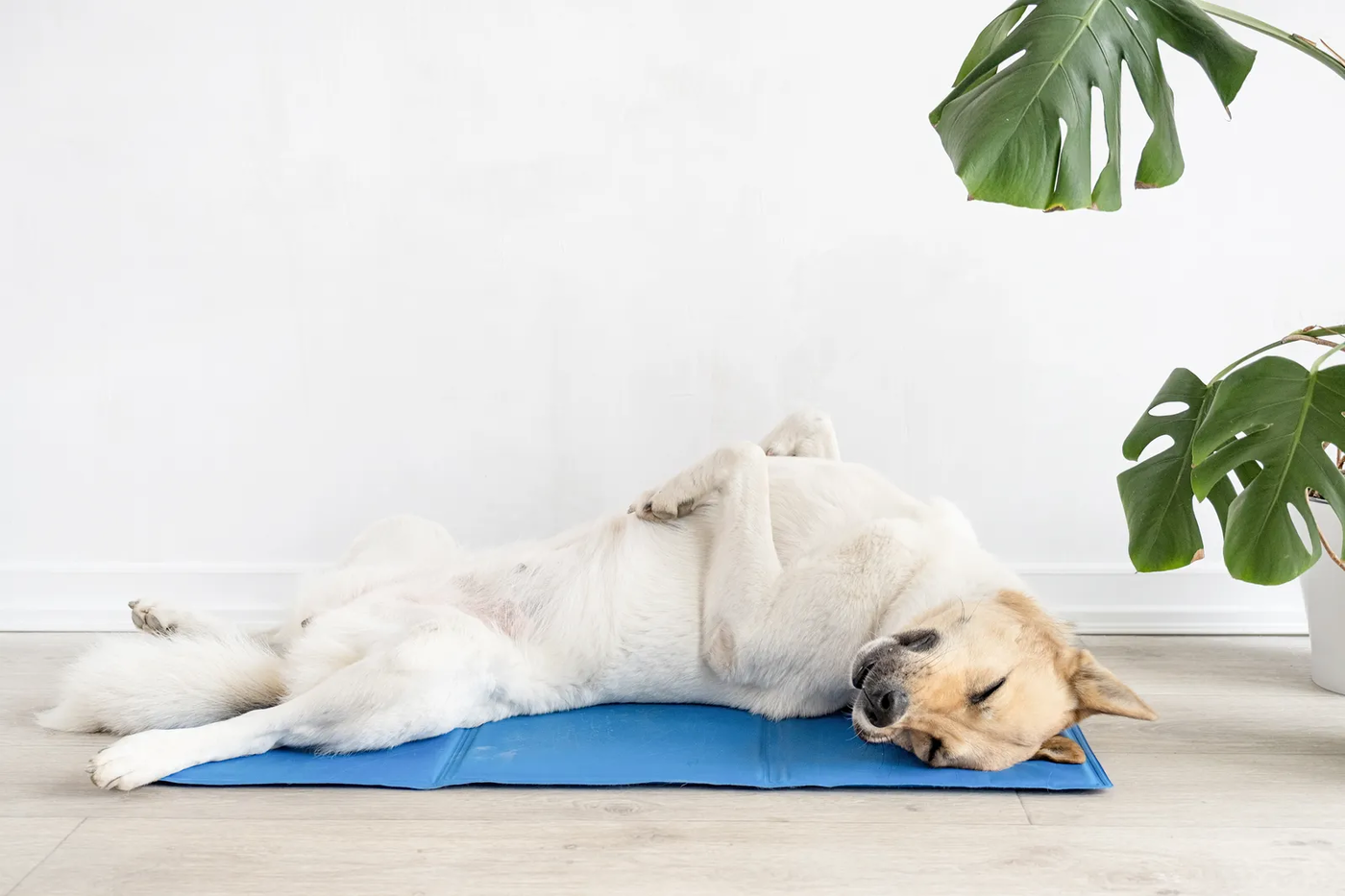
A dog that rolls onto a hip is settling and that is the goal, not a fault; a dog that sits up on its elbows is watching the door and needs the interval shortened.
- Feed on the floor, or the dog bounces
- Cue once
- Always release with the word
- Never use the down as a punishment
- Never push the dog down
Proofing around Houston
The patio, the vet's waiting room and the school pickup.
The down is proofed where a Houston dog will use it: under a table at a patio along 290 or on the Towne Lake boardwalk with a towel under the dog, on the floor of the vet's waiting room with a cat in a carrier across the room, at a school pickup in Bridgeland with children pouring past. Our trainers run all three on field trips, starting the duration over at each. In summer a down on hot concrete is cruel, so the patio work happens in the evening and the aisles and the air conditioning carry the day, and a towel or a mat goes under the dog anywhere the surface is warm.
- A towel under a patio table
- The vet's waiting room floor
- A school pickup with children streaming past
- A mat on any warm surface in summer
When to call
A dog that cannot hold a down anywhere is a dog that cannot settle.
A dog that pops out of every down within seconds, paces and whines is not failing the down; it has no off switch, and place with duration, a structured walk and a routine come first. That dog is the most common reason a family stops working on stays. A Gold stay, two weeks at $2,500, builds the down, sit and place with real duration in the training home and hands over the release word and the method at the go-home session; an in-home lesson at $220 fixes a down that has stalled. The place guide and the calm-in-the-house guide on this site are the companions to this one.
The programs
Programs that build the down for you.
Gold for the down, the sit and place with real duration, lessons at home for the stalled down, the puppy bundle to start it early.

Asked and answered
Questions people ask about this.
Why does my dog get up as soon as it lies down?
Because the reward arrived at chest height and the dog stood to collect it, or because nothing told the dog the down continues. Feed on the floor between the paws, grow the time between rewards from two seconds, and end every down with a release word.
How do I get my dog to lie down without a treat?
Fade the lure after ten repetitions to an empty hand making the same motion, then to a word, while the reward still arrives on the floor after the dog folds. The food moves from the hand that lures to the hand that pays, and then it thins out, but the cue is a word and a gesture, not the treat.
Should I push my dog into a down?
No. Pushing on the shoulders teaches a dog to resist and to dislike the position. The lure and the fold take a few more repetitions and produce a dog that lies down on a word. A dog that will not fold for a lure is usually on a slick or a hot floor; try a mat.
How long should a dog hold a down?
Ten minutes under a patio table is a realistic goal for a trained dog and twenty is common in a dog that has learned to settle. The down is the position for any wait longer than a minute; a sit is for the short ones.
Keep reading
Free consultation · 10% off this fall
Feed on the floor, grow the interval.
Tell our team how long your dog can hold a down. The free phone consultation is a direct call.