
Paws off, calmly
How to stop a dog from pawing for attention: demand behavior, quietly ended
Pawing starts as something cute, often a taught shake, and grows into a big dog raking your arm every time you sit down. It is demand behavior, the same family as nudging and barking at you, and it ends the same way: quietly, with nothing paid for it.
Last reviewed September 29, 2026 · by the Best Dog University Team
Before you start
Know what the paw has been paying, and pick the alternative in advance.
Watch for two days and note when the pawing happens: while you work at the laptop, at dinner, when you stop petting, when a guest sits down. Almost always it has been paid with a look, a word, a pat or a laugh. Choose the behavior you want instead, usually a sit beside you or a settle on a place bed, and have a pocket of food ready to pay it.
The Houston caveat is summer. From June to September, dogs spend long afternoons indoors with little to do, and bored dogs push harder for attention. Plan an early morning walk with structure and a short indoor training session in the afternoon, so the dog's need for contact is met before it starts asking with its feet.
- A two-day log of when the pawing happens
- One chosen alternative: sit or place
- Food in a pocket, not on the table
- Exercise and training scheduled before the usual pawing time
- Everyone in the house agreed on the rule
The steps
Pay the calm, not the paw.
The first few days feel slow because you are waiting for the dog to offer calm on its own. Keep your movements boring and your timing sharp. The dog is reading which of its behaviors gets you, and you are changing the answer. Keep a chew by the couch and your desk, so a settled dog has something to do the moment it gives up on the paw.
When the paw lands, stand up or turn your body away without speaking or looking. Fold your arms if you are sitting.
Wait for four paws on the floor, or a sit, even for a second. Mark with "yes" and give calm attention or a piece of food.
If the dog paws again, stand up again. Repeat until the dog tries sitting or lying down instead.
Teach the alternative on purpose: send the dog to its place bed several times a day and pay it there with a chew or quiet praise.
Give attention before the dog asks: call it over for a scratch when it is lying calmly, several times a day.
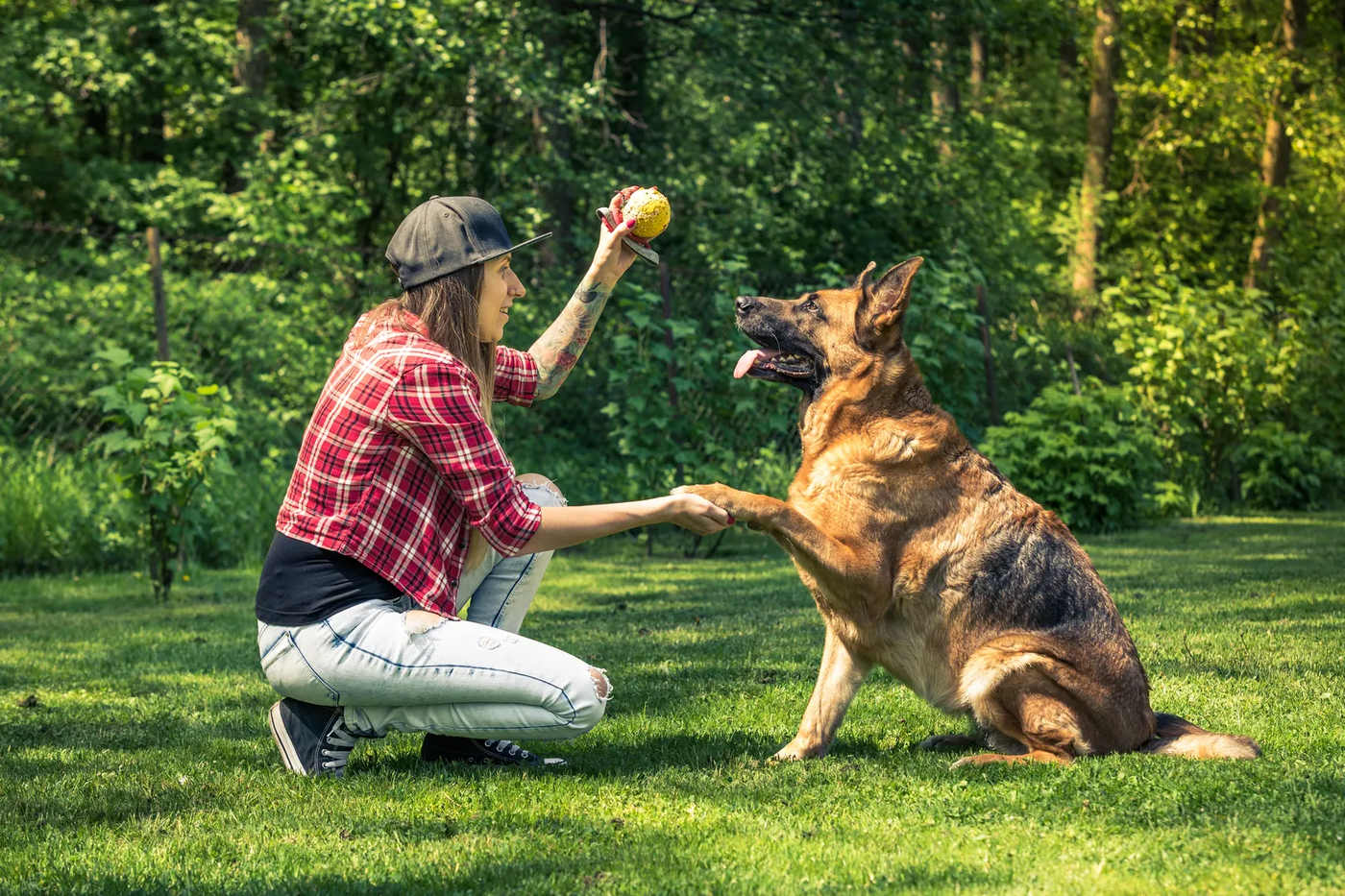
If the dog knows a shake, keep it on cue only. A paw offered without the cue earns nothing.
Once the dog understands the alternative, meet a persistent paw with a calm "no" and a send to place, then pay the settle.
When it is not working
Three reasons the pawing comes back.
The first is intermittent pay. One family member who pats the dog every fourth time it paws is running a slot machine, and slot machines are the hardest habits to break. The second is quitting during the loud days. Pawing usually gets harder and faster before it stops, because the dog is testing whether the old trick still works; giving in then teaches it to paw harder.
The third is an unmet need. A dog that paws all afternoon may simply have had no exercise or mental work since breakfast. Add a structured walk, a food puzzle or a short training session, then keep the rule. A dog whose day has a shape asks far less often, because it already knows when the attention comes.
- Someone still paying the paw now and then
- Giving in on the worst day
- A shake that is offered freely
- Too little exercise and mental work
Pawing at guests and children
A heavy paw on a child's arm is a safety issue, not a manners quirk.
Big dogs can scratch or knock over a small child with a single paw. Until the rule holds at home, keep the dog on a leash or on its place bed when children or visitors are sitting down, and tell guests not to reward the paw with a pat. A quick sentence at the door, such as asking them to ignore the dog until it sits, saves a lot of retraining.
Pawing that comes with mouthing, growling or guarding a person on the couch is a different behavior and needs a trainer to look at it. So does pawing at the owner's face at night or an anxious, frantic kind of pawing when you get ready to leave. Those point toward anxiety or guarding rather than simple demand, and ignoring them is not the plan.
When to get help
Gold builds place, impulse control and a calm dog on the couch.
Gold Board & Train, two weeks at $2,500, covers place and sit with duration, impulse control and jumping, which together replace the demand habits. Families come home with a dog that settles while they work or eat, plus a go-home session and one additional lesson to keep the rule going. A private lesson at $160 in Cypress or $220 in your home is often enough for a younger dog with a newer habit.
If the demands are only one part of a bigger picture, such as a velcro dog that cannot be alone, our team will say so on the free consultation call and suggest the right plan. Describe when the pawing happens, who pays it and what else the dog does when it does not get its way, and we will tell you whether a lesson is enough.
The programs
Programs that end demand behavior.
Gold for place and impulse control, a private lesson for a newer habit, Platinum when demand behavior comes with anxiety or guarding.


Asked and answered
Questions people ask about this.
Why does my dog paw at me?
Usually because pawing has worked: it has earned a look, a word, a pat or a treat. Some dogs were taught to shake and started offering it everywhere. Pawing can also be boredom or a sign that the dog has had little exercise or attention that day.
Should I ignore my dog when it paws at me?
Yes, in a specific way: stand up or turn away without speaking, then pay the dog the moment it settles or sits. Ignoring alone is not enough; the dog also needs to learn what does earn attention. Give plenty of attention at times when it is calm.
Why is the pawing getting worse after I started ignoring it?
That is expected. When a behavior that used to work stops working, dogs try harder before they give up. Stay consistent through the loud few days and make sure everyone follows the same rule. Giving in now teaches the dog that harder pawing pays.
Is it bad to teach my dog to shake?
No, as long as the paw only comes on cue. Pay a shake when you ask for it, and give nothing when the dog offers one on its own. If your dog already paws constantly, put the trick aside for a few weeks and reintroduce it on cue later.
How long does it take to stop pawing for attention?
Most dogs improve within one to two weeks if every family member follows the rule and the dog gets enough exercise and structure. Older, well-practiced habits may take a little longer, and occasional relapses happen when someone slips.
Keep reading
Free consultation · 10% off this fall
Trade the paw for a calm dog.
Tell our team when your dog paws and what usually happens next. The free consultation is a direct call, and we will point you to a lesson or Gold.