
Useful video clips
How to film your dog for a trainer
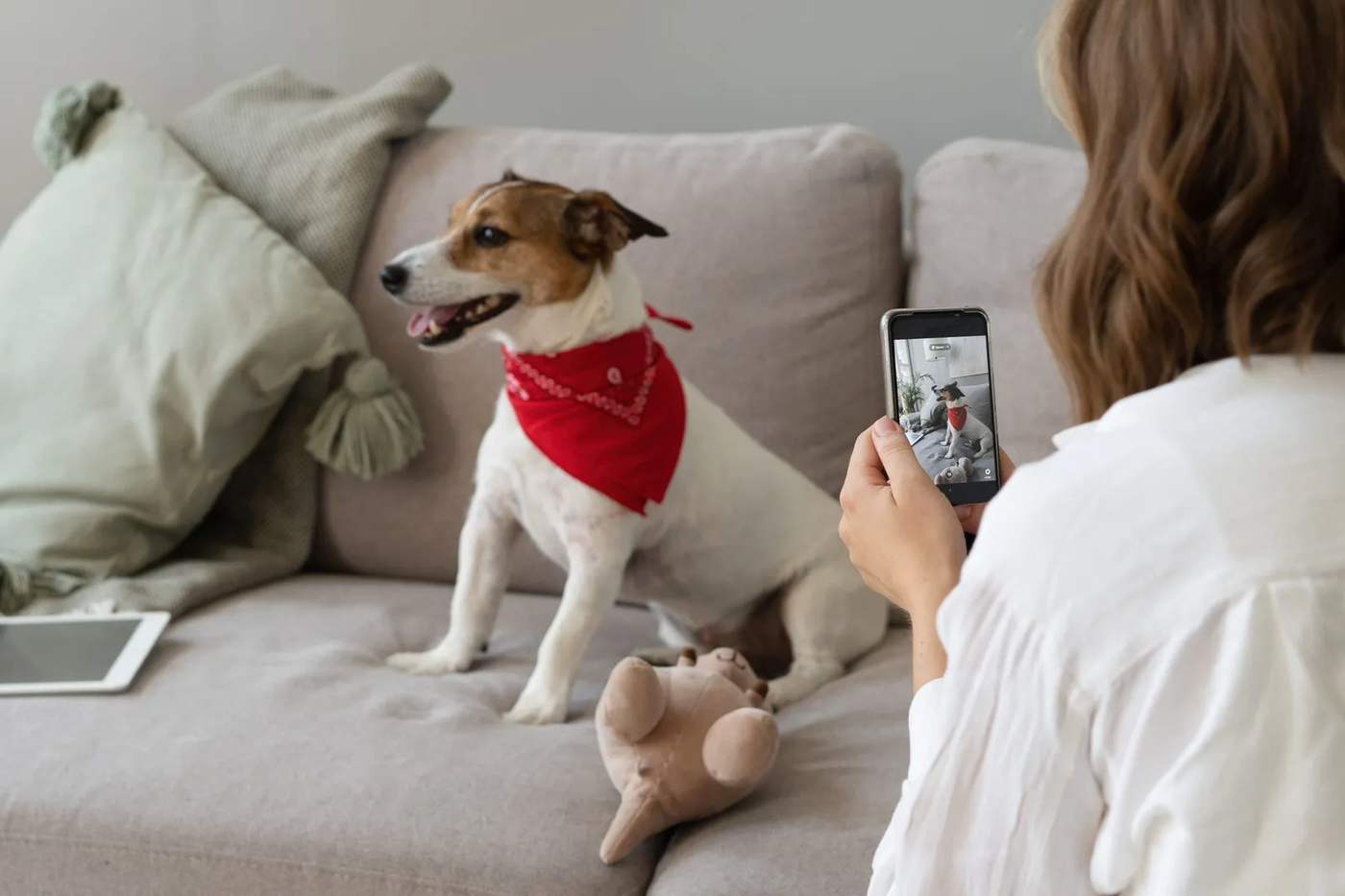
A trainer can learn more from a 40-second clip than from ten minutes of description, but only if the clip shows the right things. Most home videos miss the moment before the behavior, which is where most of the information is.
What to capture
Film the lead-up, the behavior and the recovery.
The behavior itself, the bark or lunge or growl, is only part of the story. A trainer wants to see what your dog was doing before it: where his ears were, whether he froze, how his weight shifted, how far away the trigger was. After the behavior, the recovery matters too. Does your dog shake off and sniff the ground within seconds, or stay wound up for a minute?
So start recording early. For barking at the window, start before the mail carrier appears. For a dog who reacts on walks, start rolling as you round the corner where it usually happens. Let the clip run until your dog has settled or you have moved away.
- A few seconds of normal behavior before the trigger
- The trigger itself, if it is safe to show
- The full reaction, without cutting away
- The recovery, until your dog settles
How to film
Follow these steps for clips a trainer can actually read.
Phone video is fine. You do not need a tripod or editing. What you need is a steady, wide picture taken at the right height. Work through these steps the first few times and they will become habit.
- Turn your phone sideways to landscape, which shows more of the room and both the dog and the trigger.
- Hold the phone at your dog's chest height, or prop it on a shelf, so the dog's face and body are not seen from above.
- Frame the whole dog from ears to tail with some space around him, and avoid zooming in on the face.
- Keep each clip between 30 and 90 seconds and name it with the date and a short note, such as door, Tuesday 6pm.
- Record two or three different moments rather than one long video, including one where things go fairly well.
- If a second person can help, one handles the dog and the other films, so the leash stays safe and the camera stays steady.
Common scenarios
Set the camera differently for each kind of problem.
For problems at home, a propped phone works best because you can act naturally. Set it on a bookshelf facing the front door for door rushing, or on the counter facing the window for barking. For separation problems, start recording as you pick up your keys and leave it running for several minutes after you leave; a laptop camera or a pet camera works for this.
For walks, a second person filming from a few steps behind and to the side shows the leash, your hands and your dog's posture. For two-dog tension, film them in the shared room during a normal evening rather than setting up a confrontation over a toy or a bowl.
- Door or window: phone propped, facing the trigger
- Alone time: start before you leave, run several minutes
- Walks: a helper films from behind and to the side
- Two dogs: a normal evening, never a staged conflict
Safety first
Never create a risky situation to get footage.
A clip is never worth an injury. Do not bring a reactive dog closer to another dog, a child or a guest to get a better shot, and do not put down a bone near a dog who guards just to record the reaction. If the behavior is dangerous, describe it instead, or film from behind a closed glass door or gate.
Keep both hands free for the leash on walks with a dog who lunges. If you cannot film safely, a written log of what happened, when and how far away the trigger was is still very useful. Our team would much rather hear a clear description than see a clip that put someone at risk.
Sending it
Send short, labeled clips with a line of context.
Before a virtual session, have your two or three best clips ready, each with one line of context: what happened just before, how often it happens, and what you did. If our team asks for them during or before the call, you can share them quickly. Trim long videos to the useful 30 to 90 seconds rather than sending ten minutes of footage.
Filming also helps you after the session. A clip from week one next to a clip from week three shows progress that is hard to feel day to day. If you would like our head trainer to review your dog's behavior and build a plan around it, book a $99 virtual session by phone or Zoom.
The programs
Have a trainer look at your clips.
A $99 virtual session by phone or Zoom, anywhere in the US.
$99per session
Phone or Zoom, anywhere in the US
Virtual consultation with our head trainer
One-on-one guidance for behavior, a new dog, introductions or a new puppy.
How long should a dog training video be?
Between 30 and 90 seconds per clip is ideal. That is long enough to show the lead-up, the behavior and the recovery, and short enough to watch closely. Send two or three clips of different moments rather than one long video that has to be searched.
Should I film in portrait or landscape?
Landscape. Turning your phone sideways shows more of the room, so the trainer can see both your dog and what he is reacting to. Portrait clips usually crop out the trigger, the leash or the dog's tail, all of which matter.
Is it safe to film my reactive dog on a walk?
Only if you can keep full control of the leash. A helper who films while you handle the dog is best. Never move closer to a trigger to get a better shot. If you are alone and your dog lunges hard, skip the video and write a short description instead.
What if my dog never does the behavior on camera?
Prop the phone and leave it running in the place it usually happens, so you are not holding the camera and your dog acts normally. Pet cameras help for alone time. If you still miss it, a log of each incident with time, place and trigger works well.
Can a trainer really help from video?
Video shows body language, distance, timing and your handling in a way words cannot, which makes coaching much more specific. It does not replace hands-on work for a dog with a bite history. For most everyday problems, a $99 virtual session using your clips gives you a clear plan.
Virtual session, $99
Send the clip, get the plan.
Book a $99 virtual session by phone or Zoom. Our team watches what your dog is really doing and turns it into steps you can follow.