
Biking with a dog
How to bike with your dog safely: the rules before the first ride
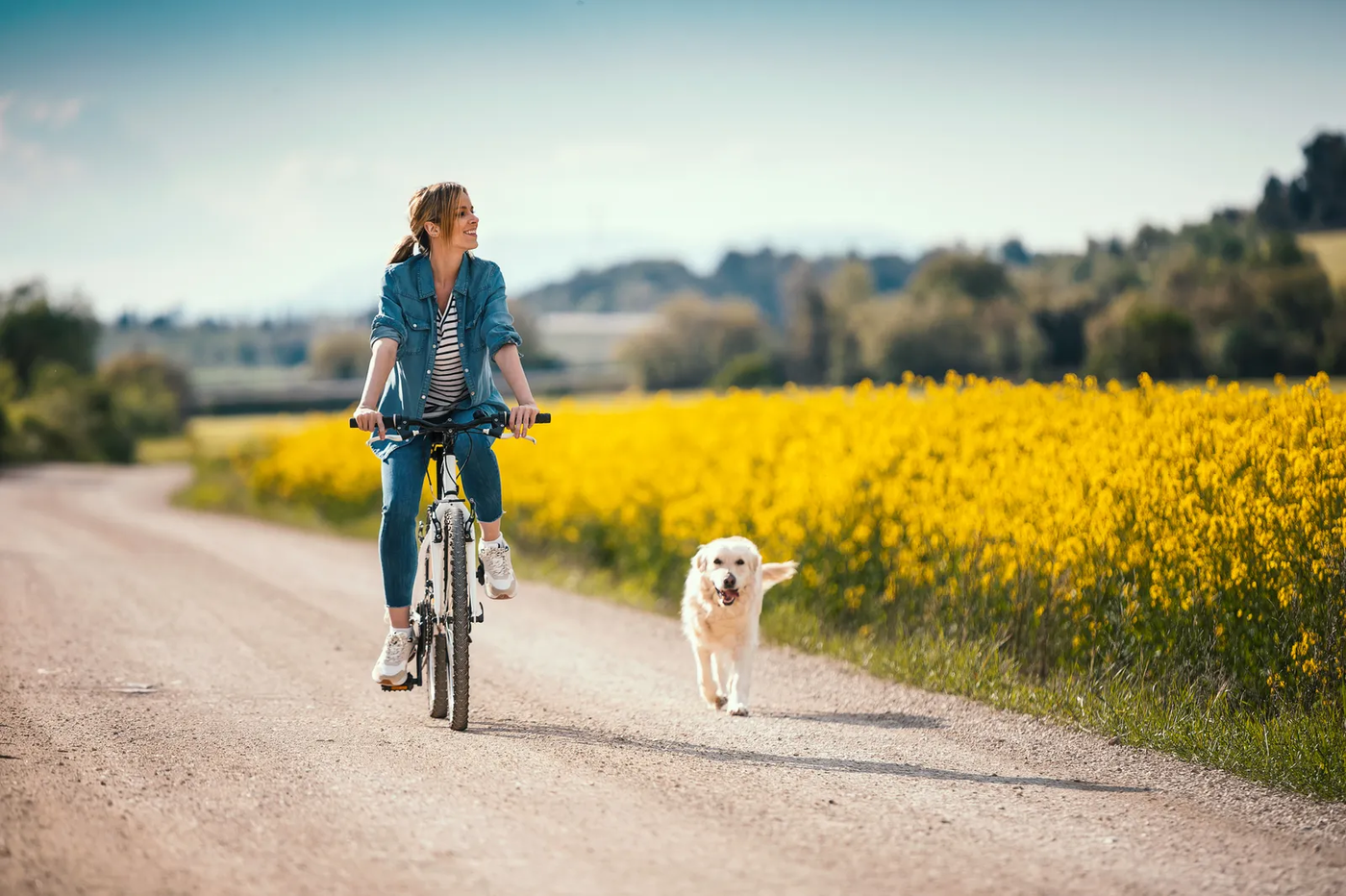
A dog trotting beside a bike looks like the perfect workout for a high-energy breed. It can be, for the right dog, at the right hour, after the right training. Done too soon, it is how dogs get hurt and riders fall.
Last reviewed September 29, 2026 · by the Best Dog University Team
Before you start
Before you start: the rules that decide whether your dog should ride at all.
Not every dog belongs beside a bike. Puppies and adolescents with growing joints, flat-faced breeds, very heavy dogs, seniors and dogs with a strong chase instinct are poor candidates, and your vet should clear any dog for sustained trotting before the first ride. The dog also needs a reliable heel on foot, plus a stop and a leave it that work around squirrels and other dogs. If the dog still pulls on an ordinary walk, a bike turns every lunge into a fall.
The Houston caveat is heat and pavement. From May to September ride only at dawn or after dark, and before every ride put the back of your hand on the pavement for seven seconds; if you cannot hold it there, the dog cannot run on it. Carry water, choose shaded routes and keep rides short, because a trotting dog heats up far faster than a rider coasting beside it. Park trails such as Terry Hershey Park set their own rules for bikes and leashed dogs, so check the operator's current rules first.
- Fully grown and cleared by your vet
- A reliable heel, stop and leave it on foot
- Dawn or after dark from May to September
- The seven-second pavement test before every ride
The steps
Six steps from pushing the bike to a short, slow ride.
Spread these over several weeks, and ride at a pace the dog can hold at a relaxed trot, not a gallop. Keep the dog on the same side every time, the side away from traffic, on a short leash held in the hand or on a rigid bike attachment that keeps it clear of the wheel. Never wrap the leash around your hand or the handlebar, because a sudden lunge then takes you with it.
Walk the bike with the dog heeling on the far side, paying it for ignoring the wheels, the ticking and the brakes
Add your cues for slow and stop while walking the bike, stopping often and paying the dog for stopping with you
On a quiet street, ride at walking pace for one or two minutes with the dog in position, then stop, pay and walk home
Build to five minutes at a relaxed trot, with walk breaks, over a couple of weeks, watching the dog's breathing throughout
Add the distractions you will meet one at a time, a jogger, a car door, a dog behind a fence, riding past with a leave it
Keep rides short and regular, end each one with a cool-down walk, and check the paws afterward
When it is not working
Lunging at wildlife, lagging behind, and a dog that drifts into the wheel.
A dog that lunges toward a squirrel or a cat while you ride is the most dangerous version of this, for both of you. That dog is not ready yet: go back to walking the bike, work the leave it, and do not ride again until the dog passes the same distractions calmly on foot. A dog that lags, slows or pulls back is telling you it is too hot, too tired or sore. Stop, walk it home in the shade, and ask your vet if it happens again.
A dog that drifts toward the front wheel usually has too much leash, or was never taught its position beside the bike. Shorten the line or try a rigid attachment, and go back to riding at walking pace. The cause underneath all three problems is the same: the ride went faster, longer or busier than the training beneath it could carry, so slow the ride down to the training.
- Lunging: not ready, back to walking the bike
- Lagging: too hot, tired or sore, so stop
- Drifting to the wheel: shorter line, slower pace
- The training sets the speed limit
When to get help
When biking needs a trainer, and the program with a structured heel.
A structured heel and impulse control are the foundation for any work beside a bike. The Platinum Board & Train, three weeks at $3,750, includes both, along with down and stay, field trips and public exposure, and it ends with unlimited private lessons, so early bike sessions can be worked with a trainer after the handover. For families who want complete off-leash reliability for trail and acreage life, the VIP program is six weeks at $10,000.
A private lesson at $160 in Cypress or $220 in your home is a sensible first step to check the dog's heel and choose a leash setup for the bike. On the free phone consultation, tell our team your dog's age, its breed and what it chases, because those three answers decide whether biking is a good idea for your dog at all.
The programs
Programs that build the heel a bike needs.
Platinum for a structured heel and impulse control, VIP for off-leash trail reliability, a lesson to check the heel first.


Asked and answered
Questions people ask about this.
At what age can my dog run beside a bike?
Only once it is fully grown and your vet has checked its joints, which comes later for large and giant breeds than for small ones. Ask your vet about your dog's age and breed. Until then, stick to walks and short play, and practice the heel and stop on foot.
What is the best leash setup for biking with a dog?
A short leash held in the hand works for a dog with a very solid heel. Many riders prefer a rigid bike attachment that holds the dog a fixed distance from the wheel and absorbs some of a lunge. Avoid retractable leashes, and never tie the leash to the handlebar.
How far can my dog run next to a bike?
Start with minutes, not miles. Five minutes at a relaxed trot with walk breaks is plenty for the first rides, and many dogs never need much more. Your vet can advise on distance for your dog, and on most Houston days the heat decides it for you.
Can my small dog ride in a bike basket or trailer instead?
For small dogs, a basket or trailer made for dogs can be safer than running. Teach it the same way: parked first, then short, slow rides. Clip the dog in with a short tether to its harness, never its collar, so it cannot jump out.
Keep reading
Free consultation · 10% off this fall
The heel comes before the bike.
Tell our team your dog's age, breed and what it chases. The free phone consultation is a direct, no-cost call.