
Household changes
Your dog after losing the other dog
When the older dog dies, the family discovers that the younger one never learned to walk on a leash, be alone or settle without a companion; it simply followed. The grief is real and so is the gap, and the kindest thing is to fill the gap with structure while the grief runs its course.
Last reviewed September 11, 2026 · by the Best Dog University Team
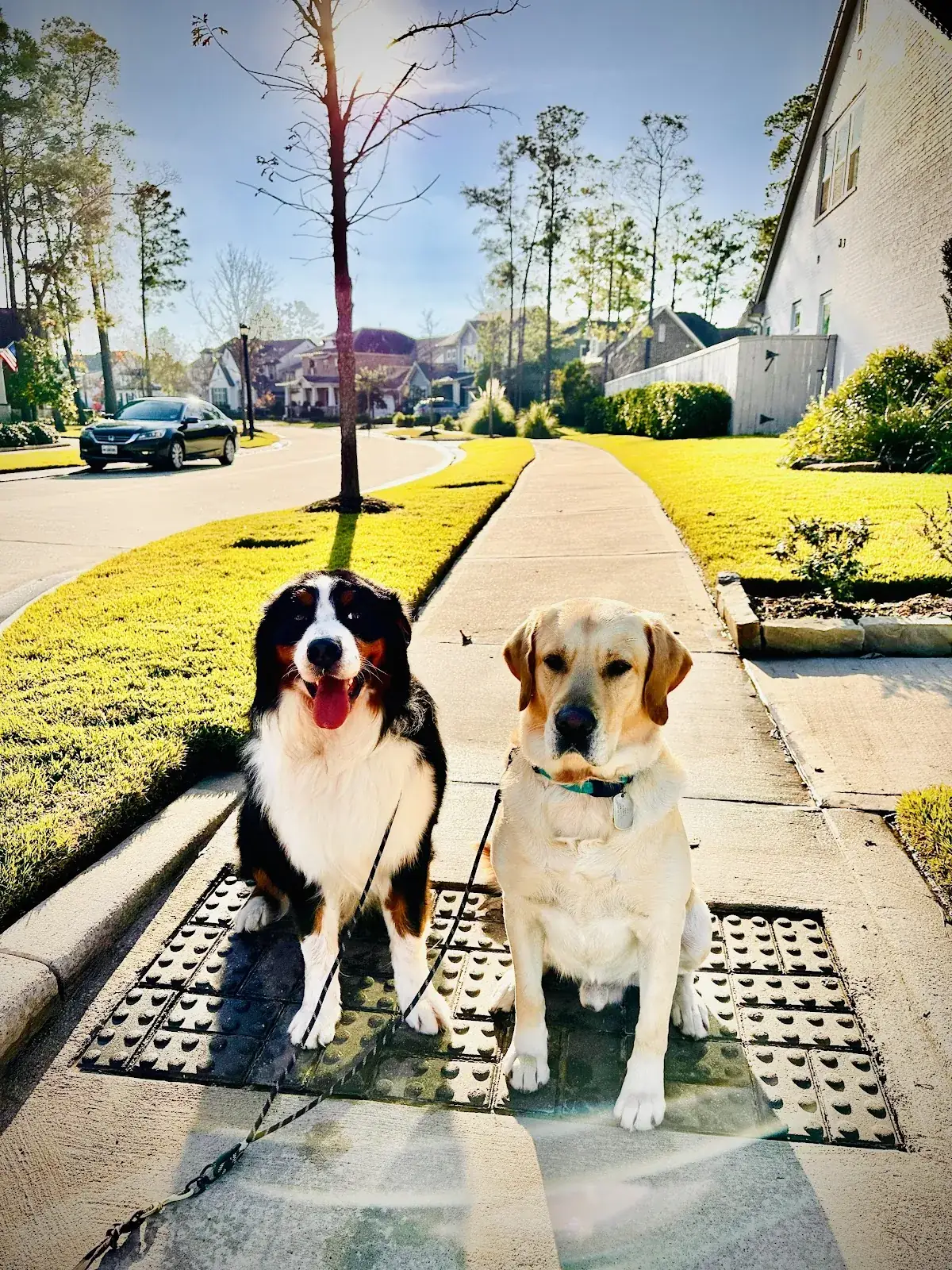
What grief looks like
Searching, not eating, and a dog that cannot be left.
Dogs grieve visibly. The surviving dog checks the other's bed, waits at the door at the time the vet visit happened, eats less, sleeps more or paces, and may whine when left alone for the first time in its life. Some become clingy; some become withdrawn. The ASPCA and the AKC both describe it, and it usually eases over weeks. What makes it worse is a household that changes everything at once: new routines, constant comfort, the crate abandoned because the dog seems sad.
Let the dog see and sniff the other dog's things for a few days, then put them away. Keep the walks, the meals and the crate exactly as they were. The routine is the thing the dog can still rely on.
- Searching the house, waiting at the door
- Eating less, sleeping more or pacing
- Whining when left alone for the first time
- Clingy or withdrawn; both are normal for a few weeks
What to keep the same
Everything, and add a little more of it.
The instinct is to comfort the dog with more attention, more couch time and fewer rules. The dog reads that as the world changing further. Keep the meal times, the place command at meals, the structured walk, the crate at night, and the departures and returns as boring as they were. Add a little more: a five-minute training session every day, a new route on the walk, a new food puzzle. Work is comfort for a dog, and a dog that has a job in the morning is steadier by the afternoon.
Do not rush to get another dog to fix the sadness. A new dog is a decision for its own sake, made when the household is ready, not a treatment for the one that is grieving.
- Same meals, same walks, same crate, same rules
- A daily five-minute training session as a job
- Boring departures and returns
- No new dog as a treatment
Week 1: routine unchanged; the other dog's things visible for a few days, then away
Weeks 2 and 3: a daily training session added; a new walking route
Weeks 4 to 6: the first longer time alone, built up in steps; appetite and sleep back to normal
Week 6 onward: if the dog is still not eating or cannot be left, the vet and then us
When ready: a second dog chosen for its own sake, introduced on a parallel walk
The gap the other dog was covering
The follower who never learned to lead itself.
In many two-dog homes the older dog was the trained one and the younger one followed: it walked beside the leader, settled because the leader settled, and was never alone because the leader was there. When the leader dies, the follower is a dog with no training of its own. It pulls on the walk it used to share, cannot settle in an empty house and has no place command because it always lay next to the other dog's bed.
That dog needs its own foundation, and the grief period is a fine time to build it, because structure is what a grieving dog does best with. Place, the walk, the crate and being alone, taught for the first time as if it were a new dog. A Gold stay does that in two weeks; lessons at home do it more slowly.
- Pulling on a walk it used to share
- Cannot settle without the other dog
- Never alone before; panics now
- No place command of its own
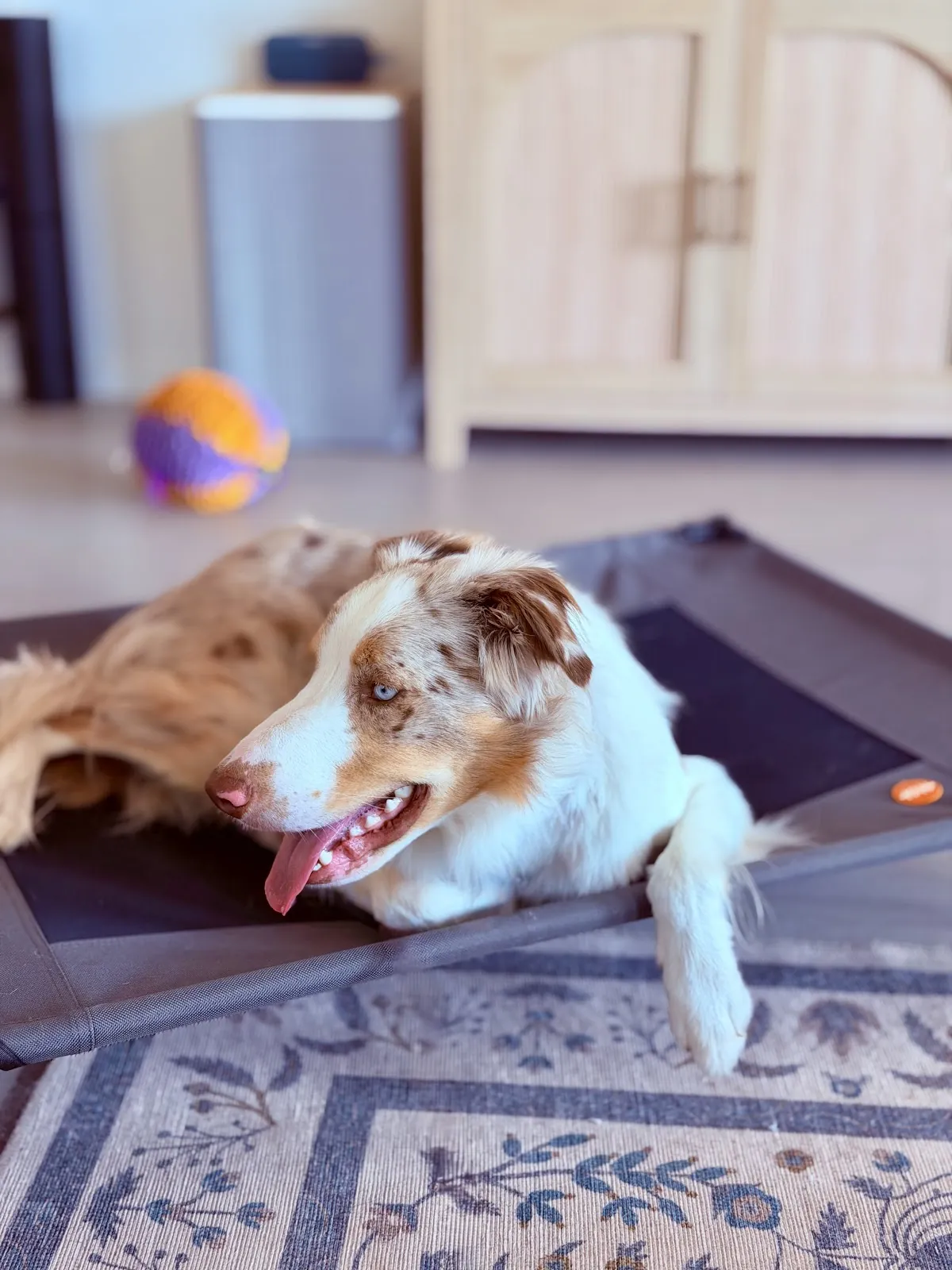
When time is not enough
Not eating at six weeks, or a dog that cannot be left at all.
A dog that is still refusing food after a couple of weeks needs the vet, because grief and illness look alike and seniors especially can be hiding something. A dog that, six weeks on, still panics when left, destroys doors or soils the house has separation anxiety triggered by the loss, and that responds to independence rebuilt in small steps rather than to more time. Our separation anxiety page explains the program, and a lesson at home is a good first step for a household in mourning.
Families sometimes feel that training during grief is cold. It is the opposite. The dog wants to know what to do next, and telling it is the kindest thing available.
In Houston
A long walk at dawn, and the vet's advice on the senior left behind.
Houston's heat shapes the practical side: a grieving dog that has stopped eating and is walking less needs its water watched and its walks at dawn, because a dog off its food dehydrates faster in July. If the surviving dog is itself a senior, the loss often coincides with its own slowing down, and the vet visit doubles as a check on the dog you still have. Local vets and the rescues at BARC and Harris County Pets see this weekly and are used to the questions.
The programs
Programs for the surviving dog.
Lessons at home to build the foundation the other dog was covering, a Gold stay when the dog needs the reset all at once.

Asked and answered
Questions people ask about this.
Do dogs grieve when another dog dies?
Yes, visibly: searching, eating less, sleeping in the other dog's spot, and sometimes whining when left alone for the first time. It usually eases over two to six weeks if the routine stays the same and the dog is given a little more structure rather than a lot more comfort.
Should I get another dog right away to keep the survivor company?
No. A new dog is a decision to make for its own sake when the household is ready. A dog that is grieving and untrained will teach the newcomer everything it does not know, and the household doubles its problems.
My surviving dog never learned anything; the old one did it all. Where do I start?
With place, the structured walk, the crate and short alone periods, taught as if the dog were new. Lessons at home do it gradually; a two-week Gold stay does it all at once and the go-home session shows you how to keep it.
How long should I wait before worrying?
Refusing food for more than a couple of days means the vet. Still unable to be left alone at six weeks means separation anxiety, and that needs a plan rather than more time.
Keep reading
Free consultation · 10% off this fall
Tell our team about the dog you still have.
The free phone consultation is a direct call: what the surviving dog is doing, what the other dog used to cover for it, and where to start.