
Adolescence
Adolescent dog regression, months 6 to 18
Every February and every September the calls come in: the puppy that graduated the bundle, that sat and came and slept through the night, is now six or eight months old and has stopped doing all three. Nothing went wrong. The dog is a teenager, and this is what teenagers do.
Last reviewed September 11, 2026 · by the Best Dog University Team
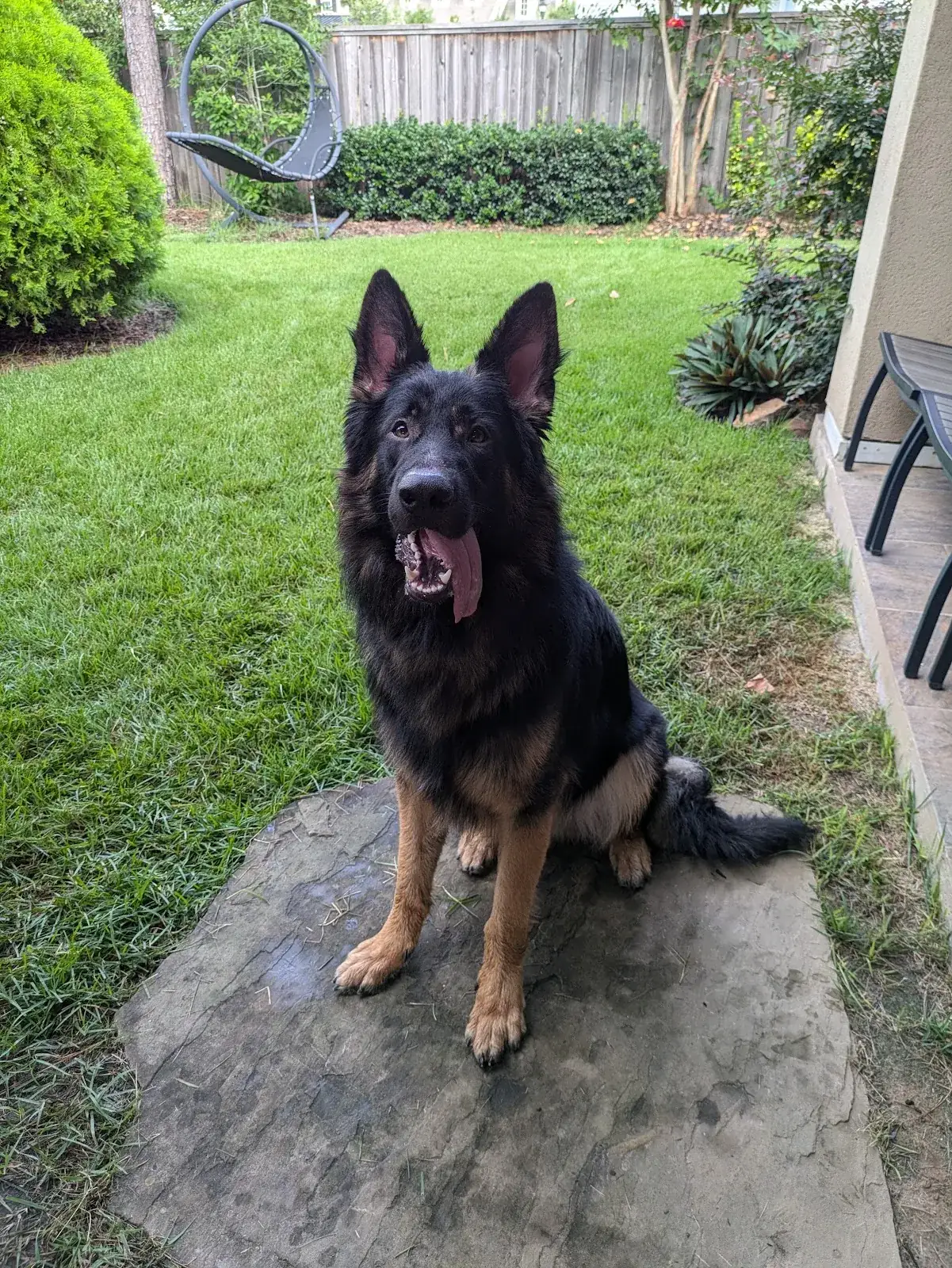
What is happening
The brain rewires, the hormones arrive, and the rules get tested.
Between six and eighteen months a dog goes through the same thing a human teenager does: the reward centers of the brain get louder, the impulse control gets quieter, and everything the puppy accepted gets re-examined. Add sexual maturity, a growth spurt and, in some dogs, a second fear period around eight to twelve months, and the sweet puppy becomes a dog that pulls, ignores its name outdoors, barks at strangers and pushes on every boundary.
It is temporary, and it is also decisive. The habits an adolescent is allowed to keep become the adult dog's habits. The families who hold structure through this window get a calm two-year-old; the families who give up on the rules because the dog is pushing get the two-year-old that arrives at our door.
- Recall that vanishes outdoors
- Pulling that was not there in the spring
- A first bark at a stranger, a first growl over a bone
- Testing the family member who enforces least
What to hold
Every rule the puppy had, without exception.
Meals on place. The walk in a heel before any sniffing. The crate at night and when alone. Waiting at doors. No jumping, no teeth, no furniture unless invited. None of these are new; all of them are the rules the dog is now testing. The mistake is to relax them because the dog is pushing, which teaches the dog that pushing works. Hold them calmly and consistently, and the testing fades in weeks.
The recall goes back on a long line for the whole adolescence. A dog that is allowed to ignore its name in the yard at seven months learns that the word is optional, and that lesson takes far longer to undo than the long line takes to use.
- Meals on place, every meal
- Long line on the recall until eighteen months
- Crate at night and when alone
- The same rules from every person in the house
Month six: back to the long line outdoors; reward every check-in
Months seven to nine: neutral exposure to dogs at a distance; no on-leash greetings
Months ten to twelve: watch for the second fear period; expose gently, never flood
Months thirteen to eighteen: earn freedoms slowly; each one is proof, not a gift
Throughout: hold every rule the puppy had
What to add
A job for the brain, and neutrality to the things the dog now notices.
An adolescent needs more mental work than a puppy and gets it from training, not from mileage. Ten minutes of place with distractions, five minutes of leave-it and heel in the kitchen, a structured walk that asks for attention: these tire an adolescent more than an hour at the park, and they build the impulse control the brain is short of.
This is also when neutrality gets built or lost. An adolescent that greets every dog on leash learns that dogs are the point of the walk and starts pulling and then lunging toward them. Walk past dogs at a distance the dog can hold, reward the look back at you, and close the distance over weeks. It is the single most valuable thing to teach between six and twelve months in a Houston neighborhood full of dogs.
- Short training sessions daily, not longer walks
- Neutrality to dogs at a distance, closing slowly
- No on-leash greetings with strange dogs
- Freedoms earned by proof
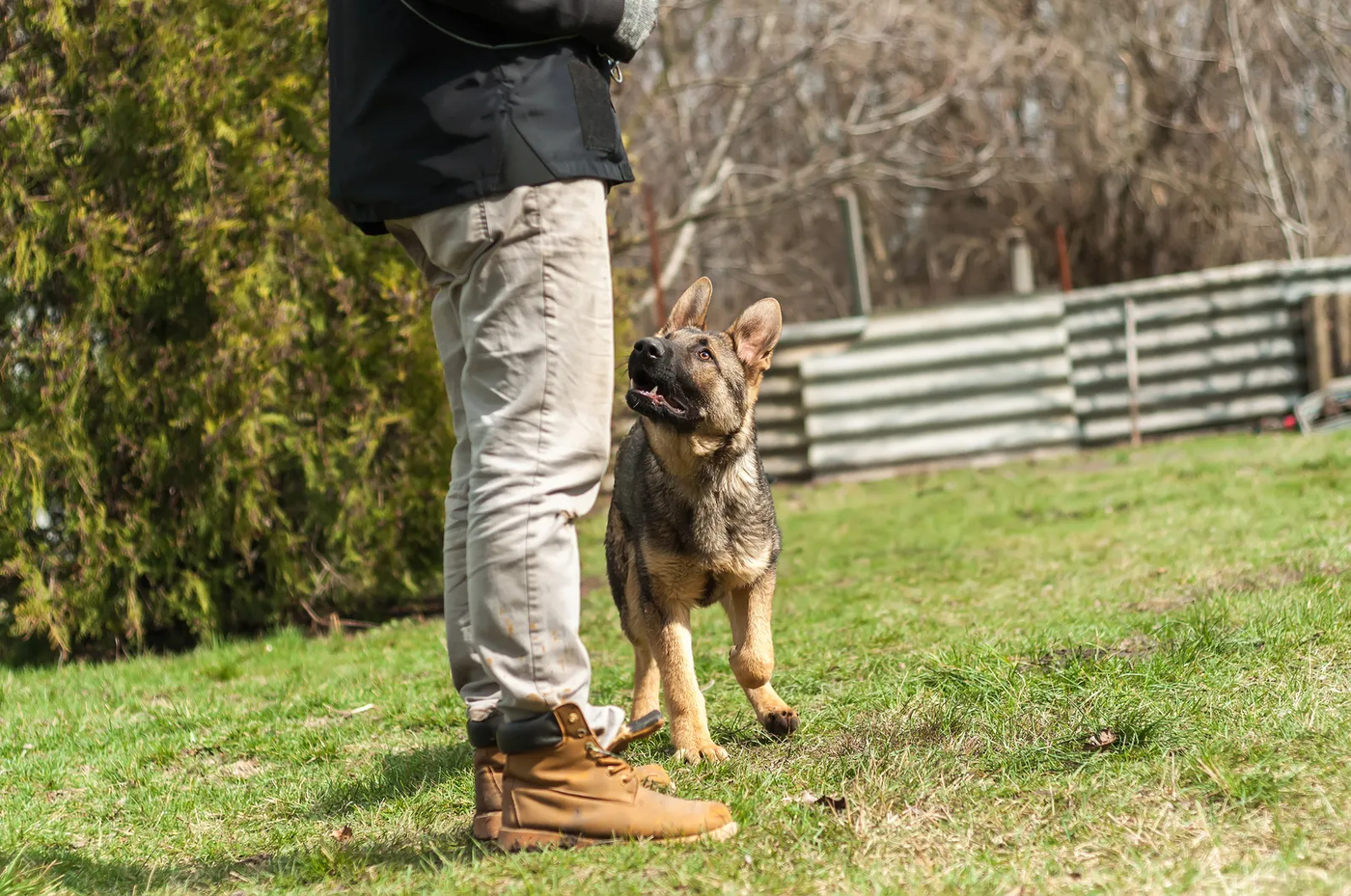
When it is more than regression
Lunging, guarding or nipping the children is a program, not a phase to wait out.
Regression is a dog that ignores its name and pulls. Reactivity is a dog that lunges and barks at other dogs on leash. Guarding is a growl over a bone or a couch. Nipping running children is herding or arousal with no outlet. Those are not things adolescence fixes on its own; they are things adolescence makes worse every week they are rehearsed.
The two-week Gold program resets an adolescent whose problems are manners and impulse control. The three-week Platinum program is for the adolescent that has started lunging, guarding or nipping, with behavior modification, field trips and unlimited lessons afterwards so the whole family learns to handle a teenager. Between six and twelve months is the cheapest time to do either, because there is less to undo.
Houston teenagers
The February and September waves.
Spring litters come home in April and hit adolescence in October; fall litters come home in September and hit it in February. Both waves land in the seasons when Houston families are walking the most, which is why the regression shows up on the trail first. A Houston adolescent also meets its first summer at six to nine months, and the heat rules, dawn and dusk walks and indoor sessions, mean less outdoor practice at exactly the age it needs most. Plan for it: more short indoor training, more store aisles, and the long line at the park in the cool hours.
The programs
Programs for an adolescent.
Gold to reset the teenager, Platinum for the one that lunges, guards or nips, the bundle to get ahead of it.


Asked and answered
Questions people ask about this.
When does adolescence start and end in dogs?
Roughly six months to eighteen months, earlier in small breeds and later in large ones. The hardest stretch for most families is seven to twelve months, when the recall fails, the pulling starts and the first reactivity appears if it is going to.
My dog knew sit and come at four months and now ignores both. Did the training fail?
No. Adolescent regression is normal; the commands are still in there, and the dog is testing whether they still apply. Hold the rules, put the recall back on a long line, and reward every check-in. The commands come back stronger if you do not let them go optional.
Should I neuter or spay to fix adolescent behavior?
That is a conversation with your vet about health and timing, not a training decision. Neutering does not install obedience or fix reactivity, and plenty of intact dogs are beautifully trained. Structure is what changes behavior, whatever you decide medically.
Is it too late to train a one-year-old?
Not remotely. A one-year-old is still an adolescent and responds fast to structure. Most dogs in our Gold and Platinum programs are between eight months and three years, because that is when the habits become impossible to ignore.
Sources
Keep reading
Free consultation · 10% off this fall
Tell our team about the teenager.
The free phone consultation is a direct call: what the dog was doing at four months, what it is doing now, and whether it needs the long line or a program.