
Breed training guides
How to train an aussiedoodle: drive, brains and the need for a job
Families buy an aussiedoodle for the brain and then discover the brain has an agenda. The dog is not hard to train; it is hard to keep busy in ways you approve of.
Last reviewed September 29, 2026 · by the Best Dog University Team
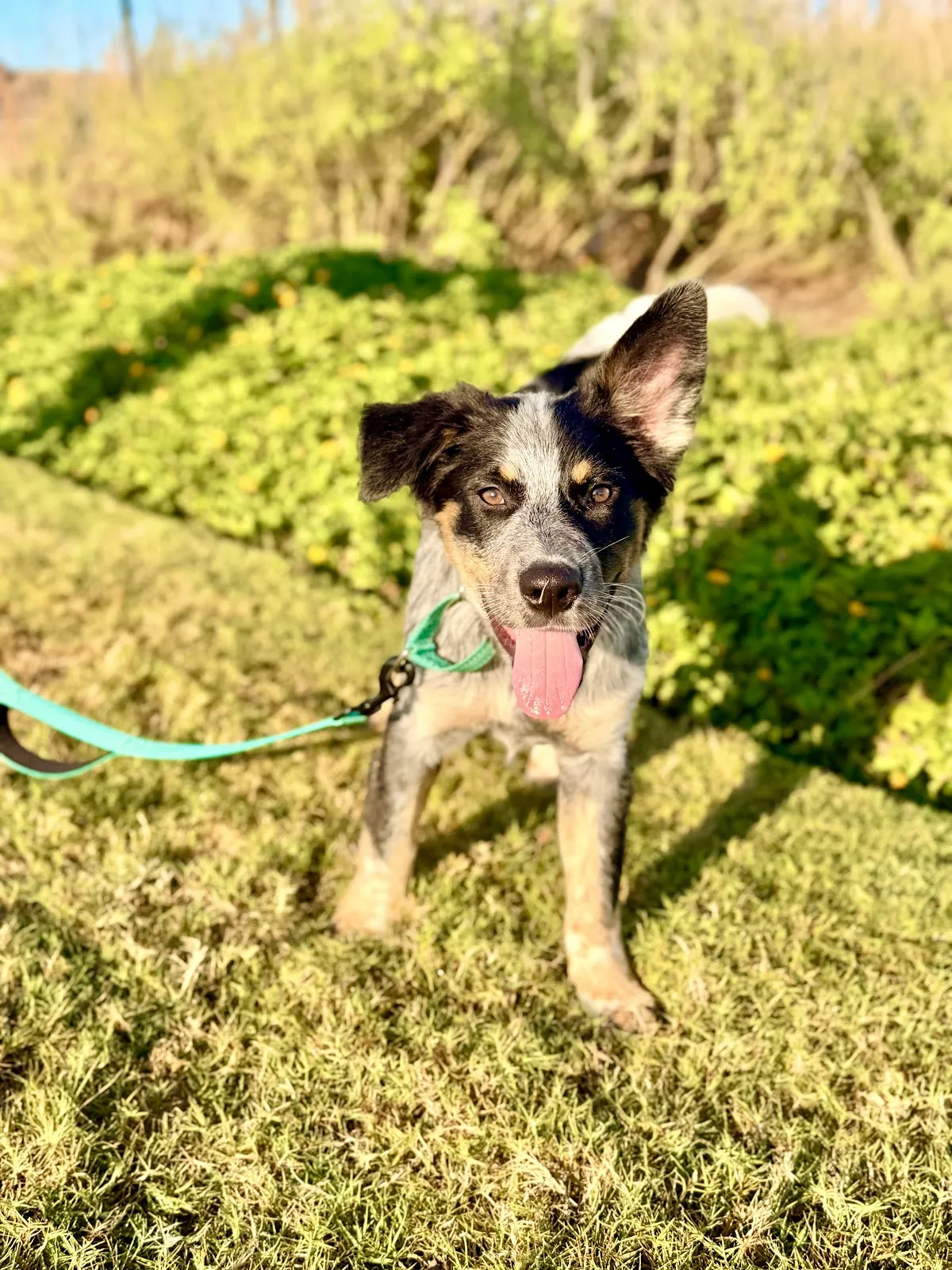
What the cross was made from
A ranch herding dog and a water retriever, both bred to work all day and think.
The Australian shepherd, despite the name, was developed on American ranches to herd sheep and cattle, working close to a rider all day and making its own decisions. The poodle was a German water retriever and later a performer, which is where the trick-learning speed comes from. The aussiedoodle inherits both: a medium dog whose size depends on the poodle used, a wavy or curly coat, an intense focus on its person, and an urge to control anything that moves.
That urge is the herding half, and it sets the problems. At home it looks like a dog that stares at the cat, circles the kids at the pool, lunges at a cyclist on the Terry Hershey trail and cannot lie down while anyone is moving. The poodle half adds sensitivity and a long memory for anything that ever worked. Balanced training fits: the dog learns what earns a reward in seconds, and it needs the boundary just as clear.
- Herding drive: movement is a trigger until taught otherwise
- Poodle memory: whatever worked once gets tried again
- Needs a daily job or it invents one
The first year
Year one with an aussiedoodle: the off switch is the first cue, not the last.
Most families teach an aussiedoodle puppy sit, spin and shake in the first week because it is easy, and skip the settle because it is boring. Reverse that. From eight weeks the puppy lies on a place bed while the family eats, sleeps in a covered crate on a schedule, and naps after every burst of play. Socialization is calm exposure, not a dog park: the puppy watches a soccer game from a blanket at a distance and learns that motion is not its business.
From four months the leash walk moves from the yard to the street at dawn, with a change of direction every time the puppy locks onto a bike, a jogger or a squirrel. Six to nine months is the drive's first peak, and a recall on a long line becomes daily practice. Adolescence runs to eighteen months and it is when families lose the settle. Keep the schedule and the place bed, and add a job: a nose game, a trick session, a structured fetch with a wait.
Eight to twelve weeks: place bed at mealtimes, covered crate, scheduled naps
Three to four months: sit, down, a release word, calm watching of moving things
Four to six months: dawn walks with direction changes, the first store aisle, the long line
Six to nine months: recall daily, bikes and joggers proofed from a distance
Nine to eighteen months: adolescence, the settle protected, a daily job added
Eighteen months on: off leash only where recall is proven
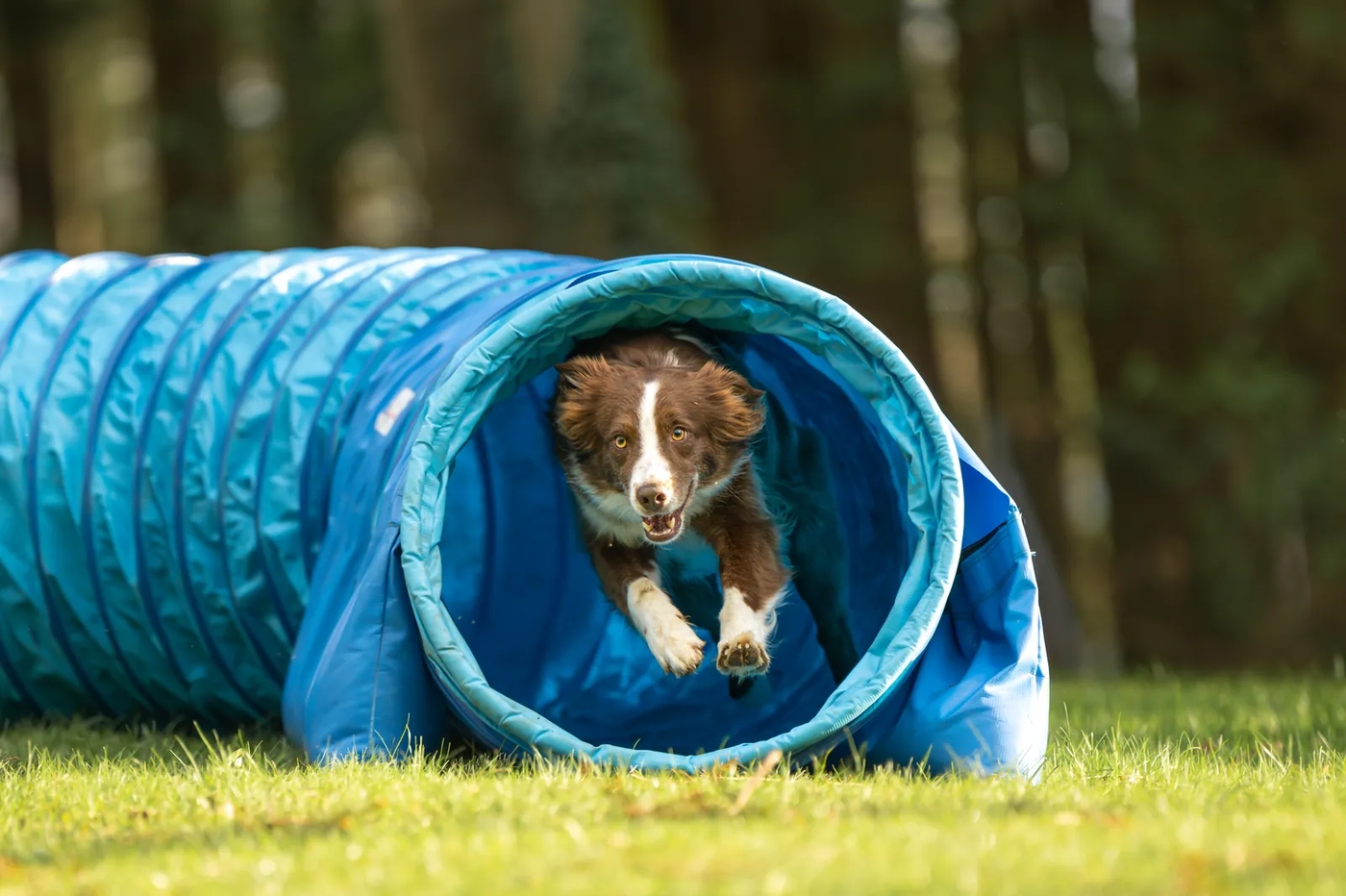
The three problems
No off switch, chasing whatever moves, and barking at the world through the window.
Problem one is the dog that never stops: pacing, staring, nudging, dropping a ball in your lap for six hours. The method is place with real duration, built from one minute to thirty over weeks, a covered crate for rest, and a daily job with a clear end. Problem two is chasing bikes, scooters, running kids and cars. The fix is a leash, a direction change the moment the eyes lock, and a reward for looking back at you, repeated until the look back is automatic.
Problem three is reactivity that starts as barking through the window and grows into lunging on the leash. A herding cross that spends a year alerting to every dog from the front room is primed to do it on the street. Block the view with a place bed out of sight, teach a quiet cue, and work other dogs at a distance where the dog can watch without erupting. A dog that has already bitten a leash or snapped at a cyclist needs a stay with our team, not a home project.
- A job with a clear end, every day
- Leash and direction change the moment the eyes lock
- Window blocked, quiet cue taught
- Other dogs worked from a distance the dog can handle
Houston specifics
Clipped for summer, worked at dawn, and proofed on the bike trails of Katy and Memorial.
An aussiedoodle's coat should be clipped short by May and kept short through September, and even then outdoor work happens at dawn and dusk after a pavement test. This cross needs its brain worked more than its legs, and brain work happens indoors in July: a kibble search around the house, a ten-minute trick session, a place hold while dinner cooks. A long run in August is dangerous; twenty minutes of thinking in the air conditioning is what the dog needs.
The neighborhood matters for proofing. The greenbelts of Cinco Ranch and Bridgeland are full of bikes and scooters, exactly the movement the herding half wants to chase, so for the first year they are training ground rather than a leisure walk. A fenced yard in Cypress is the place for a long-line recall, and retention ponds along the greenbelts are a reason it must be reliable: alligators are a real, if uncommon, presence in Harris County water.
When to get help
Get help when the dog is running the house or fixating on something dangerous.
A puppy under four months does best in the Puppy Development Bundle, four private sessions at $550 in Cypress or $750 in-home, where the settle and the crate come before the drive arrives. An adolescent with no off switch is a Gold stay, two weeks for $2,500, where place and the structured walk are installed. Chasing cyclists, lunging at dogs or any bite history means Platinum, three weeks for $3,750 with field trips, behavior work and unlimited lessons after. The Agility Board and Train, two weeks for $2,500, fits a graduate that needs a sport.
The aussiedoodle training page lays out each program for a Houston home. Katy and Cinco Ranch families are about 25 to 35 minutes from the training home outside rush hour; the $250 transportation service is available either way. Start with the free consultation call and tell our team what the dog chases and whether it can lie still.
The programs
Programs aussiedoodles usually need.
The puppy bundle for the settle, Gold for the off switch, Platinum for chasing and reactivity, Agility for the graduate that needs a sport.


Asked and answered
Questions people ask about this.
Are aussiedoodles hard to train?
No, they learn faster than almost any dog we work with. They are hard to live with untrained, because the same brain that learns a trick in five minutes learns that barking opens the door. Structure early, a daily job and a settle taught on purpose make the difference.
How much exercise does an aussiedoodle need?
Less than the internet says and more of the right kind. A structured walk twice a day, a long-line recall session and ten to twenty minutes of thinking, a nose game or trick work, beat two hours of fetch, which only builds a fitter dog that still cannot settle. In a Houston summer the outdoor part is at dawn and dusk.
Why does my aussiedoodle nip and chase the kids?
It is herding, inherited from the Australian shepherd parent. Kids who run and squeal look exactly like livestock to the dog. Stop the game the moment teeth appear, teach the children to walk, put the dog on a place bed during rowdy play, and give it a legal outlet like a flirt pole at dusk.
Do aussiedoodles get reactive?
Some do, especially after a year of barking at dogs through a front window, because the herding half is watchful and quick to arouse. The window is where prevention starts. A dog that already lunges on the leash is a case for our team rather than a home project.
Is an aussiedoodle a good dog for a Houston apartment?
It can be, in Midtown or the Galleria area, if the family commits to a routine: two structured walks, a daily job indoors, place with duration. The dog does not need a yard; it needs something to do and someone to say when the doing stops.
Keep reading
Free consultation · 10% off this fall
Give the brain a job and an off switch.
Tell our team what your aussiedoodle chases and how long it can lie still. The free consultation is a direct phone call at no cost.