
Breed training guides
How to train a Shih tzu: house training and the lap-dog door problem
Shih tzus are sturdy, cheerful little dogs that often get treated as fragile ones. Carried everywhere and trained nowhere, they learn that the lap is a watchtower and the rug is a bathroom. Our trainers put them back on their own four feet.
Last reviewed September 29, 2026 · by the Best Dog University Team
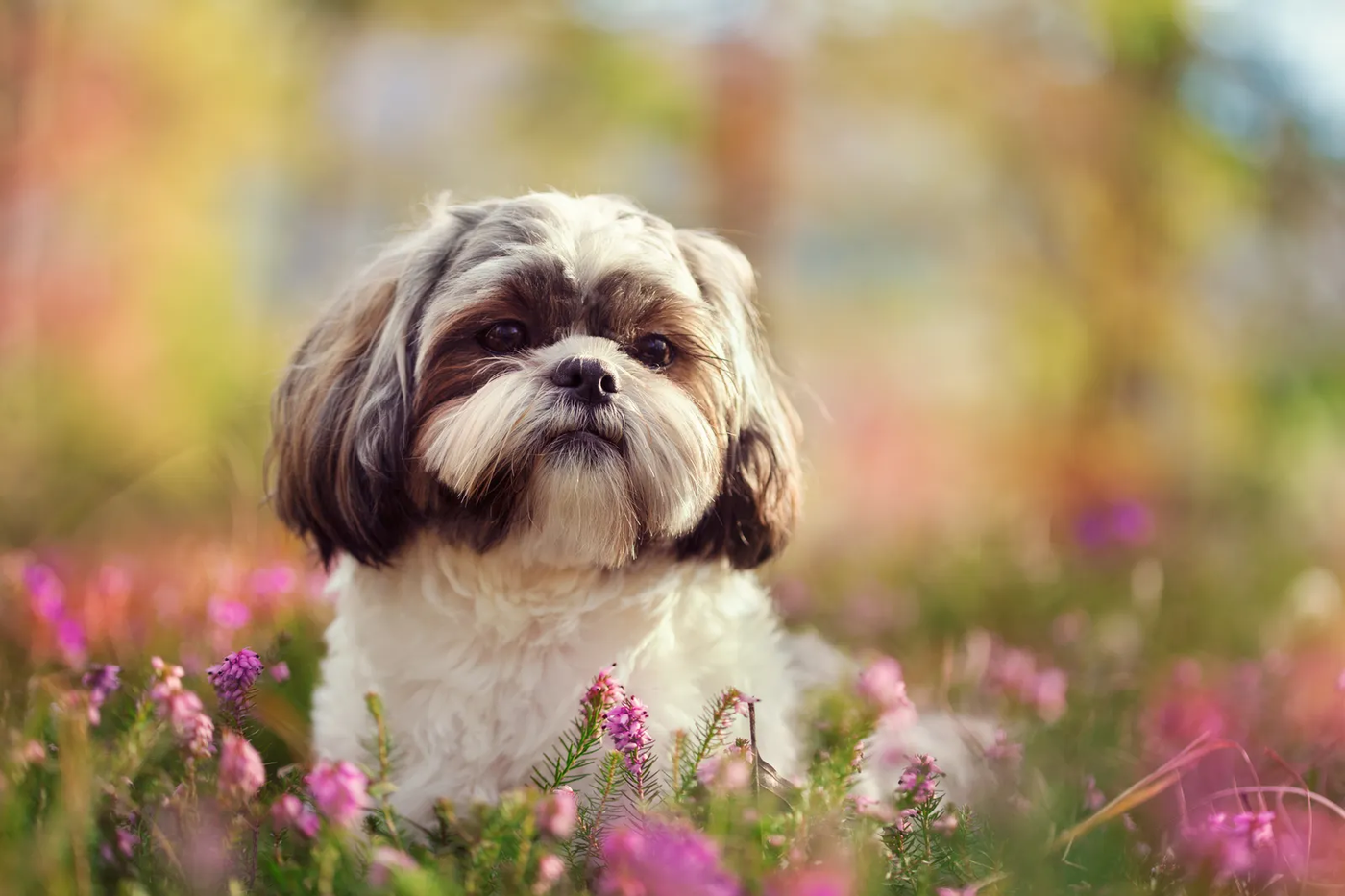
A palace companion
Bred for company rather than work, and still sturdy enough for real rules.
The Shih tzu was developed as a companion in China's imperial court, with roots in dogs from Tibet, and it has never had a working job. It belongs to the toy group, with a long double coat, a short muzzle and a solid, compact body. Its temperament tends toward friendly, outgoing and a little stubborn. It was bred to be with people, so attention is its favorite reward and boredom its usual reason for mischief.
The mistake our trainers see most is treating the Shih tzu as too delicate to train. Owners carry the dog to the door, to the car and across every parking lot, so it never learns to walk politely, wait at a threshold or relieve itself on a schedule. This is a sturdy dog. It can learn sit, down, place, a leash walk and a recall, and it is calmer and more confident once it has those skills.
- Friendly and people-focused, so attention is the main reward
- A stubborn streak that needs short, upbeat sessions
- A short muzzle that limits hard exercise in heat
- A sturdy body that can walk, wait and work like any dog
What we see
Slow house training, the lap-dog door problem and the dog that will not walk.
House training is the first call. Shih tzus are small, so accidents are easy to miss, and every missed accident is practice. Take the dog out on a leash every two to three hours and after meals, naps and play, always to the same spot, and pay it the moment it finishes. Keep it in a crate or pen when nobody is watching, and clean accidents with an enzyme cleaner so the smell does not call it back.
The door problem starts on the lap. A dog held by the window barks at every passerby and learns it is guarding you, and a dog carried to the door bolts or snaps when a stranger reaches in. Put the dog on the floor, teach place a few feet from the entry, and pay quiet while the door opens. The walking problem, a dog that sits and refuses, fades once it walks daily on its own feet with food at your knee.
- Leash trips every two to three hours, plus after meals and naps
- An enzyme cleaner for every accident
- Place near the door instead of a lap at the window
- Daily walks on four feet, with food at your knee

The first year
A stage plan from the first night home to the first birthday.
The first year for a Shih tzu is mostly house training, handling and floor manners, and obedience comes along easily if sessions stay short and fun. The coat adds a job most breeds do not have: daily brushing and regular grooming. Both go much better with a puppy that learned to stand still on a table and accept a brush, a comb and a towel before it ever met a groomer.
Adolescence in a Shih tzu often looks like plain stubbornness. The six- to ten-month-old that came when called now looks at you and keeps sniffing. Treat that as a sign to put the leash back on, raise the value of your food and keep the rules unchanged. Most Shih tzus come through the stage quickly when the whole family stays consistent about the same few rules.
Eight to twelve weeks: crate by the bed, a potty schedule on a leash, name games, a few seconds of brushing
Three to four months: sit, down, a place bed, first sidewalk walks, handling on a table
Four to six months: place near the door, a quiet cue at the window, store trips on foot
Six to ten months: the stubborn stage, more leash and better food, the same rules
Ten to twelve months: longer walks in cool hours, calm greetings, house freedom earned room by room
Houston life
A short muzzle in a long summer, and potty trips in a thunderstorm.
Flat-faced dogs cool themselves less efficiently than long-nosed ones, and a Houston summer is long. Keep outdoor training to early morning and after dark from May to September, keep sessions brief, carry water, and use air-conditioned store aisles or a hallway for the rest. Watch for loud breathing, heavy panting or a dog that lies down and will not move, and get your vet's guidance on heat for your own dog.
Summer thunderstorms and the hurricane season from June 1 to November 30 bring days when the yard floods and a small dog will not go out. A covered potty spot, or a pad station taught as a backup, keeps house training from slipping. In apartments near the Galleria or in Midtown the door problem includes neighbors in the hallway, so a sit at the elevator matters as much as place at the front door.
Getting help
When accidents or door barking outlast six months.
Get help when accidents continue past six months despite a schedule, when the dog snaps at hands reaching toward it, or when door barking has neighbors complaining. For accidents in an adult dog, a vet check comes first. Puppies under four months fit the Puppy Development Bundle, four sessions at $550 in Cypress or $750 in your home, which covers the crate, the potty routine and early socialization.
For an older Shih tzu, Gold at $2,500 builds place, door boundaries and leash manners over two weeks in our trainer's home in Cypress, followed by a go-home session and an extra lesson. Silver at $1,500 for one week is a sensible refresher for a dog that only needs the walk and the door. The Shih tzu training page explains each option for Houston families, and the free phone consultation helps you choose.
The programs
Programs that suit a Shih tzu.
The puppy bundle for the first months, Silver as a one-week refresher, Gold for the door, the walk and the house.

Asked and answered
Questions people ask about this.
Why is my Shih tzu so hard to house train?
Usually because it has too much freedom and too few trips outside. Small dogs have small bladders, and their accidents are easy to miss. Go out on a leash every two to three hours and after meals, naps and play, pay the dog outdoors, and use a crate or pen when you cannot watch. Most Shih tzus improve within weeks.
How do I stop my Shih tzu barking at the door?
Take it off your lap and put it on a place bed a few feet from the door. Practice with family ringing the bell, pay quiet, and open the door only while the dog stays calm. Close the blinds on the front window at first so it cannot rehearse barking at every passerby.
Is it okay to carry my Shih tzu everywhere?
Carrying is fine for parking lots, hot pavement and crowds. Carrying everywhere is not. A Shih tzu that never walks never learns leash manners, waiting or calm greetings, and it often becomes more reactive in arms. Let it walk wherever the ground is safe and cool enough for its paws.
Can a Shih tzu handle a Houston summer?
With care. The short muzzle makes heat harder on the breed, so walks move to early morning and after dark from May to September, sessions stay short, and afternoons are spent indoors. A shorter trim may help, so ask your groomer and vet. Heavy breathing or collapse means cool the dog and call your vet.
Keep reading
Free consultation · 10% off this fall
Put the lap dog on its feet.
Tell our team where the accidents happen and what your Shih tzu does at the door. The free phone consultation is a direct call.