
Breed training guides
How to train a pit bull
The pit bulls that come to the training home are affectionate, funny and strong, and the ones that struggle share one story: a friendly puppy that was never taught to be neutral to dogs, now an adult that cannot pass one. That is trainable, and the plan below is how.
Last reviewed September 11, 2026 · by the Best Dog University Team
The breed in Houston
A terrier athlete that loves people, in a city of leases, patios and crowded sidewalks.
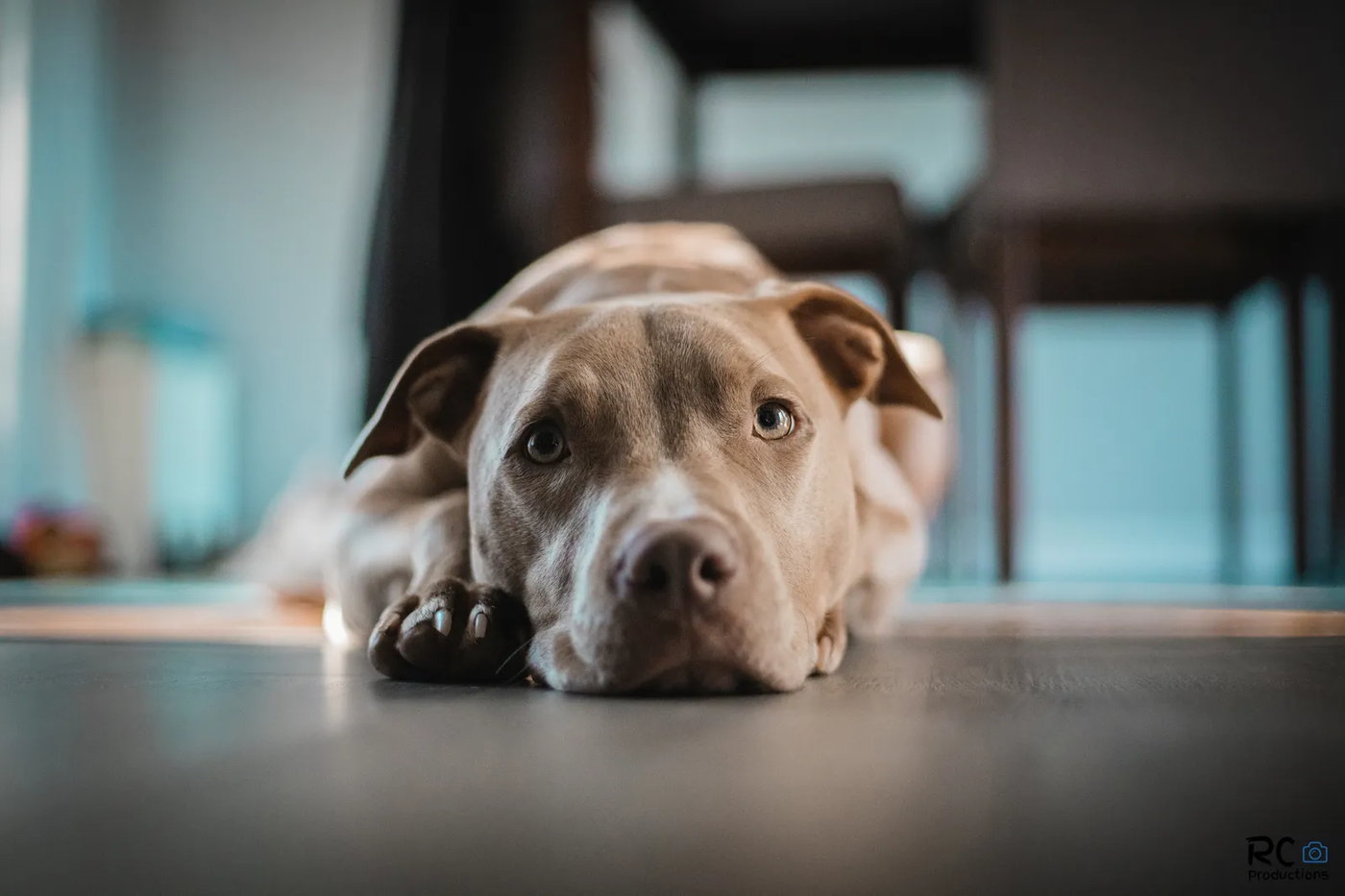
Pit bull is a shape more than a breed in Houston: American pit bull terriers, American Staffordshires, Staffordshire bull terriers, American bullies and every mix that looks like one, which is most of the dogs in the county shelters. What they share is a terrier's intensity, an athlete's body, a love of people that borders on comedy, and an arousal switch that, once flipped by another dog, a squirrel or a game, takes a long time to flip back. The short coat fools families in summer; a pit bull overheats on a hot sidewalk like any dog and its pads burn on the pavement, and a white one sunburns.
Houston adds the lease. Many apartment communities restrict the breed, and the breed-restrictions guide on this site covers what that means; the practical effect is that a pit bull's manners are examined more closely than a Labrador's, and the trained one is the one that keeps its home.
- A shape, not a breed: many mixes from the local shelters
- Intense with arousal, slow to come down
- Loves people, needs rules with dogs
- Short coat, hot pavement, sunburn on the white ones
- Lease restrictions that make manners a housing issue
The puppy months
Eight weeks to six months: neutrality to dogs before the intensity arrives.
A pit bull puppy is friendly with everything, which is the moment to teach it that other dogs are not its business. Socialization for this breed is calm exposure: dogs seen at a distance on the Heights trail or at the store, the puppy paid for looking at you, never a free-for-all at a dog park. The crate, place, the greeting rule and the walk at the knee follow the same schedule as any puppy, and handling of the mouth, paws and body by everyone in the house matters because this is a dog that will be examined by a vet, a landlord and a curious child. Tug is the breed's favorite game and it is a training tool with a rule: the game starts and ends on your word.
- Dogs seen at a distance, the puppy paid for looking at you
- No dog parks and no free-for-all play as socialization
- Crate, place, greeting rule, walk at the knee
- Handling by everyone, for the vet and the landlord
- Tug with a start and a stop
Adolescence
Six to eighteen months: the intensity arrives and the walk becomes the exam.
A pit bull's adolescence is when the arousal switch shows itself. The puppy that ignored dogs starts to stare, then to pull, then to lunge, and the game of tug becomes a contest. It is normal and it is the window that decides the adult. The answer is structure and distance: the leash back on, a structured walk that keeps the dog thinking at your knee, dogs passed at a distance the dog can hold and closed over weeks, a firm start and stop to every game, and no dog-park experiments. A pit bull worked through adolescence this way becomes a dog that walks the Memorial Park loop past every other dog without a glance; one left to figure it out becomes reactive by two.
Eight to twelve weeks: crate, place, name, handling, tug with a rule
Three to five months: the greeting rule, the walk at the knee, dogs at a distance, the puppy bundle if you want help
Five to eight months: the structured walk on the street, store trips, recall on a long line
Eight to twelve months: the stare and the pull met with distance and the heel, never with a scene
Twelve to eighteen months: neutrality proofed on busy sidewalks and trails, the settle at a patio
Eighteen months on: freedom earned, the recall proofed, the dog you can take anywhere
Every day for life: a job for the athlete and a structured walk
The problems we see
Reactivity toward dogs, arousal that will not come down, pulling, and the jump on every guest.
Dog reactivity is the call: a pit bull that lunges, screams and cannot be walked past another dog. It is worked with structure first, then neutrality at a distance the dog can hold, closer over weeks, with the handler as the most interesting thing on the street; Platinum does it daily for three weeks and the unlimited lessons afterwards teach the family the handling. Arousal is the second: a dog that gets excited and stays there, in play, at the door, at the fence. Place with duration, a start and stop to every game and a calm routine bring it down. Pulling is the structured walk from a standstill. Jumping on guests is a greeting rule, and pit bulls love guests more than any breed we train.
Dog aggression with a history is a different case, assessed first, and worked with management and a muzzle the dog is taught to love. Aggression toward people is rare in the breed and gets the same honest assessment.
- Reactivity worked with structure and distance, daily
- Arousal brought down with place and game rules
- A structured walk from a standstill
- A greeting rule for the guest-lover
- An consultation and a muzzle plan for any bite history
Summer and enrichment
A short coat that still burns, and an athlete that needs a job, not a marathon.
A pit bull in a Houston summer needs the same dawn-and-dusk schedule as every dog and two extra rules: the pavement test on every walk, because the breed's pads burn on July sidewalks, and shade or a shirt for the white and light-colored dogs, which sunburn. The athlete's body wants work and the afternoons are for indoor jobs: tug with rules, a flirt pole in the yard at dusk, obedience with duration, a search for kibble, a chew that lasts. A pit bull with a job is the calmest dog on the block; one with none finds its own, usually at the fence.
- Dawn and dusk, the pavement test, water at every stop
- Shade or a shirt for the sunburners
- Tug and a flirt pole with a start and a stop
- Obedience with duration as the daily job
- A chew that lasts for the afternoon
Which program
Platinum for the reactive dog, Gold for the manners, the bundle for the puppy.
Platinum, three weeks at $3,750, is the program for the pit bull that lunges at other dogs, because reactivity needs daily structure and controlled exposure and the unlimited lessons afterwards keep it, on your own sidewalk with you holding the leash. Gold, two weeks at $2,500, installs place, the calm greeting, the structured walk and impulse control for the friendly dog that simply has no manners. The Puppy Development Bundle, $550 in Cypress or $750 at home, is the right start for a puppy under four months and it is where neutrality begins. The pit bull training page covers each in Houston terms, and our team writes an honest description of the training at the end of a stay for families whose lease asks for one.
The programs
Programs pit bulls usually need.
Platinum for the reactive dog, Gold for the friendly one with no manners, the bundle for the puppy before the intensity arrives.


Asked and answered
Questions people ask about this.
Are pit bulls harder to train than other breeds?
No. They are eager, food-driven and attached, and they learn as fast as any breed. What is harder is the arousal: a pit bull that gets excited stays excited, and around other dogs that becomes reactivity if nobody teaches neutrality early. The training is the same; the timing matters more.
Can a dog-reactive pit bull be fixed?
In most cases it can be changed to a dog that walks past other dogs calmly on a leash, with structure and neutrality built at a distance over weeks and kept with practice. A dog with a history of fights is assessed first and managed with a muzzle while the training happens. No trainer can promise a dog park.
Do pit bulls need a lot of exercise?
They need a job more than miles. A structured walk, tug or a flirt pole with rules, obedience with duration and a chew make a calm pit bull; an hour of chaotic play makes an aroused one. In a Houston summer the outdoor part happens at dawn and dusk with the pavement test.
Will training help with my apartment's breed restriction?
It cannot change a ban, but in a building that allows the breed conditionally the manners a meet-and-greet tests are exactly what a stay builds, and our team writes an honest description of the training for families who need one. The breed-restrictions guide on this site covers the rules.
Keep reading
Free consultation · 10% off this fall
Teach neutrality before adolescence.
Tell our team what your dog does when it sees another dog. The free phone consultation is a direct call.