
Breed training guides
How to train a Miniature schnauzer: alert barking and terrier grit
Schnauzer owners in Memorial, Meyerland and Midtown usually call about the same thing: a small, bearded, very loud dog that announces every jogger and argues with every other dog on the block.
Last reviewed September 29, 2026 · by the Best Dog University Team
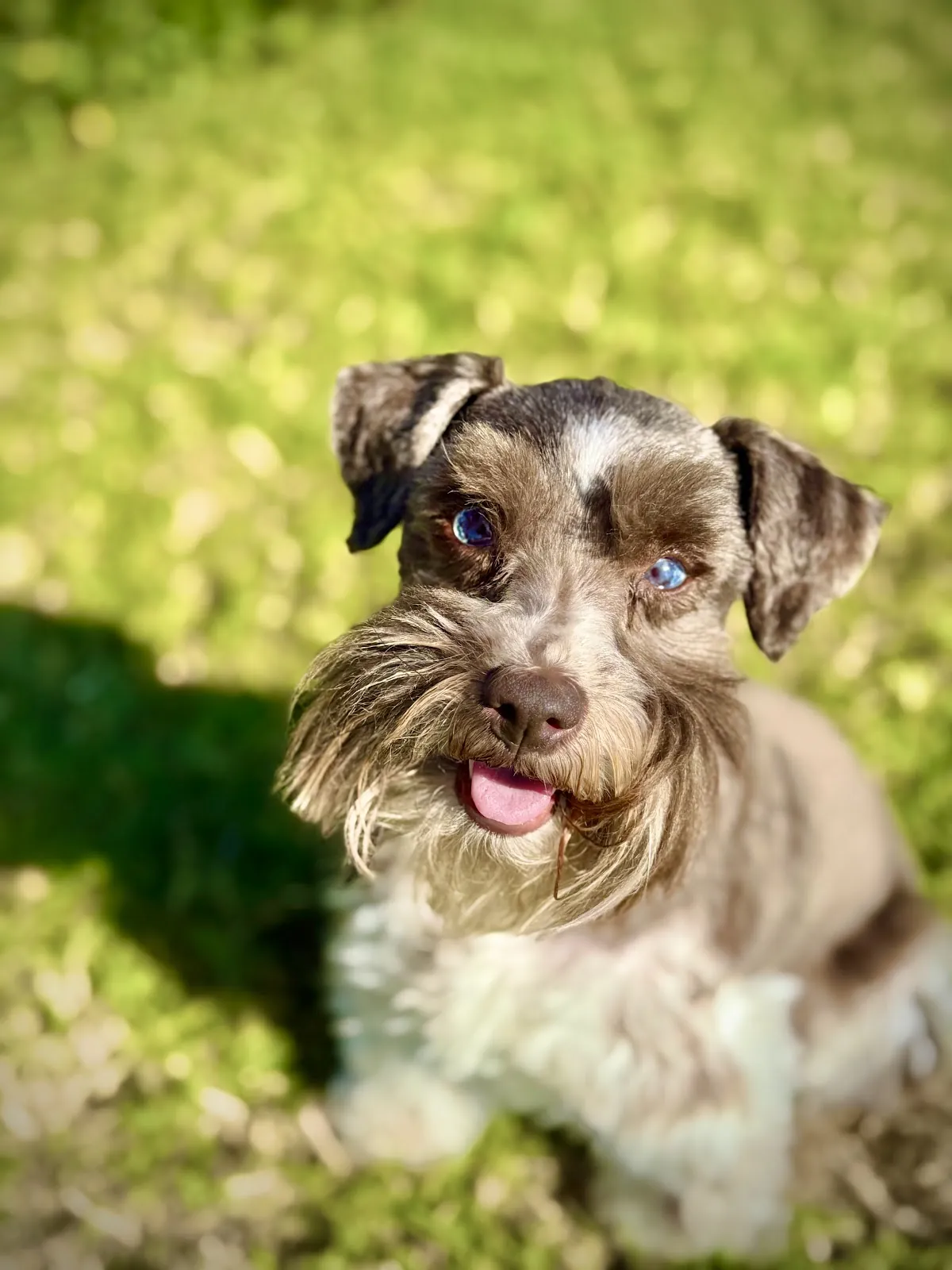
A farm dog in miniature
A German ratter and yard watchdog, shrunk but not softened.
The Miniature schnauzer was developed in Germany in the late nineteenth century from the standard schnauzer, most likely crossed with smaller breeds such as the affenpinscher and the poodle. Farmers wanted a compact dog to kill rats in the barn and bark at anyone coming up the lane. The AKC places it in the Terrier Group, though its roots are German farm dogs rather than British terriers, and it behaves like a terrier all the same.
In a Houston home that means a dog that barks at doors, windows and passing dogs, chases lizards and squirrels, and meets other dogs with more confidence than size. Schnauzers are also bright, affectionate and eager to be involved, which makes them quick learners who remember every loophole. Balanced training suits them well: rewards for quiet and calm, and a boundary that does not change because the dog protests loudly.
- A watchdog voice in a small body
- Prey drive for rats, lizards and squirrels
- Bold with other dogs
- Bright and quick to find loopholes
- A wiry coat that needs regular grooming
Year one
The first year: a quiet cue before the voice gets strong.
A schnauzer puppy finds its voice early, so the quiet work starts early too. From eight weeks the puppy sleeps in a covered crate, eats there, and spends time on a place bed with a view of the room rather than the street. Every bark at the window is interrupted calmly and the puppy is paid for quiet. Handling of the face, beard and paws starts in the first week, because a schnauzer sees a groomer every few weeks for life.
From four to eight months the puppy walks the block at dawn, passes other dogs at a distance, and learns to look back at you rather than pull toward a squirrel. Guests arrive and the puppy greets from place. Adolescence, roughly six to eighteen months, brings louder barking, bolder behavior with other dogs and a few tests of the house rules. Keep the crate, keep the place bed, and keep paying quiet.
Eight to twelve weeks: covered crate, a place bed away from the window, face and paw handling
Three to four months: sit, down, a quiet cue, guests greeted from place
Four to six months: dawn walks, passing dogs at a distance, a first groomer visit
Six to nine months: a leave-it for lizards and squirrels, the door wait
Nine to eighteen months: adolescence, barking and dog manners held to the same rules
Eighteen months on: freedom by room, window access only once the quiet holds
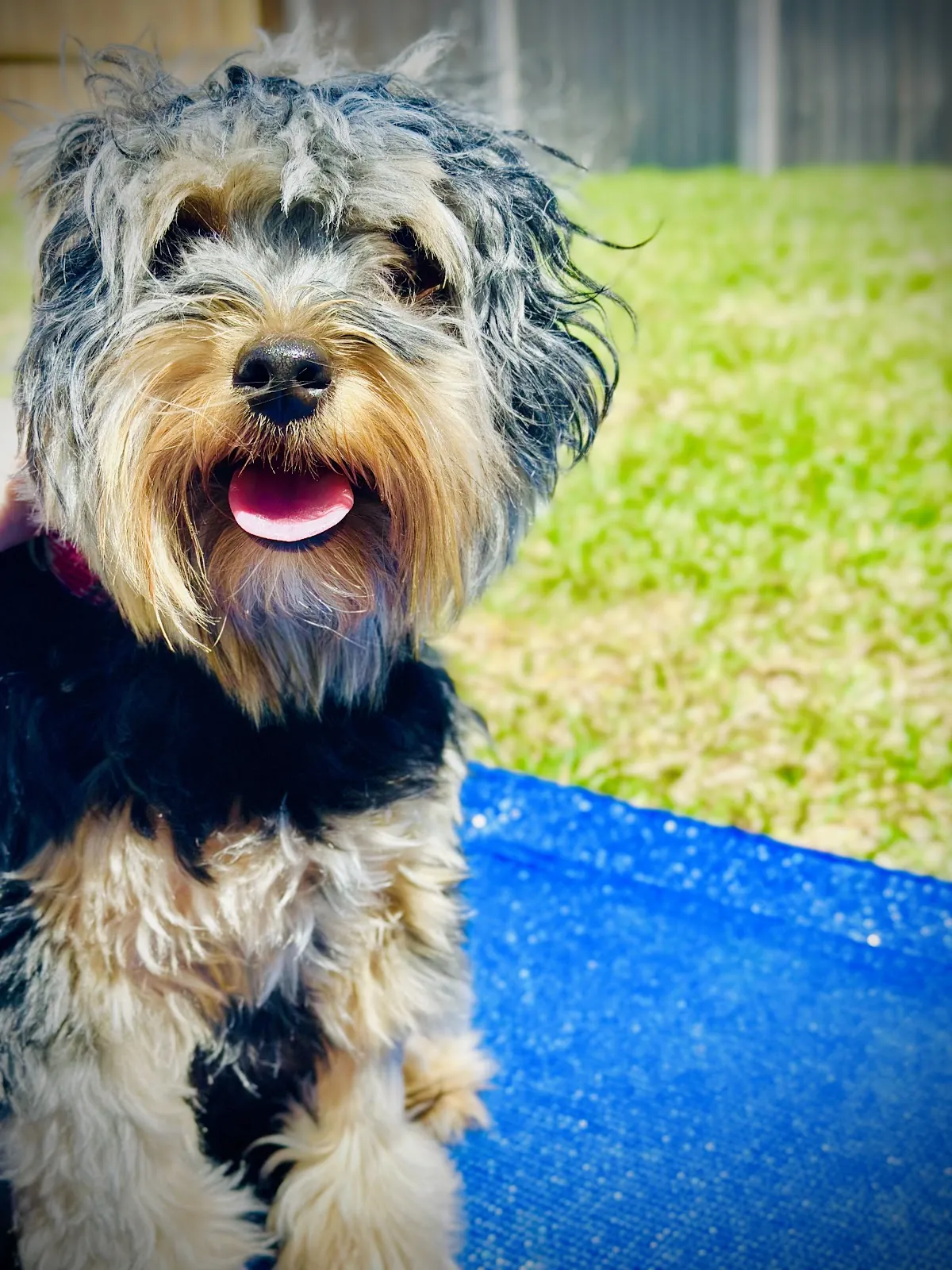
The three we fix
Barking at the world, lunging at other dogs, and chasing anything small.
Barking comes first. A schnauzer barks at the window, the door, the delivery van and the neighbor's cat, and every bark that makes the thing go away teaches it that barking works. Block the window view, teach a quiet cue with growing duration, give the dog a place bed facing the room, and pay silence. Demand barking gets no answer at all. For the doorbell, a wait at a line on the floor turns a noise into a routine.
Leash reactivity is second: a small dog that stiffens, barks and lunges at larger dogs on the sidewalk. Keep distance, pay the dog for noticing another dog and looking back, and never let a lunge end in a greeting. The third problem is prey drive. Lizards on the fence, squirrels in the oak and the neighbor's cat all trigger the ratter. A leave-it, a leash near the fence line and a recall practiced around small animals keep it safe.
- Window view blocked, place bed facing the room
- Quiet cue with duration, silence paid
- Distance and a look-back for passing dogs
- A leave-it for lizards and squirrels
- A leash near the fence line
Houston life
A wiry coat in the heat, an apartment wall and anole lizards on every fence.
A schnauzer's wiry coat, kept short by a groomer, handles Houston better than a heavy double coat, but a small dog sits close to hot pavement. From May through September walk before eight in the morning or after sunset, test the sidewalk with your hand, and bring water. Afternoon sessions stay indoors: a quiet cue at the window, a place hold during a delivery, a search for kibble. Summer storms bring thunder, and a covered crate helps a sound-sensitive dog.
In a Midtown or Galleria-area apartment, the bark carries through shared walls and down the hallway, so the elevator and the hallway are training ground and barking complaints can become a lease problem. In a Memorial or Meyerland house with a yard, the fence line is where the schnauzer barks at dogs and hunts lizards. July 4 and New Year's Eve fireworks are worth a plan weeks ahead: white noise, a covered crate and the evening walk done before dark.
When to call
When the barking runs the building or the walk turns into a standoff, call us.
A schnauzer puppy under four months fits the Puppy Development Bundle, four private sessions for $550 in Cypress or $750 in your home, which sets the quiet cue, place and handling before the voice gets strong. A young dog with the barking and the door in full swing is a Gold stay, two weeks at $2,500. Leash reactivity, lunging at dogs or snapping at the groomer is Platinum, three weeks at $3,750 with behavior work, public field trips and unlimited lessons afterward.
The Miniature schnauzer training page shows each program for Houston homes. Memorial is about 25 to 35 minutes from the training home outside rush hour and Midtown about 40, and the $250 transportation service suits apartment families who would rather not drive. Book the free consultation call and tell our team what your schnauzer barks at, how it walks past other dogs and what it chases.
The programs
Programs Miniature schnauzers usually need.
The puppy bundle for the quiet cue, Gold for barking and the door, Platinum for leash reactivity and snapping.


Asked and answered
Questions people ask about this.
Why does my Miniature schnauzer bark so much?
It was bred as a farm watchdog, so barking at anything new is the job. The barking grows when it works: the mail carrier leaves, the passing dog moves on, someone answers the demand bark. Block the window, teach a quiet cue with duration, pay silence and ignore demand barking completely. Most schnauzers quiet down a great deal with consistency.
Are Miniature schnauzers good apartment dogs?
They can be very good ones: small, tidy and people-oriented. The barking is what makes or breaks it, because it carries through shared walls. Teach the quiet cue and the place bed early, practice the hallway and the elevator, and give the dog two real walks and some indoor brain work every day.
Why is my schnauzer aggressive toward bigger dogs on walks?
Usually a mix of terrier boldness and frustration on the leash. It barks and lunges because that has made other dogs leave. Work at a distance where the dog can stay calm, pay it for looking at the other dog and back to you, and skip on-leash greetings. Lunging that escalates or includes snapping needs a professional plan.
How do I stop my schnauzer chasing lizards and squirrels?
You manage it rather than erase it; the ratter's prey drive is real. Teach a leave-it at close range and build it outward, keep the dog leashed near the fence line where anoles and squirrels live, and practice recall around small animals on a long line. Give the drive a legal outlet with a flirt pole or a scent game.
When should I start training a Miniature schnauzer puppy?
The day it arrives. At eight weeks it can learn a crate, a place bed, a quiet cue and handling of its face and paws. Early handling pays off at the groomer, and early quiet work pays off with every neighbor you will ever have. Waiting until the barking is established means undoing a habit instead of preventing it.
Keep reading
Free consultation · 10% off this fall
Keep the watchdog, lose the noise.
Tell our team what your Miniature schnauzer barks at and how it handles other dogs on a walk. The free consultation call is direct and free of charge.