
Sporting breeds
How to train a Labrador retriever
Labs are the easiest dogs to love and, between six and eighteen months, some of the hardest to live with. A seventy-pound adolescent that greets people with its whole body and drags you to the lake is not a bad dog. It is an untrained retriever, and retrievers were built to be trained.
Last reviewed September 10, 2026 · by the Best Dog University Team
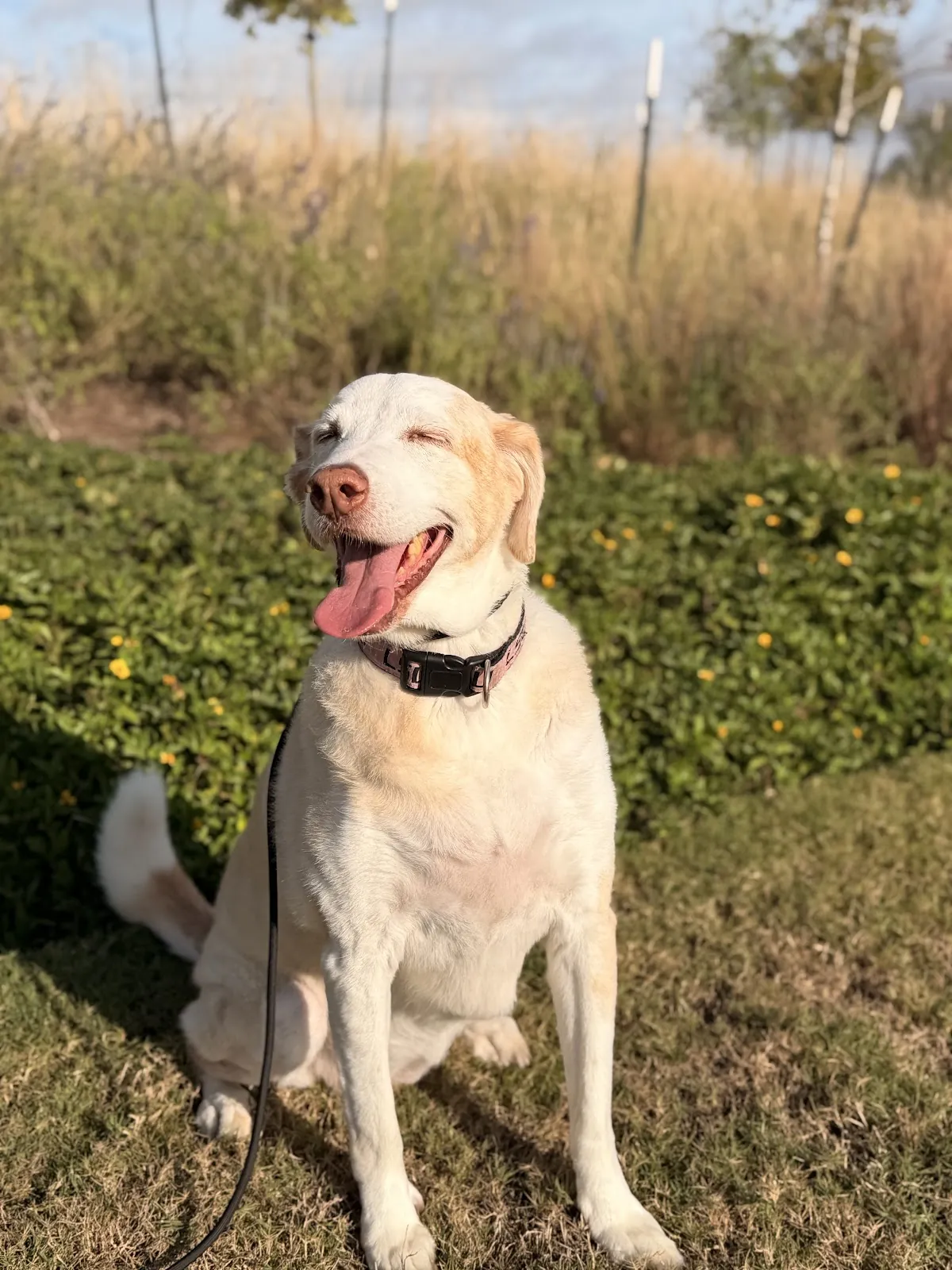
What the breed brings
Drive to retrieve, drive to eat, and a body that grows faster than its manners.
The Labrador was bred to retrieve for hours in cold water and to want nothing more than the next throw and the next meal. Those drives make it the most trainable family dog alive when they are used, and a wrecking ball when they are not. A Lab that gets food for jumping and forward motion for pulling has learned both by five months, and by ten months it weighs seventy pounds.
Adolescence hits Labs hard. The sweet puppy becomes deaf outside, mouthy, and convinced that every person and dog is a friend to be reached at speed. It passes faster with structure and slower without it.
- Food and retrieving as motivation
- Enthusiastic greetings with the whole body
- Adolescence from six to eighteen months
- Water changes everything
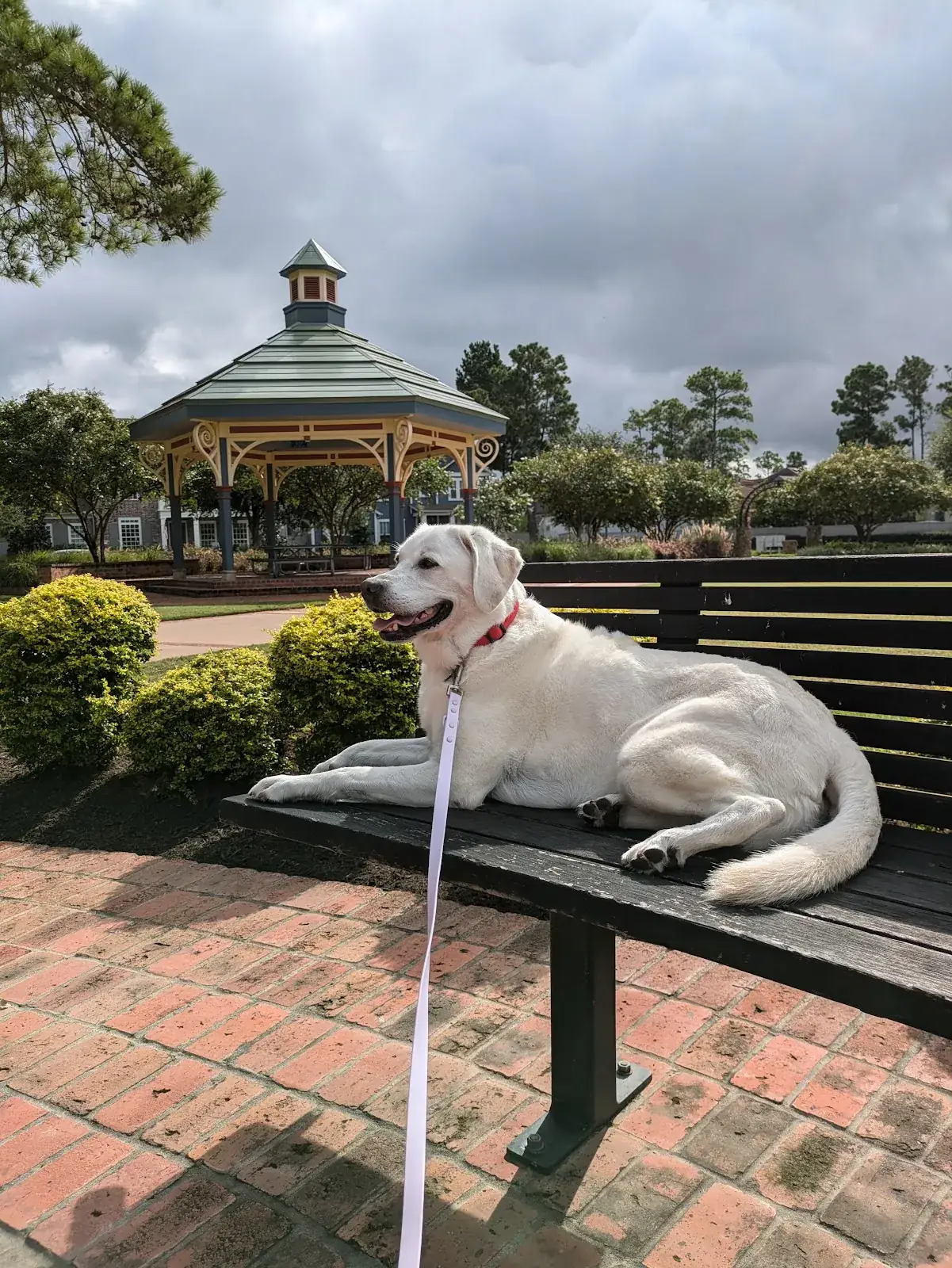
What arrives
Pulling, jumping, counter surfing and a recall that drowns at the lake.
The Labs that come to Cypress pull toward every dog and person, jump on guests and children, surf the kitchen counters, and come when called until there is water or another dog. A few add separation trouble, because a Lab that was never taught to be alone treats a closed door as a crisis. None of it is aggression; it is drive with no structure.
The fix uses the drive. A Lab will work for a piece of kibble and a thrown bumper harder than most dogs will work for anything, so the reward side of a balanced program is easy. The boundary side is what the household has usually skipped.
The training order
Place, greeting, loose leash, then recall around water, then food and doors.
Place teaches a Lab stillness, which is the one thing it does not have. The greeting rule, four paws on the floor or the person turns away, ends the body slam. A loose leash channels the pull. Then recall goes on a long line in fields and at the lake, because a Lab's recall has to survive water to count. Last, impulse control around the counter and the door, using the food drive that caused the problem to solve it.
Retrieving with rules, a sit before the throw and an out on return, gives the drive its outlet and doubles as obedience practice.
Place with duration at meals and the doorbell.
Four paws on the floor for every greeting, every person.
Loose leash on the street, then past dogs at a distance.
Long-line recall in fields, then at the lake edge, then in the water.
Leave-it and off at the counter, using the food drive.
Retrieve with rules: sit, throw, out, repeat.
Houston Labs
Water everywhere, heat that a thick coat feels, and a lot of dogs to greet.
Houston is full of water a Lab wants to be in: neighborhood lakes, bayous, pools, the Gulf. Water recall is trained deliberately on a long line at the lake near Cypress, and bayous stay off limits because of alligators and current. The coat holds heat, so summer sessions run at dawn and dusk with water breaks and a hard stop. Master-planned neighborhoods put a friendly dog on every corner, which is exactly the neutrality practice a Lab needs at the right distance.
- Water recall on a long line first
- Bayous off limits
- Dawn and dusk in summer
- Neighborhood dogs as neutrality practice
Which program
Gold for the adolescent Lab; Platinum for the puller and the bolter.
The two-week Gold program ($2,500) covers the Lab set: place, the greeting, a loose leash, counter and door manners, with a go-home session and an extra lesson. The three-week Platinum ($3,750) suits a Lab that pulls hard toward every dog, bolts after wildlife or has separation trouble, adding field trips, behavior modification and unlimited lessons. Lab puppies under four months start with the bundle, where the greeting and the crate are easiest to get right before the dog is seventy pounds.
The programs
Programs for a retriever with drive.
Gold for the adolescent, Platinum for the puller and bolter, the bundle for puppies.


Asked and answered
Questions people ask about this.
Are Labradors easy to train?
Yes. Food and retrieving drive make a Lab one of the most trainable dogs alive. The catch is adolescence, when an untrained Lab becomes a seventy-pound puppy. Structure early, or a Gold stay at adolescence, is the answer.
How do I stop my Lab pulling on the leash?
Teach a loose leash on a quiet street first, rewarding the slack leash, then add distance from dogs and people and close it over days. A Lab pulls because it works; make forward motion depend on a slack leash and the pulling stops.
How do I get my Lab to come out of the water?
Build recall on a long line at the lake edge before the dog is ever loose near water, reward coming out with another throw, and never let a swim end only with the leash going on. A Lab that comes out on the first call has a recall that will hold anywhere.
When do Labs calm down?
Most settle between two and three years, sooner with structure and later without it. Place, a job and impulse control bring the calm forward by a year or more, which is why adolescence is the most common age for a Lab to come to us.
Which board and train is best for a Labrador?
Most adolescent Labs fit the two-week Gold program. Labs that pull hard toward every dog, bolt after wildlife or panic when left need the three-week Platinum program with its field trips and behavior modification.
Keep reading
Free consultation · 10% off this fall
Use the drive, build the structure.
Tell our team what your Lab does at the door and at the lake. The free phone consultation is a direct call.