
Doodles
How to train a goldendoodle (and other doodles)
Doodles are the most common dog in the Houston suburbs and one of the most common at our door. They are sweet, smart and eager, and that is exactly the problem: an eager, smart dog with no structure invents its own, usually at the front door and the end of the leash.
Last reviewed September 10, 2026 · by the Best Dog University Team

What is in the mix
A retriever's drive to please plus a poodle's brain: a dog that learns fast, including the wrong things.
Golden retrievers were bred to work beside a person all day and bring things back; poodles were bred to retrieve too, and to think. Put them together and you get a dog that wants to be with you every second, notices everything, and learns whatever gets rewarded in about three repetitions. Families reward the jump at the door with a squeal and the pull on the leash with forward motion, and the doodle files both away as correct.
The good news is the same speed works in reverse. A doodle taught place and a structured greeting learns them faster than almost any breed, provided the household is consistent enough not to teach the old version back.
- Learns in a few repetitions, good or bad
- Wants to be near you constantly
- Bounces when excited
- Sensitive to tone, quick to recover
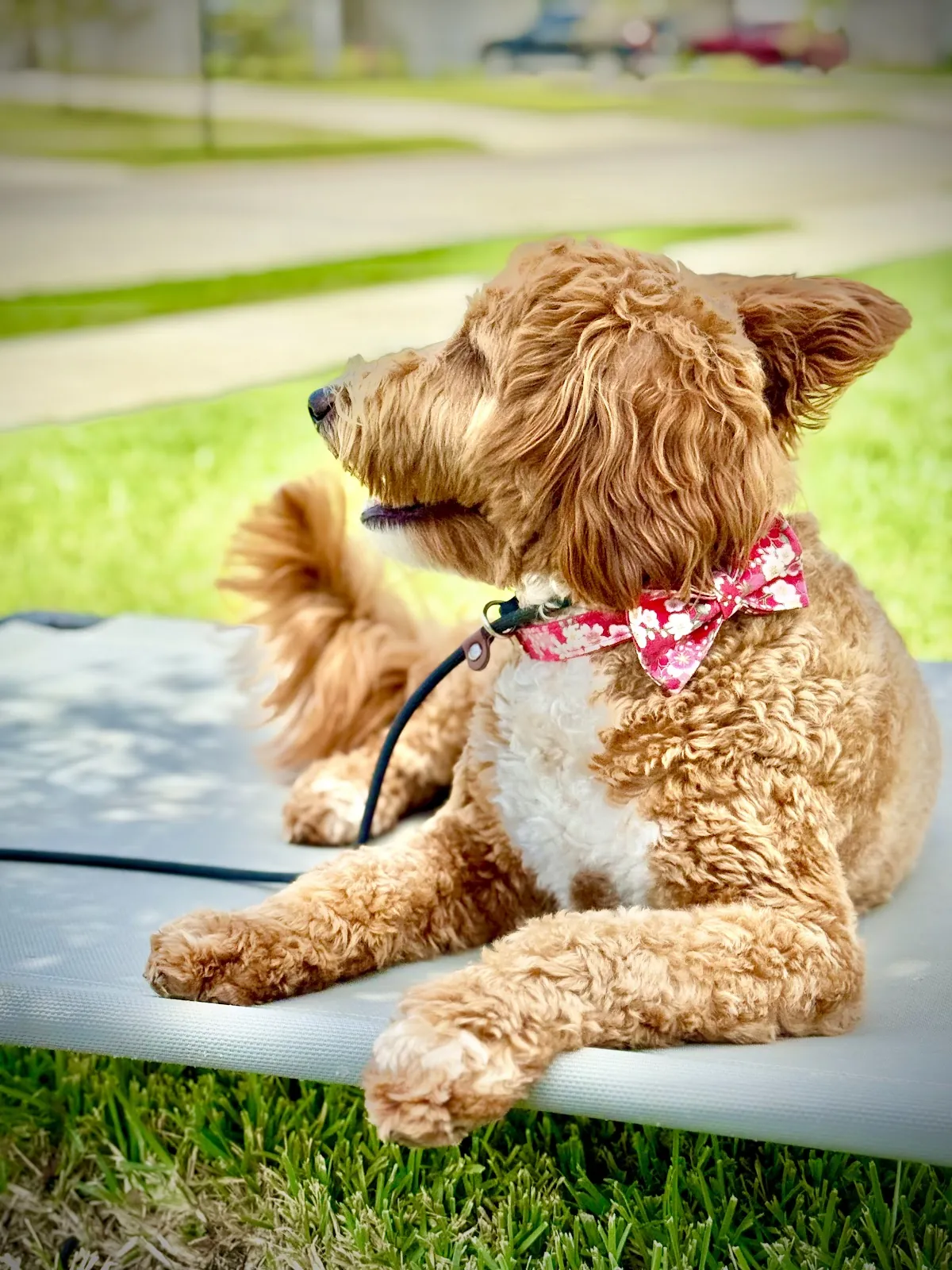
What arrives at our door
Jumping, pulling and the velcro habit are the doodle trio.
The doodle jump is enthusiastic and often on a toddler or a grandmother. The pull is not aggression, it is a dog who wants to reach the next person or dog faster than you walk. And the velcro habit, following you to every room, whining when a door closes, is the start of separation trouble in a breed that was built to stay close.
All three share one cause: no defined job and no off switch. Place gives the dog both. A doodle that can hold a bed for an hour while the family eats has learned to be still, which is the skill every other fix depends on.
What to teach first
Place, a calm greeting and a structured walk, in that order.
Start with place because it teaches stillness, which a doodle does not have by default. Then the greeting: four paws on the floor is the only way a person appears, every time, for everyone who comes through the door. Then the walk, with the leash slack and the dog beside you instead of dragging you to the next sniff. Recall and the rest come easily once those three exist.
Houston adds one wrinkle: a doodle's coat holds heat, so summer training happens at dawn and dusk and indoors, with the walk short and the place work carrying the middle of the day.
Place on a bed with duration, starting at meals and the doorbell.
A release word, so the dog learns that stillness ends when you say.
Greetings: four paws on the floor, or the person turns away.
A structured walk with the leash slack, beside you.
Crate calm, so being alone is normal.
Recall on a long line once engagement is solid.
Which program
Gold for most doodles; Platinum for the ones with no off switch or a reactive streak.
The two-week Gold program ($2,500) covers the trio: place, the greeting, the loose leash and impulse control, with a go-home session and an extra lesson. It is the right fit for the typical adolescent doodle who is sweet and out of control. The three-week Platinum ($3,750) adds field trips and behavior modification for the doodle that has become reactive on leash or panics when left, and it ends with unlimited lessons.
Puppies under four months take the Puppy Development Bundle, which is where the greeting and the crate are easiest to get right before the bounce becomes a habit.
- Gold: the jumping, pulling, velcro trio
- Platinum: reactivity or separation panic on top
- Puppy bundle: under four months

Living with a trained doodle in Houston
Groomer visits, patios and the pool are where the training pays off.
A doodle goes to the groomer every six to eight weeks for life, and a dog that can hold a stand and a settle makes that visit easy. Patios from Cypress to the Heights want the same settle. Pools in every second backyard need a dog that waits for a release before jumping in. Each of those is place and impulse control applied somewhere new, and the go-home session shows you how to take it there.
The programs
The programs doodles usually need.
Gold covers the trio. Platinum handles the reactive or anxious doodle. Puppies start with the bundle.


Asked and answered
Questions people ask about this.
Are goldendoodles easy to train?
Yes, in the sense that they learn fast and want to please. The catch is that they learn the wrong things just as fast: jumping, pulling and shadowing you. With consistent structure, place and a calm greeting, a doodle becomes one of the easiest dogs to live with.
Why does my goldendoodle jump on everyone?
Because it works. A doodle that gets attention for jumping learns it in a few repetitions. The fix is a rule everyone follows: four paws on the floor is the only way a person appears, and place gives the dog somewhere to be when guests arrive.
Do doodles get separation anxiety?
They are prone to it, because both parent breeds were built to stay close to a person. The velcro habit is the early sign. Crate calm and place with duration, built while you are home, are the prevention, and a Gold or Platinum stay handles the established cases.
How do I train a goldendoodle in the Houston heat?
Early and late. A doodle's coat holds heat, so summer walks happen at dawn and after sunset with the pavement hand test, and the midday work is place, crate and store aisles in air conditioning.
Which board and train is best for a goldendoodle?
Most doodles fit the two-week Gold program, which installs place, the greeting, a loose leash and impulse control. Doodles that have become reactive on leash or panic when left need the three-week Platinum program with its field trips and behavior modification.
Keep reading
Free consultation · 10% off this fall
Give your doodle a job.
Tell our team what your doodle does at the door and on the leash. The free phone consultation is a direct call.