
Working breeds
How to train a German shepherd
Shepherds are the breed people buy for loyalty and end up calling about for lunging. The dog is not broken; it is doing the job on the label with nobody directing it. Directing it is the whole of shepherd training.
Last reviewed September 10, 2026 · by the Best Dog University Team
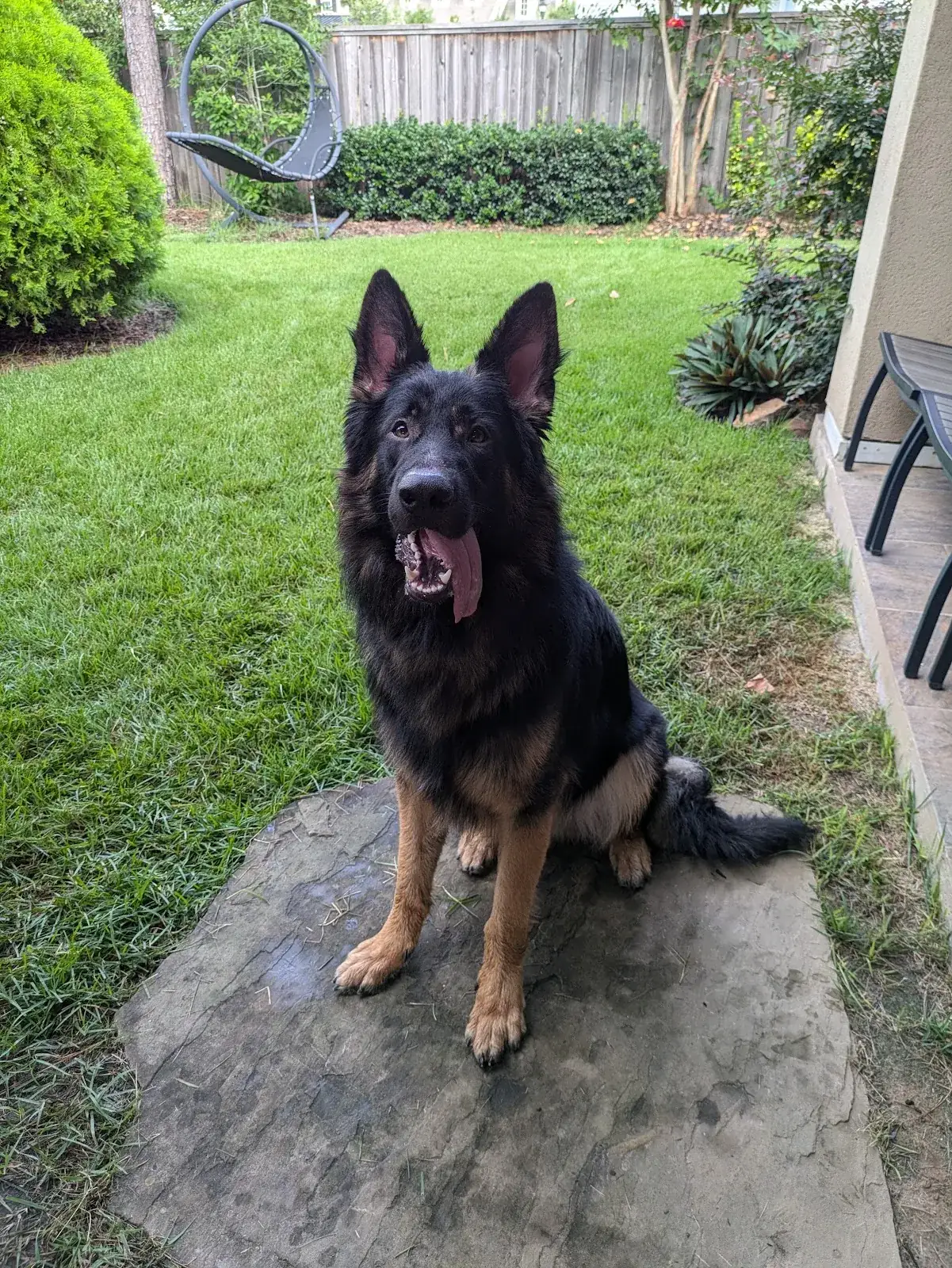
The job on the label
Herding, guarding and a handler: take away the handler and the shepherd hires itself.
The German shepherd was built to move livestock and guard a flock under a shepherd's direction. The drive to watch, to control movement and to decide who belongs is standard equipment. In a Houston house with no flock and no handler the dog applies it to the front window, the fence line, the kids' friends and every dog on the Bridgeland trail.
A shepherd with a person clearly making the decisions relaxes. That is not folklore; it is what our trainers see in the first days of a stay when a shepherd learns that the door, the window and the walk are somebody else's responsibility.
- Bred to watch and control movement
- Decides who belongs unless told
- Bonds hard to one handler
- Needs work, not just exercise
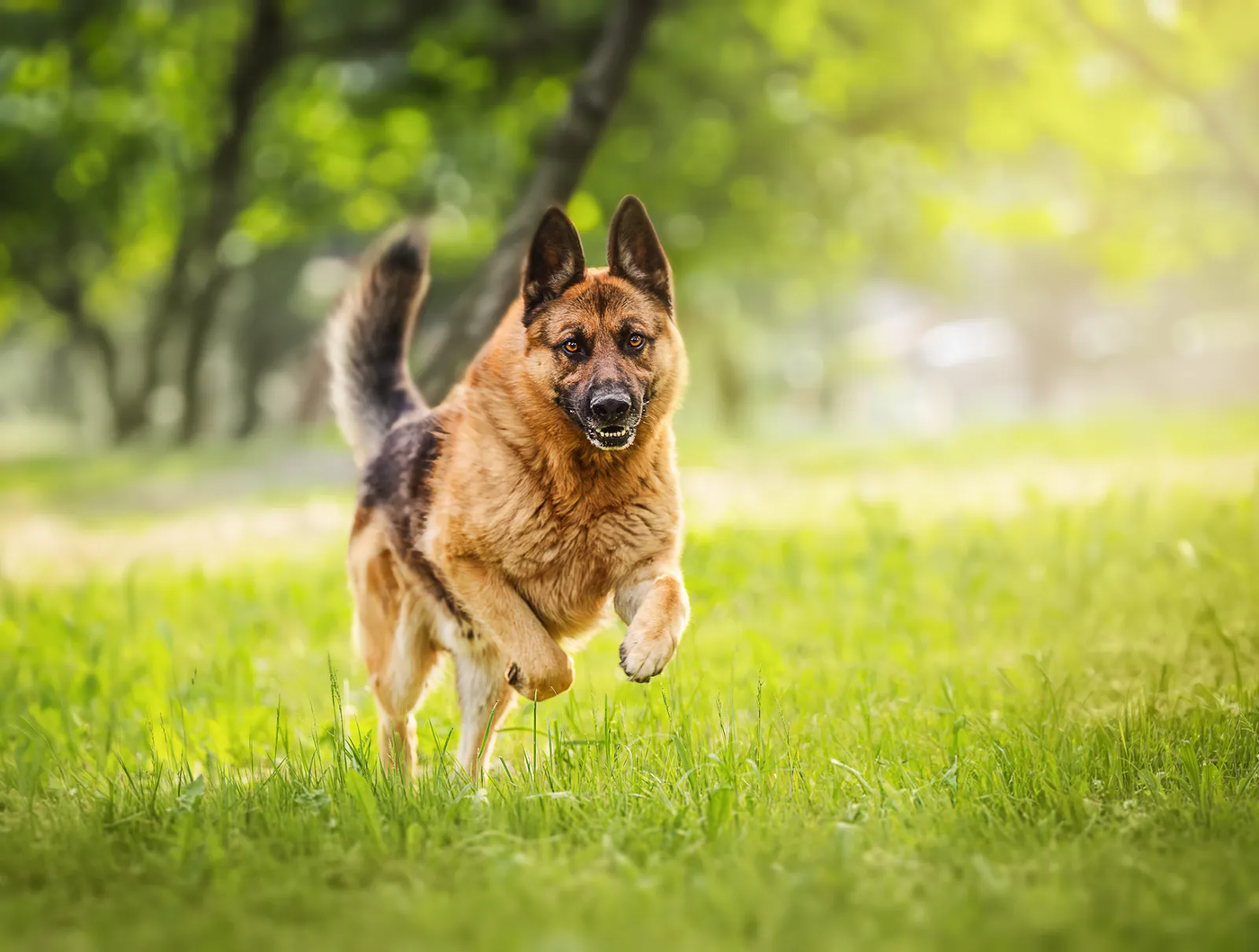
What arrives
Leash reactivity, window and fence guarding, and a dog that listens to one adult.
The shepherd cases that come to Cypress are consistent. Reactivity to other dogs on leash, usually starting around a year. Barking and guarding at the window and the fence, rehearsed all day in a neighborhood full of deliveries. And a dog that obeys the man of the house and ignores everyone else, which is a handler problem, not a dog problem.
Under all three is a dog with drive and no outlet, and a household that has been managing rather than leading. The program fixes the dog first and then hands the leading to the family.
The order to train
Structure, heel, place, then the triggers, then the family.
Structure first: earned meals, waiting at doors, crate calm, no free access to the window. Then the structured heel, because a shepherd that walks beside you is a shepherd that is following a leader. Place with duration teaches the off switch. Only then are the triggers introduced at a distance the dog can hold: other dogs on Cypress sidewalks, strangers at the door, the fence with a dog on the other side.
The last step is the family. Every adult and older child runs the same commands the same way in the handover, so the dog stops sorting the household into the one it listens to and the ones it manages.
Earned meals, doors, crate, no window access.
Structured heel on the street until the leash is slack past distractions.
Place with duration through deliveries and guests.
Neutrality to other dogs at a distance, shrinking daily.
Door and fence work with real deliveries and real dogs.
Handover with every family member holding the leash.
Houston shepherds
Heat, apartments and acreage each change the plan.
A shepherd's double coat makes Houston summers hard; outdoor work runs at dawn and dusk from May to September and the dog's real job in the middle of the day is place. Shepherds in Heights townhomes and Midtown apartments need elevator and hallway neutrality more than yard work. Shepherds on acreage in Hockley and Tomball need boundaries and a recall that beats a deer, which is where the VIP program's off-leash reliability earns its price.
- Dawn and dusk outdoors in summer
- Elevators and hallways for city shepherds
- Boundaries and wildlife recall on acreage
Which program
Platinum for the reactive or guarding shepherd; VIP for a finished, off-leash dog.
The three-week Platinum program ($3,750) is where most shepherds land: it has the field trips and behavior modification the reactivity needs and ends with unlimited lessons for the family. The six-week VIP ($10,000) builds complete off-leash reliability with the Mini-Educator introduced properly, transport home and an in-home handover, which suits working-line dogs and owners who want the full standard. A shepherd puppy under four months starts with the bundle, and the socialization there is the cheapest reactivity prevention there is.
The programs
Programs that give a shepherd a job.
Platinum for reactivity and guarding. VIP for the finished working dog.


Asked and answered
Questions people ask about this.
Are German shepherds hard to train?
No, they are among the most trainable dogs alive, which is why they work for police and search teams. They are hard to live with untrained, because the same drive with no direction becomes guarding and reactivity. Structure and a clear handler make the difference.
Why is my German shepherd reactive to other dogs?
Watchfulness and control of movement are bred in, and around a year old the dog starts applying them to other dogs on leash. Without early neutrality it becomes reactivity. It is fixed with a structured heel, place and controlled exposure, the core of the Platinum program.
How do I stop my shepherd guarding the window and fence?
Remove free access to the window, teach place with duration through deliveries, and work the fence line with a real dog on the other side at a distance the dog can hold. Guarding is rehearsed dozens of times a day in a suburb; stopping the rehearsal is half the fix.
Why does my shepherd only listen to my husband?
Shepherds sort the household into the one who leads and the ones they manage. It is a handling gap, not stubbornness. In the handover session every adult runs the commands the same way, and lessons afterwards close the gap.
When should a German shepherd start training?
The day it comes home. The Puppy Development Bundle for pups under four months builds neutrality and structure before adolescence. A shepherd that reaches a year without it usually needs the Platinum program to undo the guarding it taught itself.
Keep reading
Free consultation · 10% off this fall
Give your shepherd a handler.
Tell our team what your shepherd does at the window and on the leash. The free phone consultation is a direct call.