
Cane Corso training · Houston
Cane Corso training in Houston: what the breed needs and which program fits
Corsos come to our Cypress training home from acreage in Hockley, townhomes in the Heights and every suburb in between, and the story is usually the same: a calm puppy became a serious dog at eighteen months and nobody had planned for it. The breed is magnificent with leadership. This page is about installing that leadership, and what it costs.
Last reviewed September 11, 2026 · by the Best Dog University Team

Heat, housing, drive
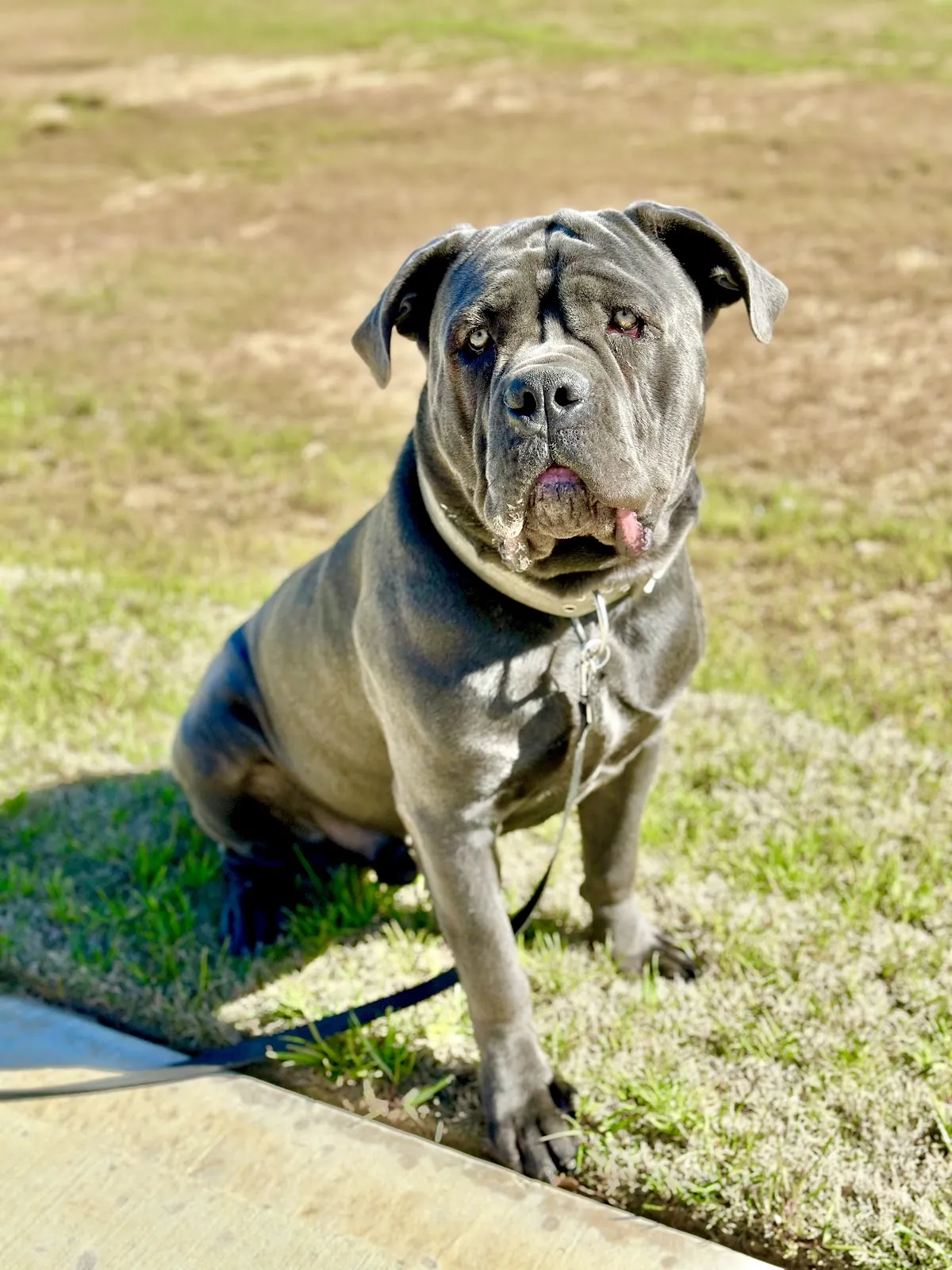
A corso brings mass, a shortened muzzle and a guardian's confidence into a Houston home.
Heat hits a corso harder than its short coat suggests. The breed carries a lot of muscle, the muzzle is shorter than a shepherd's, and the AVMA's heat guidance singles out both traits as risk factors. From May through September our corsos work outside in short sessions at dawn and after dark, with water, shade and a stop the moment the breathing gets loud.
Housing changes the job. A corso on acreage in Hockley or Waller needs a fence line it does not patrol and a recall that works past livestock and coyotes. A corso in a Bridgeland house needs to hold place while a delivery driver walks up. A corso in a townhome needs hallway neutrality, and its owner needs to know that many Houston apartments and some HOAs restrict the breed, so public manners are not optional.
The drive is guarding, and it matures late. The AKC describes the corso as affectionate, intelligent and majestic, and also as a dog that needs an owner who leads. Adolescence in this breed runs to two years or more, so the testing lasts longer than most families expect. A corso that learns the rules are negotiable will renegotiate at the worst possible moment.
- Muscle and a short muzzle: short sessions, indoors in summer
- Acreage, suburb or townhome: a different job in each
- Breed restrictions make public manners essential
- Adolescence that runs past two years
What we see most
Door and fence guarding, aggression toward other dogs and a dog that respects one adult.
Guarding is the first call and the one most families accept as normal until it escalates. A corso that barks at the doorbell becomes a corso that plants itself between a guest and the family, then one that does not let the guest move. The fence line runs the same script with the neighbor's dog. Guarding is rehearsed dozens of times a day in a suburb, and stopping the rehearsal is where we start.
Dog aggression is the second. It usually shows on leash first, a hard stare and a lunge at a strange dog on the Josey Lake trail, and sometimes through the fence. Some corsos arrive after a fight or a bite, and those begin with an in-person consultation and a plain conversation about what training can change and what management has to cover for life.
The third is the one-adult corso: obedient to the man of the house, dismissive of his wife, and something the kids walk around. That is a leadership gap, not a temperament flaw, and it is closed in the handover and the lessons afterward, when every adult learns to run the same rules with the same calm.
- Blocking guests at the door
- Fence fights with the neighbor's dog
- A hard stare and a lunge on leash
- Obedience to one adult only
The stay, built for corsos
How a corso's stay runs in our Cypress home: leadership on day one, the door by week two, other dogs by week three.
The first days of a corso stay are about taking the job back. Meals are earned, doors are waited at, the crate is calm, and the dog learns that the trainer, not the corso, decides who belongs. A corso tests this politely and then seriously, and the trainer holds the line the same way both times. That consistency is what the breed respects, and it is what the family will need to copy.
The door is worked with real deliveries and real guests at our home, at a distance the dog can hold and then closer. Other dogs come last, on Cypress sidewalks and in Fry Road store aisles, with the distance shrinking day by day. Every stage shows up in the Monday, Wednesday and Friday updates so you can watch the dog's decisions change.
Earned meals, door waits and crate calm, with the trainer making every decision from the first evening.
A structured heel on quiet streets until the leash stays slack past strangers.
Place with duration through doorbells, deliveries and guests moving through the room.
Door work with real arrivals: place, release, a calm greeting, repeated until it is routine.
Fence and sidewalk neutrality to other dogs at a distance the corso can hold, closing daily.
Field trips to hardware stores and lakeside paths, with the heel and place tested around the public.
A handover where every adult runs the rules on the leash, and lessons afterward until they hold.
Programs and prices
Platinum for guarding and dog aggression, VIP for a bite history or a finished off-leash corso.
The three-week Platinum Board & Train is $3,750 and covers most corso cases: behavior modification for guarding and dog aggression, a structured heel, down/stay, public field trips, a comprehensive handover and then unlimited private lessons with lifetime support, because a corso household needs coaching for longer than the stay. The six-week VIP is $10,000 and suits a corso with a bite history or an owner who wants complete off-leash reliability, with the Mini-Educator included, transport home and an in-home handover.
A corso puppy under four months takes the Puppy Development Bundle ($550 in Cypress, $750 in-home), and it is the best money a corso owner will spend, because neutrality built at twelve weeks prevents the guarding a two-year-old has to be trained out of. Transport is $250 and is part of VIP, and for this breed we recommend it when the drive is long.
| Program | Length | Price | When it fits a corso |
|---|---|---|---|
| Puppy Development Bundle | 4 sessions | $550 / $750 | Under four months: neutrality before the guarding starts |
| Platinum Board & Train | 3 weeks | $3,750 | Door and fence guarding, dog aggression, a one-adult dog |
| VIP Service-Dog-Level | 6 weeks | $10,000 | A bite history, or full off-leash reliability on acreage |
The programs
The programs corsos go home from.
Three weeks for most, six for the serious case, and the puppy bundle for the family that planned ahead.


Asked and answered
Questions people ask about this.
How much does Cane Corso training cost in Houston?
Most corsos at Best Dog University take the three-week Platinum program at $3,750. A corso with a bite history or an off-leash goal takes the six-week VIP at $10,000, which includes the Mini-Educator, transport home and an in-home handover. Corso puppies under four months take the Puppy Development Bundle at $550 in Cypress or $750 in-home.
Can a cane corso that has bitten someone still be trained?
In most cases the aggression can be reduced a great deal and managed reliably with structure, controlled exposure and a household that holds the rules. It starts with the full history on the free phone consultation and an in-person consultation, and it usually lands in the VIP program with a written management plan for the door, guests and other dogs.
Is a home board and train safe with a guarding breed?
It is the right environment, because a corso's problems are at the door and the fence, and our Cypress home has both. Only a limited number of dogs stay at once, introductions between dogs are managed by our trainers, and a corso with a history is crated and worked separately until neutrality is real. We do not put dogs together to see what happens.
How do you train a cane corso in the Houston summer without overheating it?
Short outdoor sessions at dawn and after dark, and the rest of the work indoors, where the door and the guests are anyway. We watch the breathing, keep water in reach, and stop before a corso wants to. The AVMA's heat guidance for heavy, short-muzzled dogs is the rule we keep.
At what age should a corso start a board and train?
Puppies under four months start with the bundle, not a stay. From about five months a Gold or Platinum stay fits, and the earlier the better with this breed, because the guarding hardens between one and two years. A corso that reaches eighteen months with no structure is still trainable, but the stay is more work and Platinum is the minimum.
Keep reading
Free consultation · 10% off this fall
Tell our team about your corso.
The free phone consultation is where we hear the history, the household and the goal, and tell you plainly whether Platinum or VIP fits. A $250 deposit reserves the stay.