
Fence line fury
Why does my dog attack the fence?
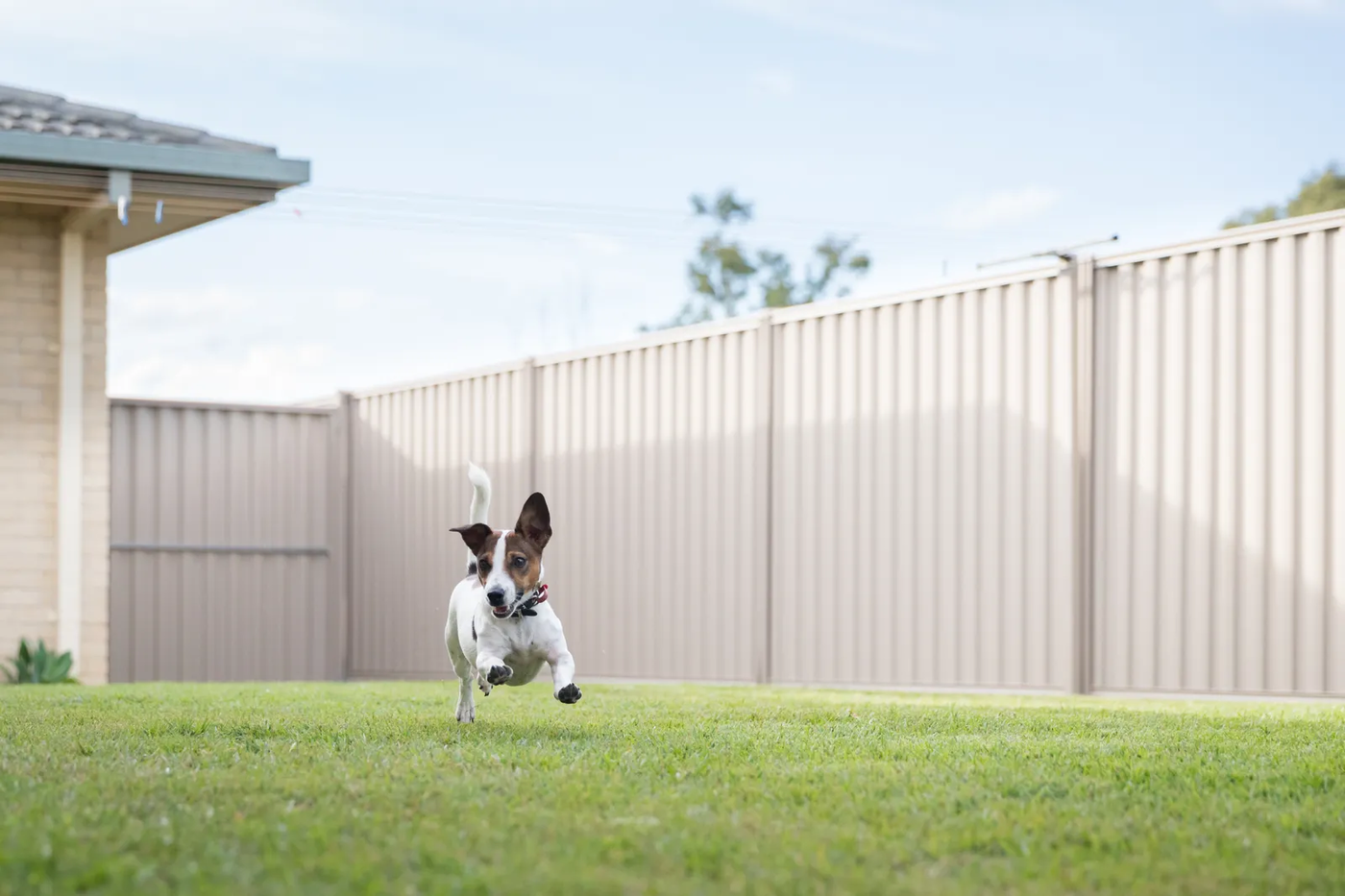
Fence charging looks like a dog that wants to fight, and some do. More often it is a dog that has found an exciting job in the yard and been left to do it all day, and a job can be taken away.
Last reviewed September 29, 2026 · by the Best Dog University Team
The answer
A barrier, a territory and endless practice turn a curious dog into a fence charger.
A fence lets a dog see, hear or smell something it cannot reach, and that frustration builds fast. The neighbor's dog runs the other side, a jogger passes, the lawn crew starts the mower, and the dog explodes. Because every passer-by eventually leaves, the dog feels it drove them off, and the next reaction starts sooner and louder. A dog left alone in the yard for hours can do this dozens of times a day.
Territory adds to it. A dog that spends its days outside often makes the yard its post and treats the fence line as a border to defend. Some dogs are calm on a walk past the same neighbor's dog and wild at the fence, which tells you the barrier and the territory are doing much of the work, not a dislike of that particular dog.
- Frustration: can see it, cannot reach it
- Reward: the passer-by always leaves
- Territory: the yard has become the dog's post
- Practice: every unsupervised hour adds reps
Warning signs
Redirection onto a housemate or a person means it has become dangerous.
The biggest risk at a fence is not the dog on the other side. It is redirected aggression: a dog so aroused at the fence that it turns and bites the dog or person beside it. Two dogs from the same house that charge the fence together can start fighting each other, and a child who grabs a collar at the fence line can be bitten by a dog that loves them. If that has happened, even once, the yard needs to be managed before anything else.
Other signs that the problem is growing: the dog is chewing boards, digging along the line, trying to go over the top, or starting to react at windows and on walks as well. Each of those means the arousal is spreading, and the fix will take longer the more it is practiced. A dog that has started coming inside wound up, pacing and panting after an hour at the fence is also telling you the yard has stopped being a place to relax, and that is worth changing whatever else you decide.
- A bite or scuffle with a housemate at the fence
- A person grabbed or nipped at the fence line
- Chewing boards, digging or climbing
- The reaction spreading to windows and walks
What to do first
No unsupervised yard time, then calm work with the trigger in view.
Take the job away. For now, the dog goes into the yard on a leash or a long line with a person, does its business, plays a game away from the fence and comes back inside. No hours alone outside. That single change removes most of the practice. Where a fence has gaps between the boards, a screen along the problem section can cut the view that sets the dog off.
Then start building calm at a distance. With the dog on a leash well back from the fence, pay it for looking at the neighbor's dog and back to you, and walk away before it reacts. Over weeks, move a little closer. A trainer can set up a neighbor's dog or a known dog on the far side so the work happens on purpose, not by accident.
Stop unsupervised time in the yard
Take the dog out on a leash or long line for potty and play
Play games away from the fence line, not along it
Screen gaps or the worst section of fence if you can
Pay the dog for looking at the trigger and back to you, from a distance
Move closer over weeks, backing off whenever the dog stiffens
Separate dogs that have redirected on each other at the fence
The Houston factor
Shared privacy fences, iron fences in HOA neighborhoods and a summer yard with nowhere to go.
Most Houston suburban yards share a six-foot wood privacy fence with the neighbors, often with gaps between the boards or under the bottom, so the dogs on each side can smell and glimpse each other all day. Newer master-planned neighborhoods in Katy, Cypress and The Woodlands often use see-through iron fencing along greenbelts and lakes, which gives a fence charger a full view of every walker on the trail.
Summer changes the pattern. From May to September, time in the yard should be short and early or late anyway, because of the heat, so it is a natural moment to end long unsupervised yard sessions. An HOA complaint about barking is often the push families need to start, and the yard plan above helps with that too. A friendly word with the neighbor also helps: agreeing on times when their dog is out and yours is inside cuts the clashes while the training catches up, and most neighbors are glad to be asked.
At Best Dog University
Gold for the fence barker, Platinum for the dog that has redirected or made contact.
A dog that charges and barks at the fence but settles quickly and has never turned on anyone usually fits the two-week Gold program at $2,500, where place, impulse control and a calm routine in the yard are built and handed over at the go-home session, or in-home lessons at $220 so the work happens at your own fence. A dog that has redirected onto a housemate or a person, or has fought through a fence, needs the three-week Platinum program at $3,750, with behavior modification, field trips and unlimited private lessons afterwards.
The programs
Programs for the dog that charges the fence.
Gold or in-home lessons for the fence barker, Platinum for the dog that has redirected onto a housemate or a person.


Asked and answered
Questions people ask about this.
Will a higher or solid fence stop fence aggression?
A solid, taller fence can reduce what the dog sees and makes escape less likely, which helps. It does not remove the frustration or the habit, and many dogs keep reacting to sounds and smells. Treat fence changes as management that supports training, not as the whole fix.
My dog is fine with the neighbor's dog on walks. Why the fence?
Because the barrier and the territory do most of the work. A fence adds frustration, and the yard is the dog's post. Many dogs that meet calmly on neutral ground still charge each other through a fence, which is why the fix starts with the yard itself.
Can I let my dogs out together if they fence fight?
Not if they have ever turned on each other at the fence. Redirected aggression is common in that situation. Let them out separately or on leashes until a trainer has worked the fence, and never reach into a scuffle with your hands.
Does a bark collar fix fence charging?
It can suppress barking without changing the frustration underneath, and a frustrated dog that cannot bark may find another outlet, including redirecting. Stopping the unsupervised practice and building calm at the fence works better, and any tool should be introduced properly as part of a plan.
Keep reading
Free consultation · 10% off this fall
Take the fence job away.
Tell our team about your yard, your fence and the neighbors' dogs. The free phone consultation is the place to start.