
Retiring the crate
When should a puppy stop using a crate?
Families ask this at about six months, usually after a good week. Our trainers ask a different question: what has the dog done with the freedom it already has?
Last reviewed September 29, 2026 · by the Best Dog University Team
The record decides
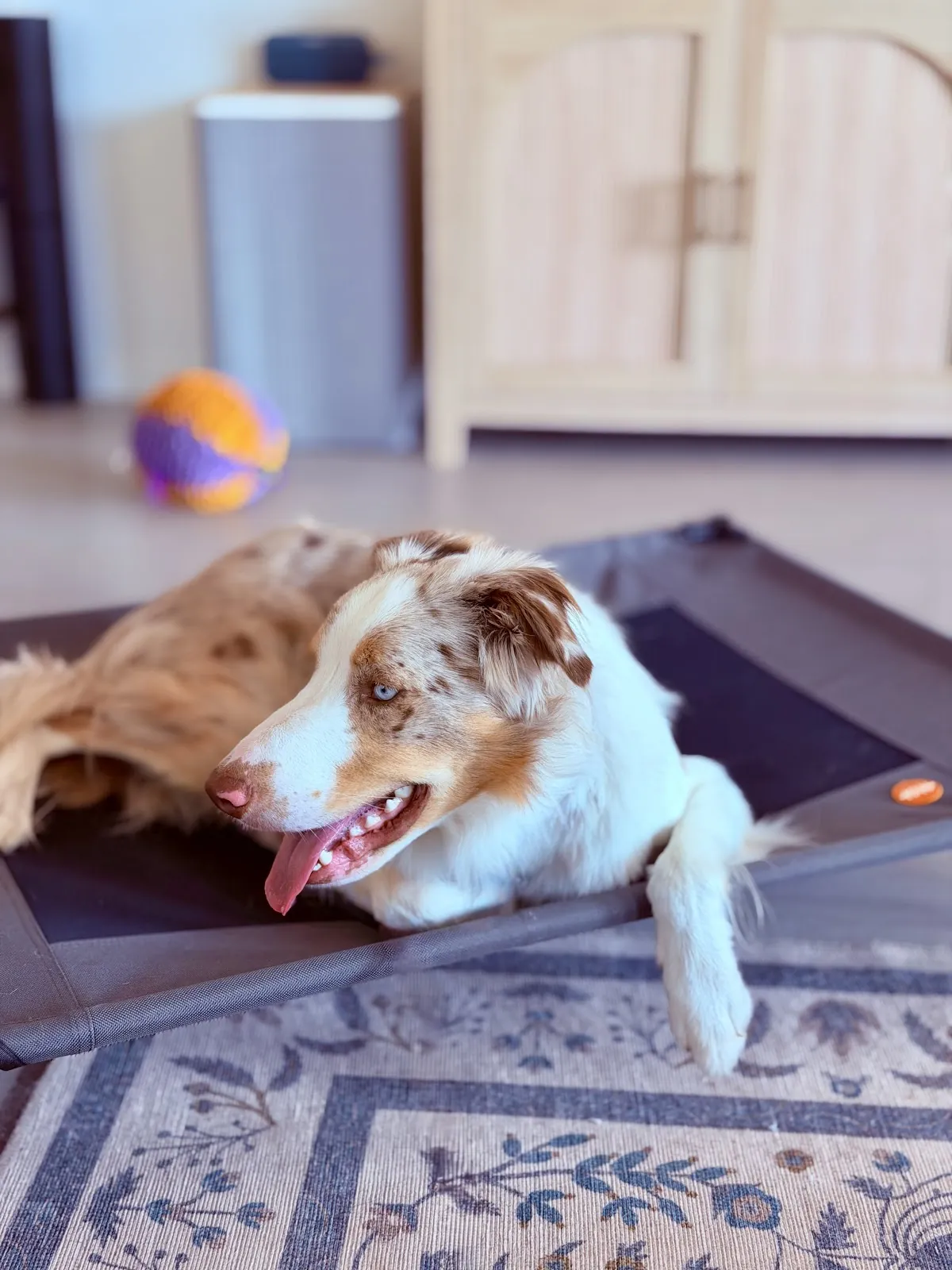
The dog's record decides when the door stays open, not its birthday.
A crate is retired when the dog has shown, over months, that it does not need one. That means no accidents in the house, nothing chewed that is not its own, and a dog that settles when left in a room rather than pacing, raiding the trash or barking at the window. A dog that meets those at ten months can start earning freedom; one that does not at two years is not ready.
Adolescence is the usual obstacle. Many dogs chew more between six months and about a year and a half, and freedom given during that stretch tends to be taken back after a lost sofa cushion.
- Months without an accident
- Nothing chewed but its own toys
- Settles in a room without supervision
- No trash raids or window barking
Phase it out
Freedom comes one room and one short absence at a time.
The jump from a closed crate to the run of the house is where most setbacks happen. Instead, open the crate door but keep the dog in one room, usually the room the crate is in, and start with short absences while you are home. Watch on a camera if you can. If the dog sleeps, the next step comes; if it explores, you are not there yet.
Add rooms and time slowly, and keep the crate available the whole way. Most dogs that are given freedom this way keep the crate as a place they choose to nap.
Leave the crate door open with the dog gated in one room while you are home
Step out for ten minutes and check the camera
Stretch to an hour, then a short errand
Try a full night with the crate open in the bedroom
Add a second room once a week has gone cleanly
Stretch to a work morning, then a full day with a midday break
Close the door again for a week after any lapse, without drama
Adolescent setbacks
A lapse means one step back, not the start again.
An adolescent dog that has been clean for a month and then chews a remote has not failed the whole plan. Go back one step, to the smaller space or the shorter absence, for a week, then try again. Freedom that is taken back calmly is regained quickly; freedom that is fought over becomes a battle.
Watch the times that go wrong. Many dogs are fine in the morning and restless by late afternoon, especially in a Houston summer when the midday walk has been cancelled for heat. More exercise at dawn and a chew at the hard hour often fix it.
- One step back after a lapse
- A week, then try again
- Note the hour that goes wrong
- Dawn exercise and a chew for the restless afternoon
Keep the skill
Keep the crate skill even after the door stays open.
Houston's hurricane season runs from June 1 to November 30, and an evacuation to a relative's house or a hotel is much easier with a dog that rests calmly in a crate. So are a vet stay, a car trip, a boarding visit, a thunderstorm and the fireworks on July 4 and New Year's Eve.
Keeping the skill costs little: a crate the dog can walk into, an occasional meal inside it, and a nap with the door shut once in a while. A dog that has not been crated in two years may treat the first evacuation night as a crisis.
What we do at Best Dog University
The bundle builds the crate, and lessons plan the handoff to freedom.
Our program for the youngest puppies is the Puppy Development Bundle, four sessions of 45 to 60 minutes, $550 in Cypress or $750 in your home; it sets up the crate so it becomes a den. During a board and train stay every dog sleeps in a crate in the house, and the go-home session covers where the crate lives and how freedom grows.
The honest fit: a dog that destroys the house the moment the crate opens may be dealing with anxiety rather than manners, and that is a conversation for our team, often private lessons at $160 or $220, or Platinum at $3,750 when separation stress is involved.
The programs
Programs for crate and freedom.
The bundle builds the crate, lessons plan the step to freedom, Platinum for a dog that panics when left loose.

Asked and answered
Questions people ask about this.
Can I stop crating my puppy at six months?
Usually not yet. Six months is when adolescence starts, and many dogs chew and test more for the next year. Start with the crate door open in a single room while you are home, and add freedom only as the record allows. Most dogs are ready somewhere past their first birthday.
Should my dog sleep in a crate forever?
It does not have to, but it should stay comfortable in one for life. Many dogs choose to keep napping in an open crate. The skill matters during Houston storms, hurricane evacuations, vet visits and travel, so an occasional meal or nap inside keeps it alive.
My dog was fine loose and then chewed the couch. What now?
Go back one step for a week: the smaller room or the shorter absence, and the crate available. Look at the timing, since restless afternoons often follow a skipped walk in summer heat. Add a chew at the hard hour, then try again. A calm step back works faster than a big reset.
Is an exercise pen a good middle step?
Yes, for many dogs. A pen or a gated room with the crate open inside gives more room while still limiting what the dog can reach. Keep it in the air conditioning with water and its own chews, and move to the next room once the pen has been calm for a week or two.
Keep reading
Free consultation · 10% off this fall
Freedom in steps, the crate kept.
Tell our team how your dog does when left in a room. The free phone consultation is a direct call, and we will help plan the next step.