
First dog meetings
When can my puppy meet other dogs?
Families usually picture a puppy playdate. Our trainers picture one calm older dog, a quiet yard and a puppy that leaves the meeting a little more confident than it arrived. The difference decides how your puppy treats other dogs as an adult.
Last reviewed September 29, 2026 · by the Best Dog University Team
Two timelines
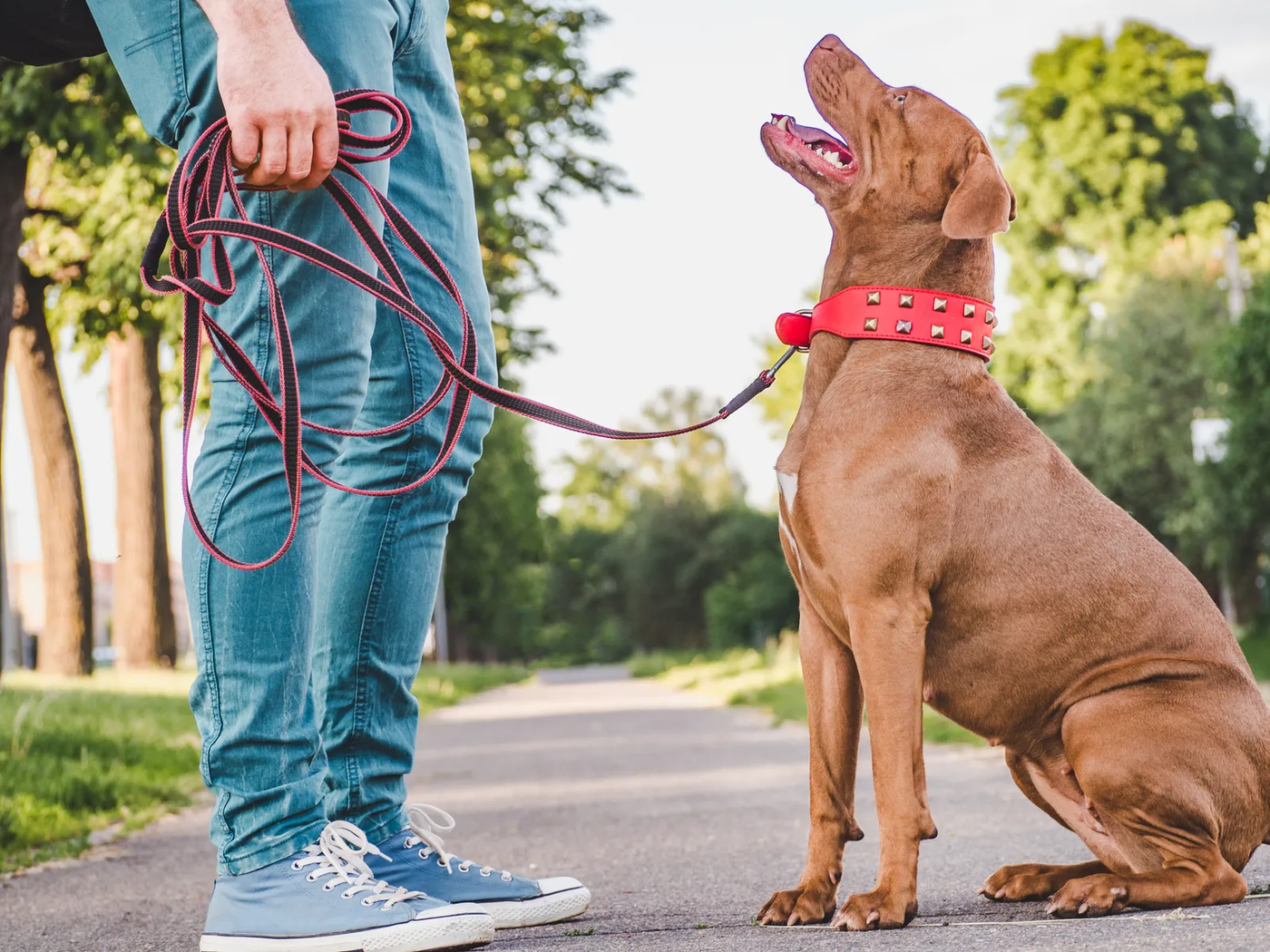
Known, vaccinated, calm dogs can come early; strangers wait for your vet's go-ahead.
There are two separate questions. The health question, which dogs and which ground are safe before the vaccine series is complete, belongs to your veterinarian, and the answer depends on your puppy and on local risk. The training question is which dogs your puppy should meet at all, and that answer is: fewer than you think, and better ones.
Most veterinarians are comfortable with a known adult dog that is up to date on its shots, healthy, and lives in a yard that unknown dogs do not use. That meeting can often happen in the first weeks at home. Busy public ground and unfamiliar dogs are the ones that wait.
- Health timing: your veterinarian decides
- A known adult dog, current on vaccines
- A private yard unknown dogs do not use
- Public ground and strangers wait for the vet
The right dog
The best first dog is a calm adult, not another puppy.
A steady adult dog that tolerates a puppy, ignores most of its antics and gives a clear, gentle warning when it goes too far teaches manners no person can. Two young puppies together teach each other to wrestle harder and louder, and a rowdy adolescent can frighten a small puppy in a single afternoon.
Think of a relative's older Lab, a neighbor's settled retriever or a friend's easygoing mixed breed. Ask the owner honestly whether their dog likes puppies. A dog that merely puts up with them is not the right teacher.
- A calm adult that likes puppies
- One dog at a time
- Not a rowdy adolescent
- Not a pile of puppies
Watching counts
Watching dogs from a distance is socialization too, and it can start in the first week.
Much of what a puppy needs to learn about dogs is that they are ordinary and not always for reaching. That lesson comes from watching. A puppy on your lap in a parked car at the edge of a park lot, or held on a shaded patio while dogs walk past, learns to look, stay calm and look back at you for a treat.
Houston makes this easy to do at dawn and dusk from May to September, when the dog walkers are out and the pavement is cool. A few minutes near the trails at Towne Lake or along a Heights side street, with the puppy off the ground until your vet says otherwise, is plenty.
Pick one calm adult dog whose owner knows it likes puppies
Meet in a quiet private yard, both dogs on loose leashes at first
Let them sniff for a few seconds, then call the puppy away for a treat
Drop the leashes to drag if both bodies are loose and wiggly
Interrupt before the play climbs, and give both dogs a break
End after a few minutes, while the puppy is still confident
Repeat with the same dog before adding a new one
Leash greetings
Greetings on a leash should not happen at all, even once the vaccines are done.
A leashed puppy that meets every dog it passes on a walk learns that every dog is for pulling toward. By the time it weighs forty pounds that becomes a lunge, and in some dogs the frustration turns into barking and reactivity. Our trainers teach families a simple rule from the first street walk: dogs on walks are for looking at, then walking past.
Meetings belong in yards and planned sessions, off leash or on a dragging leash, with a dog you chose. That rule keeps the walk calm and keeps the meetings good.
What we do at Best Dog University
The bundle plans the first meetings, and an older puppy that missed them gets a stay.
The Puppy Development Bundle is our program for puppies younger than four months, four sessions priced at $550 in Cypress or $750 in your home, and it includes a socialization plan: which dogs, where, how long and what to do when it goes wrong. Our trainers help you choose the first dog and read both bodies during the meeting.
The honest fit: an older puppy that is already frightened of dogs or already pulling to greet every one fits a stay from about four to five months, Gold at $2,500 or Platinum at $3,750 when there is fear or reactivity, with neutrality built on Cypress sidewalks and in store aisles.
The programs
Programs for a puppy learning about dogs.
The bundle for the first meetings, Gold for an older puppy that pulls to greet, Platinum when fear or reactivity has started.


Asked and answered
Questions people ask about this.
Can my puppy play with other puppies?
Occasionally, with one puppy of a similar size and a calm style, and briefly. Puppy-with-puppy play tends to climb fast, and it teaches rough play as often as manners. A calm adult dog is the better teacher. If you do set up a puppy playdate, interrupt every minute or two and end it early.
What if the older dog growls at my puppy?
A short growl or an air snap from a steady adult, followed by the puppy backing off and the adult relaxing, is normal dog manners. Let it happen, and give the puppy a break. A dog that pins, chases or keeps going after the puppy has stopped is the wrong dog for this job; end the meeting.
Should my puppy say hi to dogs on walks?
No. Greetings on a leash teach a puppy to pull toward every dog, and that is where much adult leash reactivity begins. Let your puppy look at dogs on walks, pay it for looking back at you, and keep walking. Save meetings for chosen dogs in yards.
My puppy is scared of other dogs. Should I make it meet more?
No. Forced meetings make fear worse. Go back to watching from a distance where the puppy can still eat, and pay it for looking at dogs calmly. Add one gentle, known adult dog when the puppy is relaxed. If the fear grows, talk to our team rather than pushing harder.
Keep reading
Free consultation · 10% off this fall
Choose the first dog carefully.
Tell our team your puppy's age and the dogs in your circle. The free phone consultation is a direct call, and we will help you pick the first meeting.